

 Locations
Climate Finance
UNDP Rome Centre
Our aim
Catalyse the deployment of public and private capital, international and domestic, to climate mitigation and adaptation projects in developing economies.
The challenge
Climate change continues to put pressure on ecosystems, human health and economic stability. An estimated 3.6 billion people live in areas of high vulnerability to climate impacts such as droughts, floods, heatwaves and sea-level rise, and Africa faces some of the most severe consequences despite historically contributing only around 4 percent of global carbon emissions. Energy access remains closely tied to this challenge.
In 2024, 655 million people worldwide still lacked access to electricity, and close to eight in ten of them live in Sub-Saharan Africa (SDG 7 report, 2026). Around 2 billion people continue to rely on hazardous cooking fuels. Every additional degree of warming also raises the risk to biodiversity, with 20 to 30 percent of species facing a heightened risk of extinction if global temperatures rise by 1.5 to 2.5 degrees. Meeting this challange requires far more capital than is currently flowing. Global climate finance surpassed USD 2 trillion for the first time in 2024, and reached an estimated USD 2.1 trillion in 2025 (Climate Policy Initiative, Global Landscape of Climate Finance 2026). Yet CPI estimates that an average of USD 7.8 trillion a year will be needed through 2030, rising to USD 9 trillion annually between 2031 and 2035, to stay on track. Developing economies, and Sub-Saharan Africa in particular, continue to receive a small share of this finance relative to their needs. Closing that gap means building pipelines of investable projects and connecting them to the capital that does exist.
Our goals
To increase the flow of capital towards promising climate mitigation and adaptation initiatives. We break this down into three objectives:
| - | Work with policymakers to strengthen the legal, policy and regulatory frameworks needed to attract investment in climate-related sectors. |
| - | Build a pipeline of bankable, high-impact projects that can unlock capital at scale. |
| - | Increase the flow of investment, from both international and domestic sources, into these projects. |
Our approach
UNDP Rome Centre draws on UNDP's network of country offices, present in more than 170 countries, to identify and support climate and energy initiatives where they are needed most. Through its programmes, the Centre currently provides technical assistance in 68 countries. Each country presents its own set of challenges and opportunities, and UNDP's decades of in-country experience shape how that support is delivered.
To turn promising initiatives into a pipeline of bankable projects, the Centre provides direct financial support and technical expertise across three stages:
| - | UpstreamSupport the strengthening of the policy, legal and regulatory environment, aligned with national development needs, strategies and priorities. |
| - | MidstreamSupport the de-risking of projects to make them bankable and investment-ready, including through technical and operational capacity building and strategic planning support. |
| - | DownstreamSupport the mobilization of finance by connecting projects with investors and, where needed, structuring blended finance transactions that mitigate risk. |
We match projects that are ready to raise funds with suitable sources of capital, and we work with international climate finance providers looking to grow their exposure in developing economies. This approach is delivered mainly through two programmes.
What we offer

UNDP is the lead agency for sustainable development within the UN Development System and serves as an integrator for collective action on the Sustainable Development Goals. Under its Strategic Plan for 2026-2029, sustainable finance is one of three accelerators supporting UNDP's work, alongside a dedicated objective on a healthy planet. UNDP Rome Centre's work sits within this framework, mobilizing the public and private capital needed to move climate and energy commitments from pledges to impact.
In practice, this means:
As of June 2026, we are supporting over 30 projects across 21 countries, building a pipeline of climate and energy projects that meet the eligibility and quality standards of partner financiers and capital providers.
- Providing technical assistance, directly and through UNDP country offices, to help projects move from idea stage to being investment-ready. As of 2025, this has included approx. USD 2.5 million in technical assistance delivered through PISTA, plus approximately 15,000 hours of in-kind support from specialised experts.
- Engaging a growing network of more than 20 financing institutions across Europe and Africa to match the Centre’s project pipeline with suitable sources of capital.
The current pipeline under PISTA , is expected to draw an estimated USD 120-240 million in direct investment from the Italian Climate Fund, with the potential to leverage a further USD 500 million to USD 1 billion from co-financiers.


This pipeline is designed to connect with a wide range of financiers and investors, including the Italian Climate Fund, a EUR 4.4 billion instrument established by Italy and managed by Cassa Depositi e Prestiti (CDP), which channels the majority of its resources to Africa and the Mediterranean region. UNDP and CDP signed a Memorandum of Understanding in September 2024 to strengthen this collaboration.
Behind the Pipeline
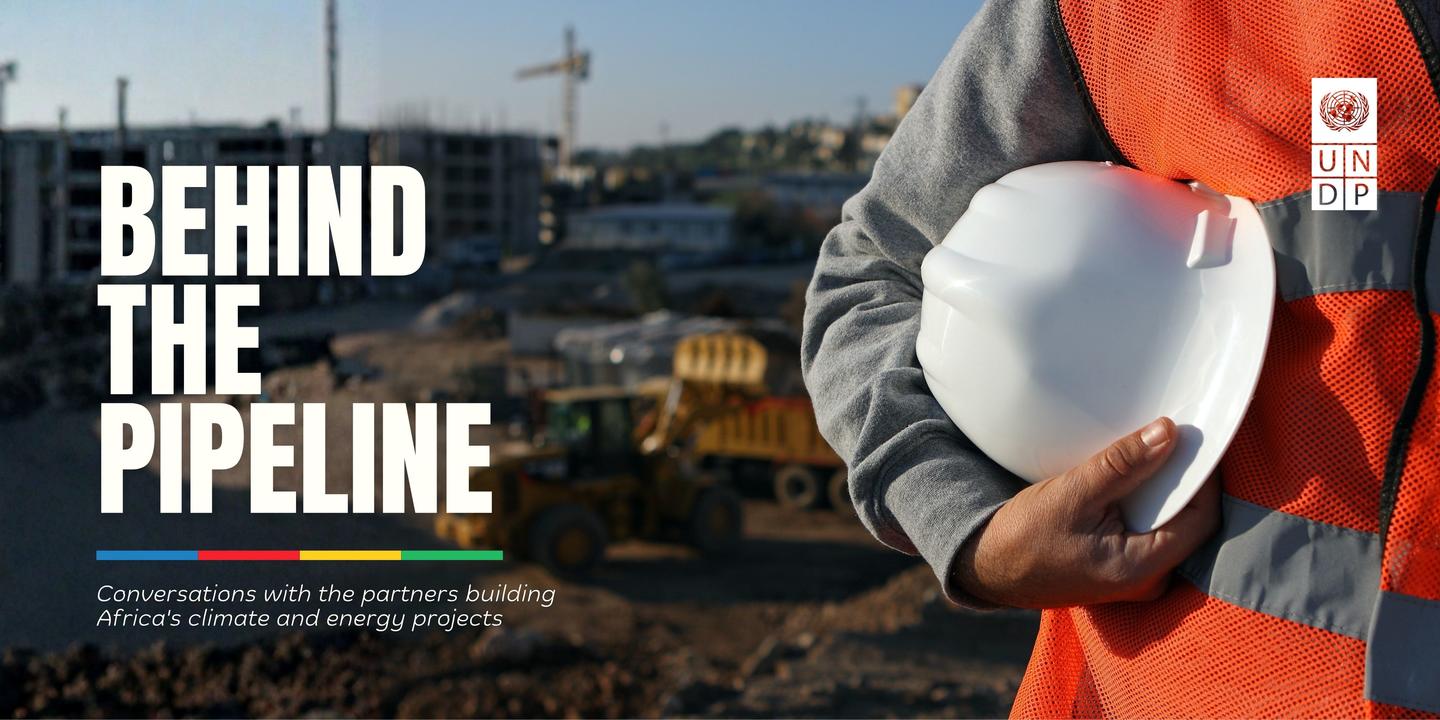
A closer look at what it takes to move a climate or energy project from an idea into something a bank, a fund, or an investor is ready to back.
Climate finance Porfolio
UNDP Rome Centre's Climate Finance Portfolio presents a selection of climate and energy projects currently under preparation through the PISTA and Energy for Growth in Africa programmes. Spanning more than 20 countries across Africa, the projects cover sectors including renewable energy, rural electrification, climate-resilient agriculture, industrial decarbonisation, and sustainable finance. Each project is at a different stage of development, and the portfolio is intended as a resource for development finance institutions, private investors, and partners looking to engage with investment opportunities aligned with national priorities and the Sustainable Development Goals.


