

 Locations
The United Nations Development Programme (UNDP) and the Climate Change and Development Authority (CCDA) of Papua New Guinea conducted a four-day training on climate change adaptation for sector managers and district and community government planners from the Autonomous Bougainville Government (ABG), from 27 -30 October 2025.
UNDP and CCDA Continue Climate Resilience training in the Autonomous Region of Bougainville
October 30, 2025
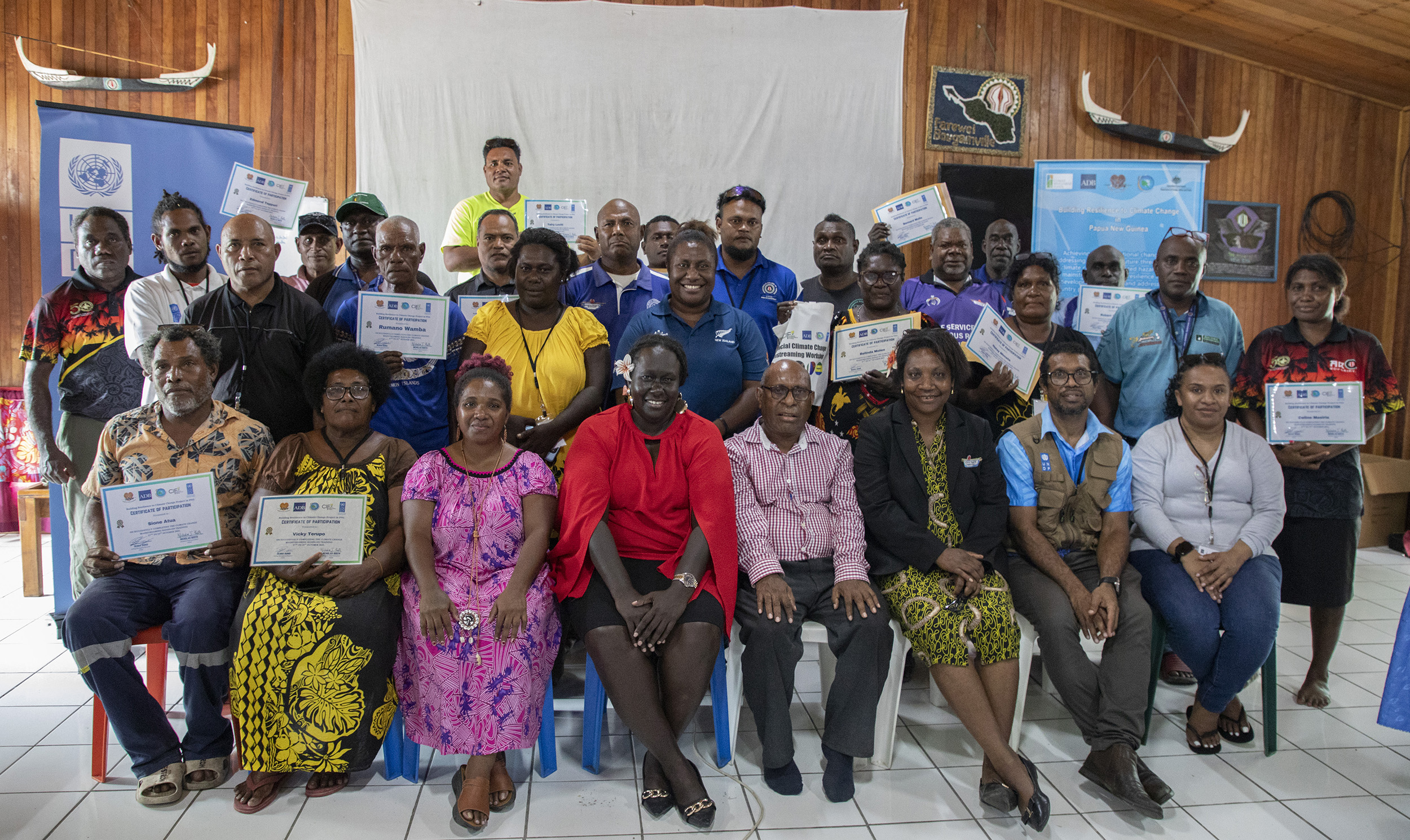
Group photo of participants after receiving their training certificates.
Seru Kepa | UNDP Papua New Guinea
As an island region with diverse and vulnerable coastal ecosystems, Bougainville faces growing threats from sea-level rise, saltwater intrusion, and increasingly unpredictable weather patterns. The training, held under UNDP’s and CCDA’s Building Resilience to Climate Change (BRCC) Project, brings together local stakeholders, including representatives from all levels of the Autonomous Bougainville Government and non-government organizations to strengthen their capacity to integrate climate change adaptation into development planning and decision-making processes.
“This workshop marks an important step in strengthening Bougainville’s resilience to climate change. By equipping our district and community government officers with practical tools and knowledge, we are ensuring that adaptation planning is rooted in local realities and aligned with both the National Adaptation Plan and Bougainville’s development priorities. Together with CCDA and our provincial planners, we are building the foundation for a resilient, sustainable, and climate-ready Bougainville,” stated Mr. Steven Paissat, UNDP Management Specialist, on his opening remarks given on behalf of UNDP.

Mr. Steven Paissat, UNDP Management Specialist, on his opening remarks given on behalf of UNDP.
Seru Kepa | UNDP Papua New Guinea
In Bougainville, the project has targeted climate-vulnerable communities from the atolls of Carteret, Mortlock, Tasman, and Fead/Nuguria, which face some of the most severe effects of sea-level rise and coastal erosion.
“Through the BRCC Project, we are not only aiming to strengthen climate resilience but embedding it into the way we plan and deliver development across all levels of government. From climate-resilient community boats and new water facilities to early warning systems and local adaptation plans, these initiatives are helping our atoll communities better prepare for and respond to the impacts of climate change. As we move toward developing Bougainville’s Adaptation Implementation Plan, our focus is on ensuring that climate action is institutionalized, aligned with national priorities and driven by our people for a sustainable and resilient future,” explained Ms. Joy Samo, Output 2 Coordinator of BRCC Project.
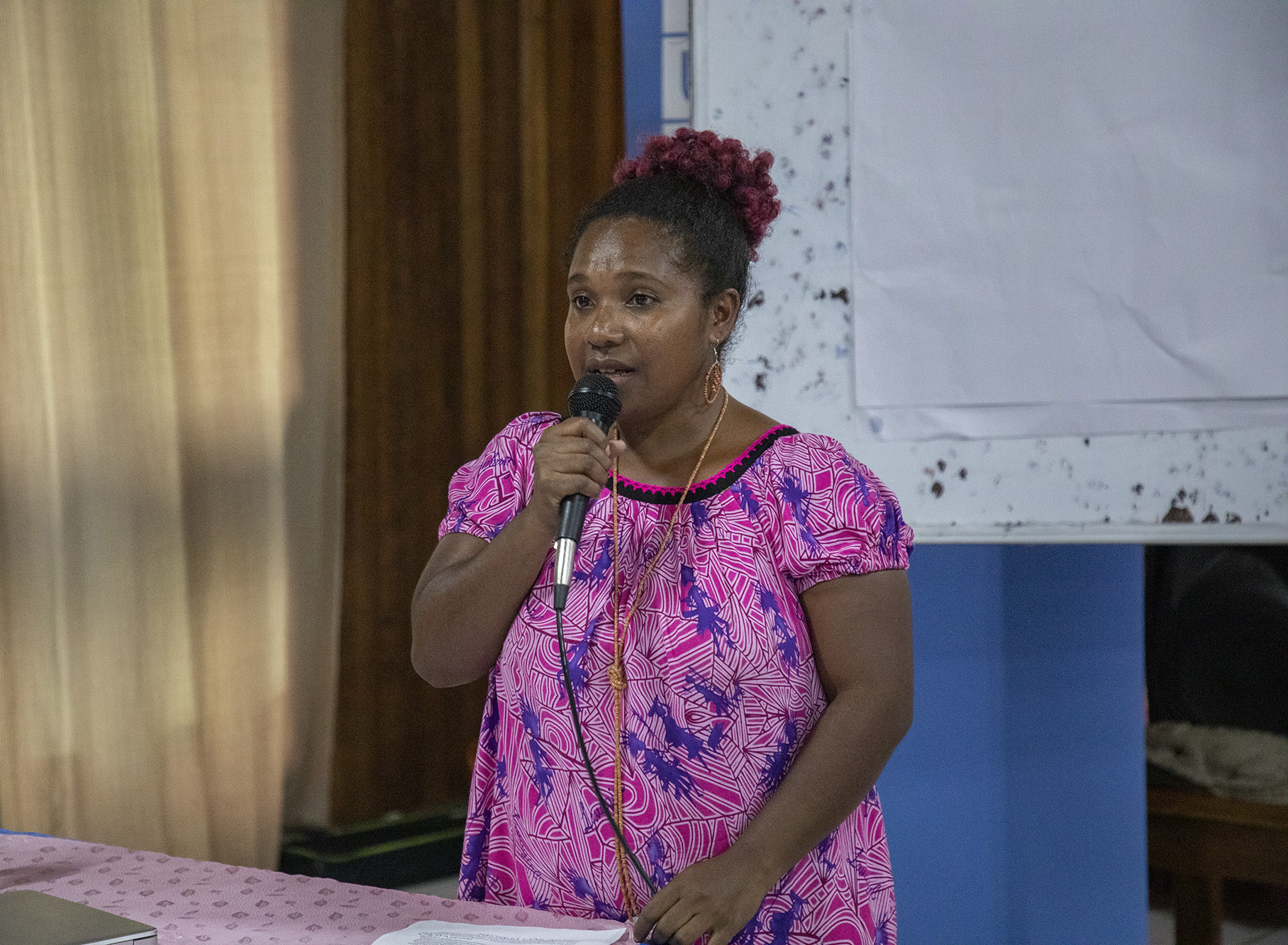
Ms. Joy Samo, Output 2 Coordinator of BRCC Project, during her opening remarks.
Seru Kepa | UNDP Papua New Guinea
Key outcomes from the workshop will include the development of Adaptation Implementation Plans for each district and LLG, along with vulnerability profiles, risk maps, and the identification of priority adaptation measures to address local challenges such as saltwater intrusion, flooding, and coastal degradation.
“Our people have a deep connection to the land and the sea. They possess traditional knowledge and adaptive skills that have sustained life in their communities for generations, and this local strength is the foundation upon which we must build our climate response. True resilience in Bougainville will come from anchoring adaptation in our local realities, ensuring that solutions are homegrown, inclusive, and guided by the voices of our women, youth, and communities who live with these changes every day,” said Ms. Lynette Baratai-Pokas (LLB), Secretary for the Department of Lands, Physical Planning, Environment Conservation and Climate Change from the Autonomous Bougainville Government.
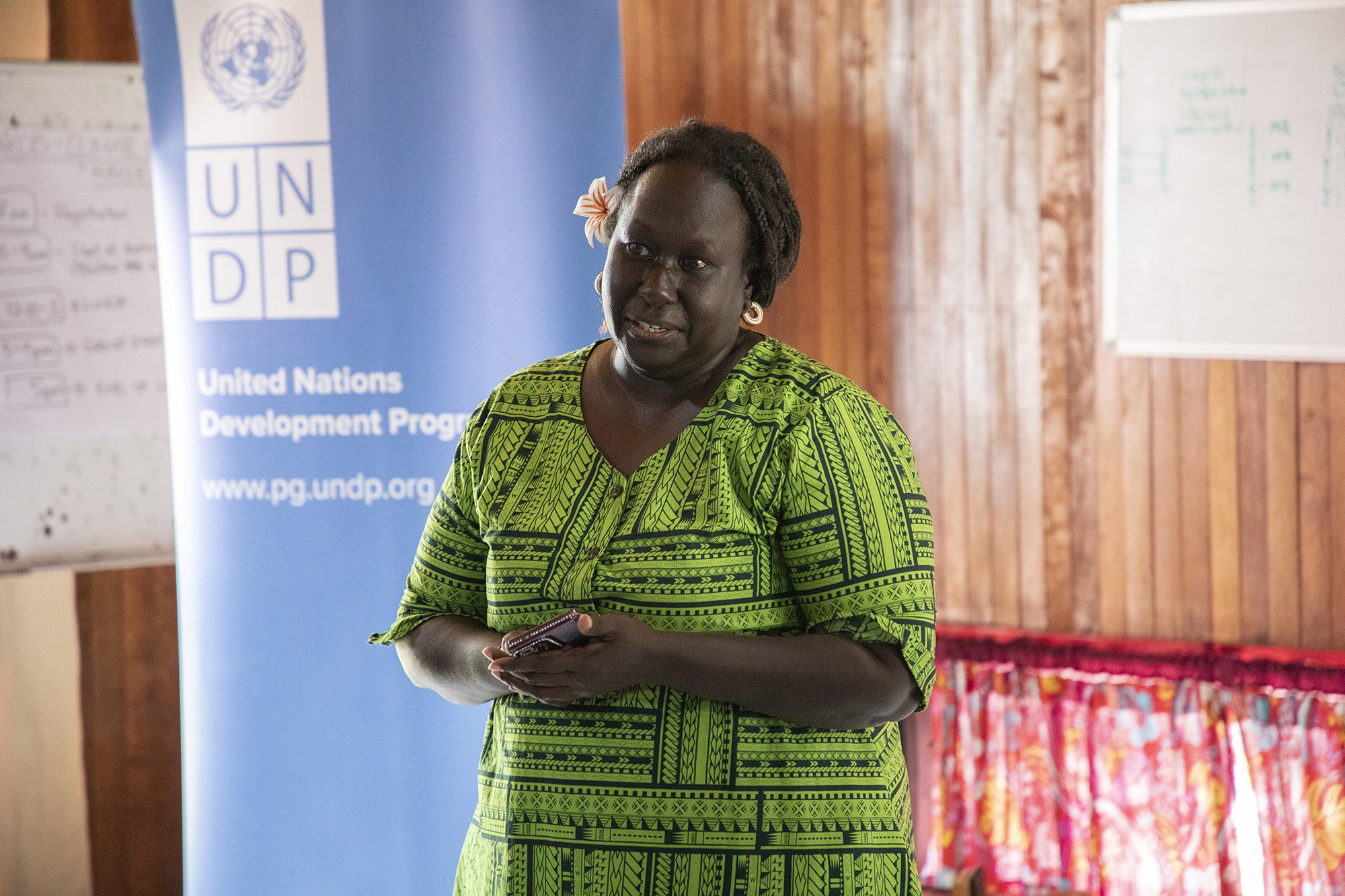
Ms. Lynette Baratai-Pokas (LLB), Secretary for the Department of Lands, Physical Planning, Environment Conservation and Climate Change from the Autonomous Bougainville Government, giving her speech at the training.
Seru Kepa | UNDP Papua New Guinea
Throughout the course of the workshop, the participants engaged in a series of hands-on sessions designed to strengthen their capacity to integrate climate change adaptation into their development plans. The training covered key topics including understanding climate change and its impacts in Papua New Guinea, the principles and framework for mainstreaming climate considerations into planning and conducting sectoral vulnerability assessments. Participants also worked on developing Adaptation Implementation Plans, aligning them with priorities outlined in the National Adaptation Plan, and learned about monitoring, evaluation, and reporting mechanisms to track progress on climate actions at all levels of government.
“Climate change has changed our way of life, from king tides to long droughts, our people are feeling its impact every day. What we’ve learned from this training is vital for us to adapt, protect our homes, and secure the survival of our communities for the future,” said Ms. Vicky Terupo, Chairlady of the Taku Community Government from Bougainville’s remote Mortlock Island.

Ms. Vicky Terupo, Chairlady of the Taku Community Government from Bougainville’s remote Mortlock Island.
Seru Kepa | UNDP Papua New Guinea
Related
content
content


