Locations
Transforming Digital Spaces in Pakistan: Policy, Legal Reforms, and Advocacy to Combat Tech-Facilitated Gender Violence
Project Summary
As Pakistan embraces digital transformation, women and marginalized groups face increasing risks of technology-facilitated gender-based violence (TFGBV), including cyberstalking, online harassment, deepfake pornography, and digital surveillance. These forms of abuse compromise safety, mental well-being, and access to education, employment, and civic participation. According to the Digital Rights Foundation, nearly 90 percent of cyber harassment complaints filed with the Federal Investigation Agency (FIA) are from women while 45 percent working women report online abuse, with 15 percent leaving their jobs as a result.
Despite the scale and complexity of these violations, institutional responses remain fragmented, and legal protections are limited in scope and enforcement. The TFGBV initiative by the United Nations Development Programme (UNDP) in Pakistan, running from January till December 2025, aims to address these challenges through legal and policy reform, institutional strengthening, and digital literacy promotion – ensuring safer, more inclusive online spaces for women and marginalized communities.
Implemented by UNDP in partnership with the Ministry of Human Rights, Ministry of Law and Justice, FIA, National Commission for Human Rights, National Commission on the Status of Women, and the Federal Ombudsperson Secretariat for Protection against Harassment, the initiative will contribute to a safer, more inclusive digital and offline environment by empowering survivors, strengthening access to justice, and enabling national and provincial ownership to sustainably address TFGBV.
Objectives
- Develop a national framework to define, prevent, and prosecute TFGBV, addressing legal ambiguities and aligning with international human rights standards.
- Strengthen legal protections by proposing reforms to the Prevention of Electronic Crimes Act (PECA) 2016 to address gaps such as deepfake pornography, cyberstalking, and non-consensual digital abuse.
- Improve institutional coordination among law enforcement, the judiciary, technology platforms, and civil society to ensure consistent, survivor-centered redress pathways.
- Increase awareness and legal literacy through targeted advocacy, media campaigns, and university-based engagement, especially among women, youth, and political stakeholders.
Outcomes
- Conduct a comprehensive legal, policy, and institutional diagnostic to assess existing frameworks and map systemic gaps, providing an evidence-based foundation for future reforms.
- Develop a legal framework, including proposed amendments to PECA 2016, to address gaps such as cyberstalking, deepfake pornography, and non-consensual digital abuse, in consultation with legal experts, public institutions, and civil society.
- Establish an interagency coordination mechanism and standard operating procedures to guide justice, law enforcement, and human rights institutions in handling TFGBV cases, ensuring survivor protection and institutional accountability.
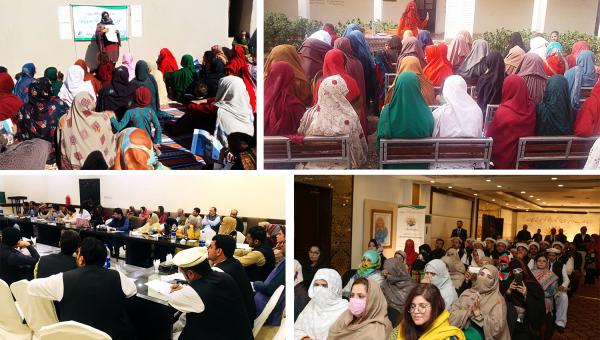
- Organize wareness campaigns, university-based workshops, and targeted trainings to enhance digital safety literacy, reduce vulnerabilities, and strengthen resilience, reaching students and educators in institutions such as the National University of Modern Languages (NUML) and Rawalpindi Women University.
- Convene national and provincial sessions with parliamentarians, public institutions, law enforcement, and civil society organizations, embedding TFGBV priorities within legislative processes through advocacy with the Women Parliamentary Caucus and Standing Committees.
Project Brief