

 Locations
By Martin Namasaka
When Silence Speaks: Ashura Michael and the Fight for Inclusion as a Right, Not a Favour
May 6, 2025

Ashura Michael doesn’t raise her voice; she doesn’t have to. Meeting her is to be immersed in a world where silence speaks volumes, and resilience is woven into every word she signs. In the quiet rhythm of her hands and the firm steadiness of her gaze, you begin to understand, her presence, grounded and luminous, speaks with a force that comes from having lived what she now champions: justice, equality, and dignity for all, especially those whose voices society too often refuses to hear.
We sit in a small room flooded with afternoon light, her interpreter by her side. Born in Rongo Town in Migori County, she was a vibrant child, full of life, until measles swept in and robbed her of her hearing at the age of four. What followed was not a story of defeat, but of fierce adaptation. “I had to learn how to live again,” she tells me through her interpreter.
Today, Ashura is a force. A policy advocate, a mentor to girls, a political contender, and the UNDP Kenya Disability Inclusion Lead. Her work dismantles the barriers that silence people with disabilities—those built not only in physical spaces, but in minds, institutions, and attitudes. She has sat at decision-making tables across Africa and the globe, spoken in legislative assemblies, and danced, yes, danced to the tunes of Koffi Olomide and Fally Ipupa in celebration of every hard-won step forward.
Her life, like her favorite quote by Mother Teresa, reminds us that we don’t need to move mountains to make change we only need the courage to cast a stone, and the faith that the ripples will reach farther than we imagine.

Ashura, your work as a human rights and disability inclusion advocate is phenomenal. But I want to take it back. What made you step into this journey so fearlessly?
You know, I didn’t wake up one day and decide, “I want to be a disability rights advocate.” Life pushed me there. It signed me up, literally.
I lost my hearing at four, after a bout of measles. One day, I was a chatty, dancing little girl in Rongo. The next I was in silence. But even then, the world didn’t grow quiet. It grew louder in different ways. I started to notice how people looked at me differently. How the world slowly started to shrink, like it wasn’t made for me anymore.
Growing up as a deaf young woman in Kenya, I lived through the harsh realities of exclusion. The education system wasn’t ready for girls like me. I saw friends, brilliant, full-of-dreams drop out because of stigma, lack of support, or simple neglect. Some stories still break my heart: deaf girls who survived sexual violence but couldn’t access justice because the courts didn’t “understand” them. Imagine surviving something like that… and then being erased by the very system meant to protect you.
As a deaf woman, I have had to fight for recognition and the right to be heard. And here’s the thing—being deaf is just one part of my story. I’m also a woman. I’m young. Each part of my identity adds another layer to the barriers I face. Imagine being told you can’t lead, can’t earn, can’t pursue a law degree just because of who you are. That’s not just exclusion. That’s erasure. The cruelty of multiple discrimination is that it makes you invisible before you even get a chance to be heard.
These experiences became my fuel. I pursued a Bachelor’s degree in Gender and Development to understand the roots of inequality. Then I studied law because if I’m going to demand justice, I want to do it in a courtroom, not just behind a microphone.
My advocacy is not a job. It’s personal. It’s survival. It’s justice. I am committed to building a world where girls and women with disabilities are not just protected or empowered, they are fully included. In classrooms, in boardrooms, in courtrooms. In every room where decisions are made.
Why do you think disability inclusion is so urgent right now especially in Kenya, but also globally?
I’ll put it this way: imagine planning a big national party, everyone’s invited, you’ve got speeches, food, music… but the ramp to the hall? Missing. The sign language interpreter? Didn’t show. The programme? Not in braille. That’s how we’ve been doing development, exciting from the outside, but inaccessible at the door.
Inclusion is not a favour. It’s not some warm, fuzzy “good-to-have.” It’s a human right. It’s smart development. People with disabilities bring innovation, resilience, and powerful lived experience. But how can we contribute if the systems keep shutting us out?
The SDGs promise to “leave no one behind.” Well, persons with disabilities are still way behind. So if we’re serious about this promise, inclusion has to stop being a side conversation and become the main agenda. Otherwise, we’re not progressing, we’re pretending.

You’re now leading disability inclusion at UNDP Kenya and the work has really gained momentum. What are you most proud of so far?
Honestly, it's been such a rewarding journey. One of the moments I’m most proud of is the launch of the Disability Inclusion Status Report 2025 in December 2024. It was the first report of its kind in Kenya, data-driven, honest, and eye-opening. For the first time, we had a clear national picture of just how deep the exclusion of persons with disabilities runs, and what it’s costing us as a country.
The numbers were sobering. We found that disability exclusion is costing Kenya an estimated KES 1.05 trillion every year, that’s about 6.95% of our GDP. On top of that, the report exposed a 44.7% wage gap and a stubbornly high poverty rate of 38% among persons with disabilities. Those figures aren’t just statistics, they’re lived realities. And seeing them all laid bare like that gave us the urgency and the evidence we needed to act.
Off the back of that, UNDP brought together 71 stakeholders, government, organizations of persons with disabilities (OPDs), private sector actors, civil society, to co-create a Joint Disability Inclusion Strategy. That strategy is now being finalized, and it’s built around five key pillars that touch on the heart of inclusion: Economic Empowerment, Digital Accessibility, Inclusive Services and Infrastructure, Disability-Disaggregated Data, and Political Participation and Legal Reform. It’s not just a document it’s a shared roadmap for action.
We’ve also been driving forward the Unpaid Care and Domestic Work Programme, together with UNICEF, UN Women, and ILO, and with funding from the Global Disability Fund. Through that, we’ve worked with the private sector to secure commitments for 1,049 job opportunities and we’ve already verified over 210 of them. These aren’t token gestures. They’re steps toward systemic change, grounded in evidence and built on collaboration.
And I have to say, I’m also proud of what we’re doing internally at UNDP. We’re walking the talk, recruiting persons with disabilities into our workforce, holding regular training sessions for all staff on diversity and inclusion, and really trying to build a culture where inclusion isn’t just a box to tick, but a way of working. Because if we expect others to lead inclusively, we have to lead that way ourselves.
Looking ahead, the real shift I’m excited about is moving disability inclusion from being seen as a standalone issue or “special project” into something that’s embedded across everything we do. Whether it’s governance, climate action, economic empowerment, or digital transformation, we’re making sure disability rights are part of the foundation, not an afterthought. That’s how we build truly inclusive and sustainable development.
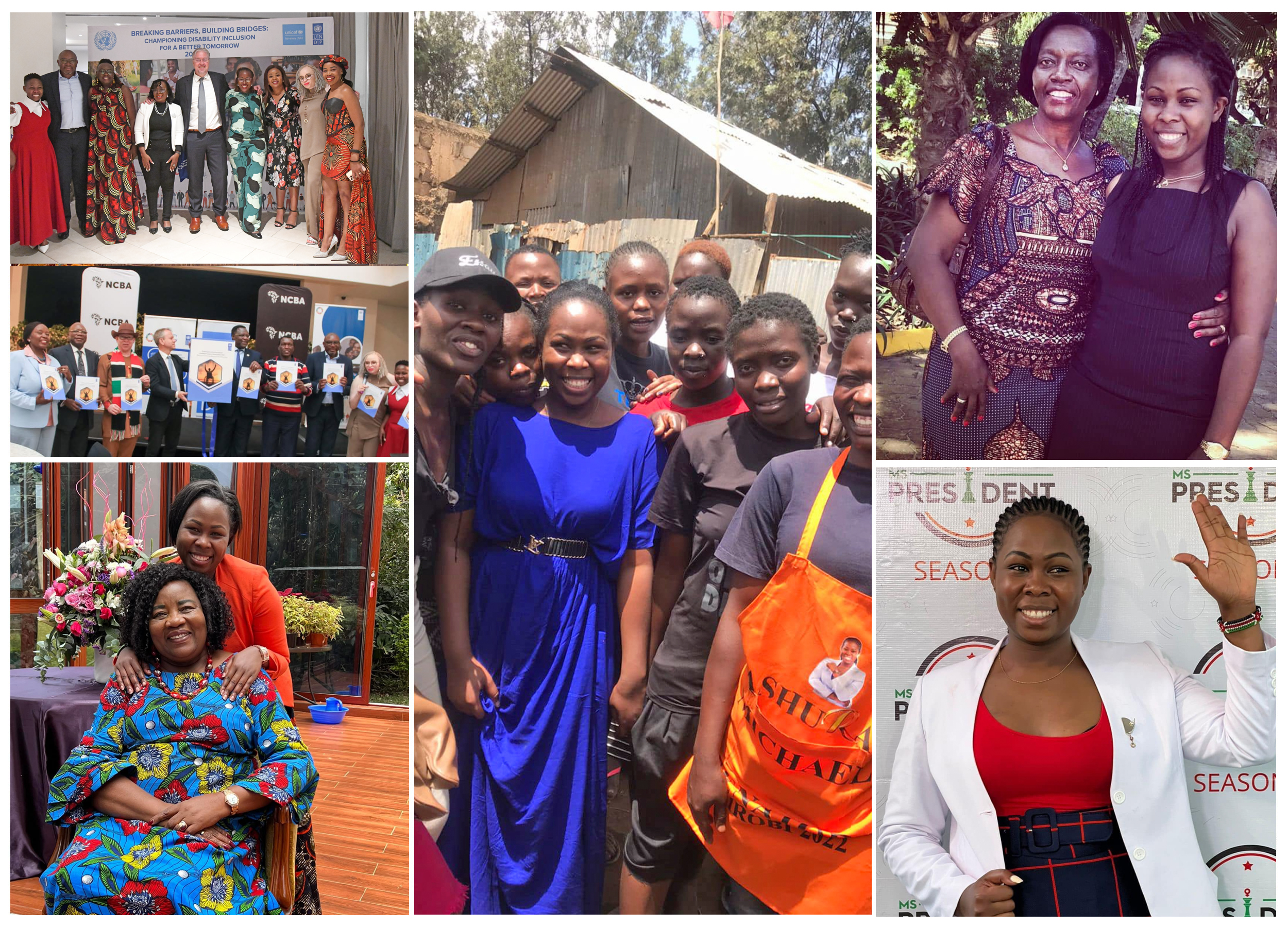
Let’s be honest. We’re behind on disability inclusion across the SDGs. How far behind are we and what’s dragging us down?
You want the truth? We’re seriously behind. Like, missed-the-bus-and-the-next-one-isn’t-coming kind of behind.
Look, persons with disabilities are still among the poorest, least represented, and most excluded groups, globally and right here in Kenya. Yes, we have policies. Beautiful ones, written in lovely fonts. But policies alone don’t walk the talk. Paper doesn’t implement itself.
Let me break it down:
- Poverty? Persons with disabilities in Kenya experience a poverty rate of 38%, way above the national average.
- Wages? They earn 44.7% less than their non-disabled peers doing the same work.
- Representation? Still far too few in politics, decision-making, or even visible public life.
So what’s holding us back?
- Data (or the lack of it): If we don’t count people properly, we can’t plan properly. Disability-disaggregated data is scarce, which makes it hard to design real solutions that meet real needs. It's like flying a plane with no radar.
- Money: Inclusion isn’t free. It needs actual investment, not leftover change from other programmes. We can’t build ramps to equality on broken budgets.
- Accountability: Policies without enforcement are just suggestions. Who’s actually checking if inclusion is happening? Who’s measuring progress or calling it out when we fail?
And here’s the kicker: the cost of exclusion isn’t just moral, it’s economic. Kenya loses an estimated KES 1.05 trillion annually, that’s 6.95% of GDP, by not fully including persons with disabilities in the economy. That’s not a small leak; it’s a flood.
If we don’t fix these three gaps data, funding, and enforcement, 2030 will show up, and we’ll still be giving the same speeches about "leaving no one behind" while entire communities remain unseen and unheard.
But it’s not too late. We just need the political will, bold partnerships, and the guts to do what’s right—not what’s convenient.
So what needs to happen, really happen for us to meet the SDG goals for persons with disabilities?
Governments need to stop treating disability like a line item and start putting real money behind real plans. Budget for inclusive infrastructure. Pass bills like the Equal Pay Bill. And stop excluding us from decisions that affect us!
Private sector, dear CEOs, we don’t need charity. Go beyond the Corporate Social Responsibility, we need jobs. Build ramps, hire inclusively, procure from businesses run by persons with disabilities. It’s not rocket science, it’s fairness.
Development partners, please ditch the one-off pilot projects. Invest in systems. Work with Organizations of Persons with Disabilities (OPDs). Fund grassroots movements. And support national coordination platforms that bring us all together, like the Disability Inclusion Working Group we have in Kenya.
Kenya is increasingly seen as a model for disability inclusion. What lessons should other countries and UNDP offices, take from your work?
First, let me say, Kenya isn’t perfect. But we’re learning. We’re listening. And we’re showing that inclusion isn’t about big budgets, it’s about big hearts and bold leadership.
Here’s what I’d tell other UNDP offices:
- Co-create everything. Don’t design for us without us. Our approach in Kenya has been rooted in co-creation with OPDs, government, private sector, and UN agencies working together. This collective ownership has built credibility and scale.
- Use data. Don’t just rely on stories. Stories inspire, but data moves budgets. By launching the Disability Inclusion Status Report 2025, we moved from anecdote to evidence and from intention to investment.
- Align with national goals. Don’t be a parallel universe. We have aligned our efforts with national development plans and global goals, ensuring sustainability.
- And lastly, be humble. Listen more than you speak. Inclusion is about empathy, not ego. I encourage other UNDP offices to listen deeply to persons with disabilities, invest in evidence, and lead with humility and purpose.

Meeting Ms. Ahunna Eziakonwa six years ago at UNDP Kenya was more than just a moment, it was a spark that lit a fire in me. As a young African woman with a disability, I saw in her a reflection of the kind of leadership I dreamed of: bold, inclusive, unapologetically African, and deeply rooted in justice. Her words and presence made me believe that my voice mattered, and that I, too, could be part of shaping a more inclusive world. That encounter inspired me to join the journey with UNDP, where I now work every day to push boundaries, open doors, and ensure that no one is left behind. Her leadership continues to remind me that inclusion isn't charity it's power.Ashura Michael
As we close, Ashura is quick to add, “every individual, regardless of their abilities, has inherent value and should have the opportunity to fully participate in society. Inclusion is not just a matter of accommodation but a recognition of the richness that diversity brings to our communities.”
Her fight is not about special treatment. It’s about equal footing. It’s about a future where girls like her don’t have to fight to be seen, heard, or valued.
“Disability isn’t the problem,” she says. “Exclusion is.”
