

 Locations
By Edith-Casely Fordjoe
Building Africa’s Marketplace: MSMEs, Ecosystems and the Power of Continental Trade Platforms
May 29, 2026

Woman Entrepreneur at Biashara Afrika
UNDP Nigeria
The promise of the African Continental Free Trade Area (AfCFTA) is often discussed in terms of policy, tariffs, and trade volumes. Yet its real success will ultimately depend on something far more practical: whether African businesses - especially Micro, Small, and Medium Enterprises (MSMEs) - can successfully connect to markets, build partnerships, and move products across borders. Platforms such as Biashara Afrika are increasingly becoming important in testing grounds for that reality.
Held in Lomé, Togo, Biashara Afrika 2026 convened entrepreneurs, buyers, investors, ecosystem builders, and policymakers from across the continent around a shared ambition: strengthening intra-African trade and unlocking new pathways for African businesses to scale beyond domestic markets.
For many of the Nigerian MSMEs supported by UNDP Nigeria under initiatives such as HerAfCFTA and Young Africa Innovates (YAI), funded by the Mastercard Foundation, the experience represented far more than participation in a trade event. It was their first direct exposure to continental trade ecosystems, structured B2B engagements, and regional market conversations.The significance of that exposure became evident almost immediately.
For the founder of Zone A Limited, a Nigerian leather bags and accessories brand, one of the defining moments came unexpectedly. An industry leader she had long admired - someone she had spent years attempting to connect with - walked directly to her booth, complimented her designs, and personally shared a direct contact line for future engagement. What may appear small on the surface represented something much larger: validation, visibility, and entry into networks that previously felt inaccessible.
Across the exhibition floor, similar stories emerged.

For many businesses, this was their first formal Business-to- Business (B2B) experience. The process initially felt intimidating - navigating buyer conversations, pitching products, discussing pricing structures, and engaging potential distributors across multiple African markets. The founder of Damife Naturals, a skincare brand, admitted she arrived nervous and uncertain about how to position her business in such a high-level environment. However, the preparation sessions provided beforehand by UNDP Nigeria, combined with peer support from fellow Nigerian entrepreneurs, quickly helped build her confidence. By the end of the engagements, conversations that initially felt overwhelming became opportunities for collaboration, visibility, and market exploration.
These experiences highlight an often-overlooked reality about trade participation: access alone is not enough. Preparation, ecosystem support, and confidence-building significantly shape outcomes.
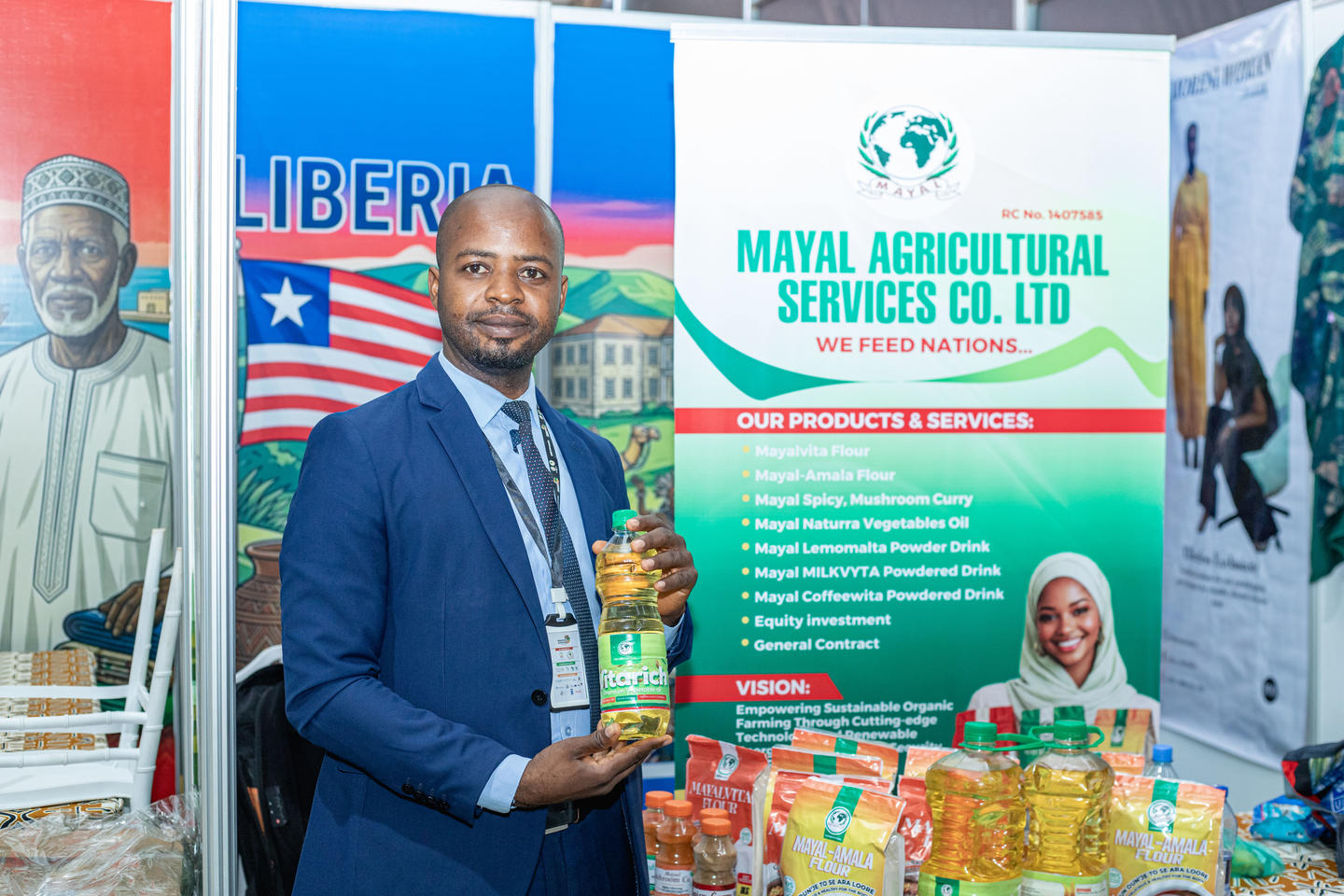
The participation of the founder of Mayal Agricultural Services Co. Ltd, a beneficiary of the Young Africa Innovates (YAI) Cohort 1 programme, also reflected the importance of sustained ecosystem support beyond training interventions. The company recorded over six confirmed partnership opportunities and more than fifteen follow-up meetings during the engagement, reflecting one of the highest levels of business interaction among participating MSMEs. The experience demonstrated how continued support around market access and ecosystem engagement can help businesses transition from local operations to regional opportunity pipelines.
Another experience repeatedly highlighted by participating MSMEs was the opportunity to engage directly with high-level actors within Nigeria’s trade policy and regulatory ecosystem. For many entrepreneurs, Biashara Afrika created rare access to policymakers, trade support institutions, and regulatory stakeholders in ways that would ordinarily be difficult to achieve independently. Several businesses described how direct conversations helped them seek clarification on long-standing export and trade concerns, while also creating pathways for immediate follow-up engagements and future support. Beyond networking, these interactions helped demystify aspects of cross-border trade that many MSMEs often struggle to navigate alone. Other businesses described the experience as transformative not simply because of sales opportunities, but because of the relationships and ecosystem access it created.
Equally important was the market intelligence gained from observing products and businesses from across Africa. For many participants, seeing what other MSMEs were producing, how they packaged their products, positioned their brands, and communicated value to buyers helped sharpen their understanding of where their own competitive advantage could lie within African and even global markets. For some, this revealed pricing advantages; for others, it highlighted opportunities around quality positioning, branding, packaging, niche targeting, and product differentiation.
This type of market intelligence is increasingly critical under AfCFTA. Competitiveness will not depend solely on the ability to produce, but also on the ability to understand market expectations, benchmark against continental peers, identify gaps, and strategically position products within evolving African value chains. Trade platforms such as Biashara Afrika therefore serve not only as marketplaces, but also as learning environments where businesses gather intelligence that directly shapes future growth strategies.
The support provided by UNDP Nigeria also helped address one of the biggest barriers facing African MSMEs: the high cost of participation in international trade ecosystems. For many businesses, sponsorship covering flights, accommodation, exhibition access, and on-ground coordination made participation feasible for the first time.
As one participant reflected, “The platform provided for travel, logistics, on-ground support - everything. Without that support, participation would have been extremely difficult.”
Yet beyond the optimism and opportunities, the experience also reinforced several structural realities about intra-African trade.
While demand for African-made products continues to grow, logistics costs remain high, cross-border payments remain inefficient, and inconsistent standards continue to affect the movement of goods across markets. For many MSMEs, competitiveness is shaped not only by product quality but by affordability, production efficiency, and the ability to navigate fragmented trade systems.
These are the areas where the broader AfCFTA agenda must continue evolving - beyond agreements and into practical trade infrastructure that enables businesses to scale sustainably.
Still, what Biashara Afrika demonstrated clearly is that Africa’s trade future is no longer theoretical. It is already being built through conversations, partnerships, ecosystems, and market connections forming across the continent.
And increasingly, it is young entrepreneurs, women-led businesses, and MSMEs that are driving that momentum forward.
