

 Locations
When Technology Meets People: Stories from a Retreat That Is Set to Transform Mozambique!
May 15, 2025

From March 25 to 28, 2025, the peaceful coastal village of Macaneta in Marracuene hosted one of the most significant moments in Mozambique’s digital transformation journey. The Seminar on Mapping and Aligning Digital Transformation Initiatives, co-organized by the Ministry of Communications and Digital Transformation (MCTD) with support from UNDP and the Government of Italy through the Italy Flagship Initiative for Africa, was not just a technical meeting – it was an exercise in active listening, trust-building, and above all, collaboration.
The retreat brought together representatives from public institutions, development partners, the private sector, civil society, and academia. Among them were the Italian Embassy, European Union, World Bank, UNICEF, Huawei, GIZ, UNESCO, INTIC, INAGE, MAEFP, ICTT, and MISAU, among others. Each voice represented a crucial piece of the digital ecosystem. Every proposal and shared experience played a vital role in building a shared vision, embodying the spirit of Global Partnership as championed by SDG 17.
"The choice of Macaneta was no coincidence—it was a proposal from the Ministry of Communications and Digital Transformation (MCTD)," explained Danilo Jone, UNDP Associate Officer. “We wanted an environment that would inspire reflection and collaboration. Digital transformation doesn't happen in an office—it happens with people, side by side, sharing solutions and commitments.”

Danilo Jone from UNDP’s Decentralization Programme.
From Dialogue to Action: The Power of Believing in Change (SDG 9 & SDG 16)
Cristino Pedraza, Chief Technical Advisor of the Decentralization Programme and focal point for the Italy Flagship Initiative for Africa at UNDP. The retreat offered intensive moments of collaborative work. Thematic sessions and working groups were organized to address topics such as digital regulation, system interoperability, cybersecurity, digital identity, and equitable access to digital public services. Contributions from cooperation partners reflected a strong commitment to strengthening public institutions (SDG 16) and creating resilient, sustainable digital infrastructure (SDG 9).
Key proposals that emerged from the working groups included:
- Strengthening the Government Network (GovNet), with extended coverage to the country’s most remote areas;
- Creation of digital plazas and expansion of satellite internet in administrative posts;
- Implementation of secure and universal Digital Identity;
- Development of the Citizen Portal and Digital Municipality as integrated platforms for public service access;
- Selection of three major projects for implementation: E-Payment, E-Procurement, and E-Taxation.
These initiatives converge on the need for a more efficient, transparent, and citizen-centered state. They also contribute directly to SDG 16 by promoting more open, digital, and accountable institutions. The creation of a Governmental Working Group for Digitalization represents not just a concrete result but also the beginning of a robust structure with the potential to become a national reference for harmonizing and coordinating digital initiatives across the country.
One of the most significant outcomes of the retreat was the formal establishment of this working group, bringing together all public institutions involved in digitalization, while also promoting dialogue with the private sector and development partners supporting this agenda, such as the World Bank, UNDP, the European Union, GIZ, UNICEF, and the Government of Italy. This group reflects a new approach to tackling digital transformation challenges, moving away from siloed and fragmented visions to embrace a horizontal, systemic, and interconnected perspective. Here, digitalization is seen as a means to solve real problems that directly affect people’s quality of life, especially the most vulnerable.
With this in mind, the digitalization program was designed to deliver fast and tangible impact, ensuring institutional and social ownership from the outset, and promoting digital solutions that are inclusive, sustainable, and oriented toward the common good. “We discussed strategies, but we also shared stories. We talked about how digitalization can make a difference in a rural hospital, a primary school, or a local administrative post. That’s when we realized we were talking about people—not just systems,” emphasized Danilo Jone from UNDP’s Governance Unit.

A group of development partners present at the Macaneta retreat.
People at the Heart of the Digital Agenda (SDG 10 & SDG 4)
Digitalization in Mozambique must leave no one behind. That’s why the discussions in Macaneta placed digital inclusion and technological literacy at the center. The focus was clear: ensure that rural communities, women, youth, persons with disabilities, and other vulnerable groups can access and benefit from digital opportunities. The presence of sister agencies and partners such as UNICEF and UNESCO brought practical approaches to the table to support inclusive digital education (SDG 4), prevent early marriages using tech-based solutions, and build digital skills among teachers, students, and public servants.
Health digitalization, in turn, was presented as a key factor in reducing inequality in access to services (SDG 10). Initiatives such as telemedicine, a unified patient record, and integration of health information systems point to a fairer and more efficient system with clear benefits for those most in need. “It’s on the digital margins that the fight against exclusion takes place. This retreat reminded us that it’s not enough to build platforms—we must ensure everyone can access, understand, and benefit from them,” concluded Danilo Jone

Mr. Alberto Tonela, National Director of Cooperation at the Ministry of Communications and Digital Transformation (MCTD).
A New Era Begins in Macaneta
The Macaneta Retreat demonstrated that Mozambique has a clear vision, committed partners, and a civil society ready to walk side by side with the government in advancing the digital agenda. More than a technical meeting, it was a moment of active listening and co-creation of people-centered solutions.
The commitments made and proposals designed during these days will serve as the foundation for structured progress in the country’s digital transformation. The experience showed that, with shared leadership, inclusion, and innovation, it is possible to bring public services closer to the people, improve lives, and deliver on the SDGs.
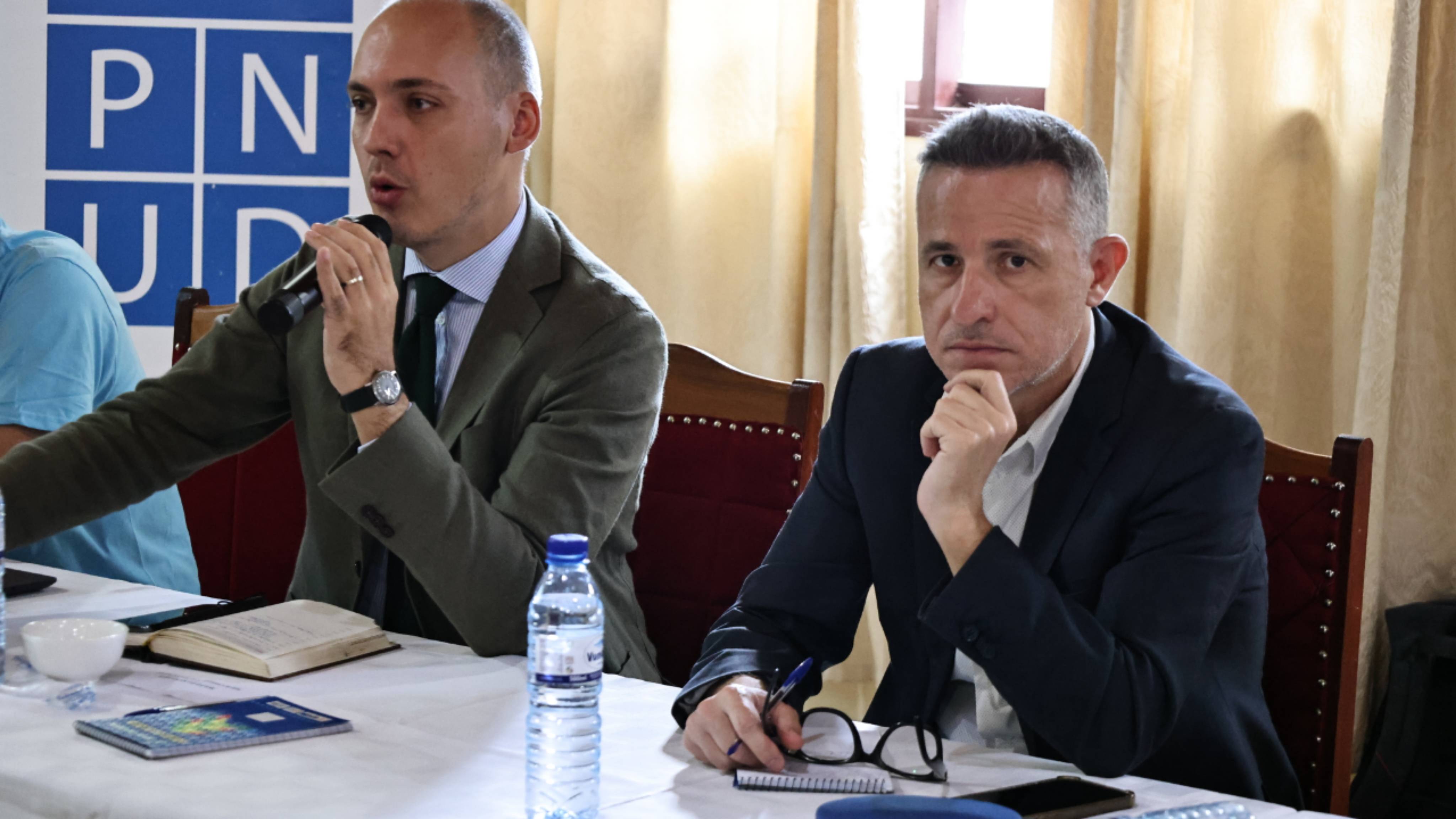
Deputy Ambassador of Italy in Mozambique, and Mr. Cristino Pedraza, Chief Technical Advisor of the Decentralization Programme and focal point for the Italy Flagship Initiative for Africa at UNDP.