Locations
UNDP's response
Supporting refugees from Ukraine and host communities in Moldova
UNDP scales up support in Moldova as early projections suggest thousands could be pushed into poverty by a protracted war.
Since the onset of the war in Ukraine, the people of Moldova and the national and local authorities opened their hearts and their homes to those seeking refuge from the destruction and chaos left behind. UNDP quickly stepped up to support its national and local partners to respond to the refugee's influx – improving living conditions and covering essential needs of refugees, promoting access to decent work, providing legal and psychosocial support, and supporting access to a safe and continuous learning environment.
Almost four years after the start of the war, Moldova continues to host a significant number of refugees from Ukraine relative to its population. The situation has gradually evolved from an emergency response to a protracted displacement context, requiring sustained support to both refugees and host communities as well as continued strengthening of national and local systems to foster social and economic inclusion.
At national level, UNDP works with government institutions to promote policies and national systems that support social and economic inclusion and integration of refugees. At local level, UNDP works with host communities on both banks of the Nistru River to ensure that refugees from Ukraine receive the support they need while also strengthening the capacity of local institutions and services supporting both refugees and host communities.
Key results:
- Over 22,500 refugees from both banks of Nistru River received items for covering basic needs, toys, and gifts for children and benefitted from furniture, household appliances, and IT equipment distributed to refugee shelters.
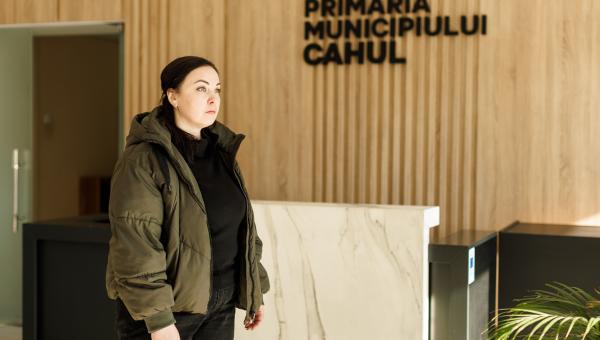
- Over 2,000 people, including refugees from Ukraine, attended five job fairs organized in Chișinău, Bălți, Cahul, Ungheni, and Căușeni.
- 378 refugees from both banks of Nistru River attended professional development, Romanian language, and digital literacy training, which resulted in enhanced livelihoods and employment opportunities, discovering of new talents and means of psychological relief.
- 5 local companies were supported to expand production, 38 new jobs were created, including for refugees.
- Approx. 2,000 refugees from both banks of Nistru received legal assistance.
- Over 2,000 women and girls from Ukraine received support through the Mobile Teams mechanism covering assistance in legal matters and protection to gender-based violence (GBV) victims, psychological support, support in work integration, as well as capacities building.
- 60 local public authorities’ representatives enhanced their knowledge and understanding of the phenomenon of domestic violence, mechanisms for providing assistance and protection to survivors of domestic violence, as well as approach in providing counselling to refugees.
- More than 5,000 refugees from Ukraine were assisted to understand and navigate the complexities of the Temporary Protection mechanism, instituted by Moldovan Government in 2023.
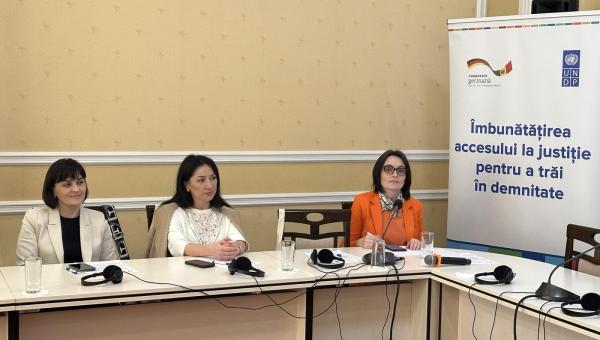
- Through partner NGOs, over 1,000 displaced persons received substantive support and guidance in the context of access to services and legal remedies on their path to solving grievances they face, including in the context of the temporary protection mechanism.
- 150 paralegals and social workers were trained in addressing refugees’ needs.
- 42 paralegals have enhanced knowledge and skills to assist and interact with refugees, asylum seekers, and host communities. 16 paralegals completed the induction training and developed skills for interacting with vulnerable people, including refugees, respecting the principles of equality and non-discrimination and contributing to the identification of needs and ways of prompt assistance.
- Rapid assessment of the legal aid system's capacities to respond to refugees' and host communities' needs, as well as on the needs of refugees and asylum seekers in the field of access to legal and other public services, conducted and used to inform the training programme for justice professionals (judges, prosecutors, police officers, paralegals).
- 136 justice professionals trained on the protection of rights of refugees.
- Over 2,000 refugees from both banks of Nistru received psychosocial support, including through recreational and education activities for children.
- More than 2,000 refugees from both banks of Nistru received medical care and were helped to cover medicine costs.
- Over 10,000 refugees from both banks received information about the services and assistance available to refugees in Moldova.
- 15 communities organized summer camps that brought together 365 refugee children and children from local and diaspora communities.
- 186 young people from all regions of the Republic of Moldova, including from the Găgăuzia region, from the left bank of the Nistru River, as well as refugees from Ukraine gained knowledge about human rights and the justice system in Moldova during a summer camp "#YOUthAct - Youth for Justice".
UNDP Economic, Social and Environmental Resilience Offer for Moldova
UNDP aims to enhance the economic, social and environmental resilience of the country, building its support around four pillars:
- Economic and social resilience
- Socio-economic inclusion and social cohesion
- Energy, food security and environmental resilience
- Governance, rule of law and anti-corruption
Energy Vulnerability Reduction Fund
The consequences of the war in Ukraine and the energy crisis have placed significant pressure on household budgets in Moldova, particularly affecting vulnerable and low-income households. High energy prices and inflation increased the risk of both energy and monetary poverty, especially during the winter heating seasons.
The Energy Vulnerability Reduction Fund (EVRF), developed with UNDP support and implemented by the Government of Moldova, provides targeted assistance to energy-vulnerable households through short-term compensations and longer-term energy efficiency measures. During its first heating season (November 2022-March 2023), the EVRF reached 895,000 households. This number decreased to 792,000 in 2023-2024, 719,000 in 2024-2025, and around 630,000 in 2025-2026, reflecting improved targeting mechanisms and Moldova’s gradual progress in strengthening energy resilience.
Recent analysis shows that EVRF has played an important role in mitigating the social impact of the energy crisis by reducing the risk of both energy and monetary poverty and helping households cope with rising energy costs during winter months. Estimates indicate that energy poverty decreased by more than 10 percentage points between 2022 and 2025, while the mechanism also helped prevent a sharper increase in monetary poverty. This mechanism has also contributed to strengthening social stability and protecting vulnerable households, including refugee families and their host communities.
According to the latest assessment of the welfare impact of energy compensations, the policy measures implemented through the EVRF significantly reduced the risk of energy poverty and helped prevent a sharper increase in monetary poverty during the heating seasons.
Going forward, UNDP will continue supporting analytical work and policy tools that help improve the targeting and effectiveness of energy support programmes and strengthen evidence-based policymaking in the areas of energy vulnerability and social protection.
Interagency inclusion & livelihoods working group
UNDP is working closely with the UN entities and other humanitarian and development stakeholders to meet the specific needs caused by the impact of the war in Ukraine on Moldova and strengthen national system’s response capacity. Our work is aligned with the Regional Refugee Response Plan, which outlines the comprehensive response and activities needed to support countries’ efforts to protect and assist refugees coming from Ukraine. In addition, UNDP, UNICEF and UNHCR and the Ministry of Labour and Social Protection lead the interagency Inclusion and Solutions working group, which coordinates and guides partners working in area of social protection and labour market integration, and economic empowerment, and allows for a coherent response.
By focusing efforts on economic and social resilience, UNDP and its partners will be able to both support the Government of Moldova’s humanitarian needs while at the same time help deliver on the country’s medium to long-term sustainable-development priorities in the spirit of the humanitarian-development-peace Nexus.