Locations
UNWOMEN - WE RISE Together – Advancing Gender-responsive Procurement
Development Challenge
In Lao PDR, gender gaps in economic participation remain significant, with the Sixth National Human Development Report highlighting persistent income disparities between men and women. These differences are especially visible in business opportunities where women-owned businesses (WOBs) face structural barriers to market and networks. Many operate as informal microenterprises with limited financial literacy and access to finance due to collateral requirements, and little exposure to formal business networks. This contributes to the ‘missing middle’ phenomenon, limiting their growth or ability to compete on equal terms.
Procurement presents a transformative yet largely untapped opportunity for women’s economic empowerment. Globally, the procurement market is worth more than ten trillion dollars by engaging public and private organizations through the exchange of goods and services. Yet, WOBs and Gender-Responsive Enterprises (GREs) receive only 1 percent of both public and private procurement opportunities. In Lao PDR, the Law on Procurement Under Governmental Budget (No. 30/NA, 2017) establishes rules to promote fair competition but contains no provisions to support supplier diversity or recognize women-owned businesses.
This exclusion is further reinforced by limited awareness of gender-responsive procurement (GRP) among both public officials and private sector buyers. With no policies promoting supplier diversity, few actors recognize procurement as a tool to advance gender equality. At the same time, persistent barriers for WOBs, including restricted access to technology, finance, networks, continue to hinder their ability to adapt and develop competitive, inclusive business models.
Project Background
The UN Women We RISE Together 2.0 Programme, funded through the Mekong-Australia Partnership Programme and implemented by UNDP in Lao PDR, is advancing women’s economic empowerment by facilitating equal access, participation, leadership, and benefit from expanded market opportunities in the region. This is accomplished through three interlinked outcomes to 1) create normative ecosystem by increasing awareness and institutional commitment to Gender-Responsive Procurement, 2) Aligning the market on the demand side by ensuring national procurement frameworks are anchored by regional best practices, and 3) strengthening the supply side by capacitating WOBs and GREs and creating market linkages allowing them to access procurement opportunities. These outcomes will generate systemic changes by embedding gender considerations into procurement, incentivizing inclusive sourcing by public and private buyers, and equipping WOBs and GREs to develop resilient, inclusive business models.
Expected Outcome
Through a whole-of-ecosystem approach that engages both public and private sector actors and combines demand- and supply-side interventions, the programme is expanding and sustaining market access for women-owned businesses (WOBs) and gender-responsive enterprises (GREs) in Lao PDR. By strengthening enabling systems, enhancing institutional capacity, and directly supporting enterprises, the initiative aims to shift procurement practices, improve competitiveness, and create more inclusive value chains.
The programme will deliver the following key impacts:
- Strengthened regulatory and policy environment for inclusive procurement: GRP principles and provisions are increasingly embedded within national procurement frameworks and related policies, creating a more enabling and predictable environment for WOBs and GREs to access public and private procurement opportunities.
- Enhanced capacity and commitment among public and private stakeholders: Government institutions, buyers, and private sector actors demonstrate increased awareness, technical capacity, and practical ability to design and implement Gender-Responsive Procurement (GRP), reflecting stronger institutional commitment to advancing women’s economic empowerment in Lao PDR.
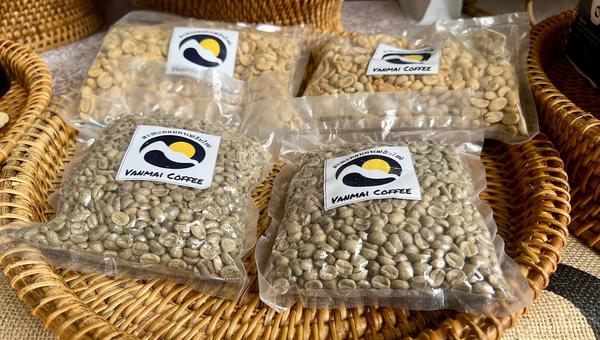
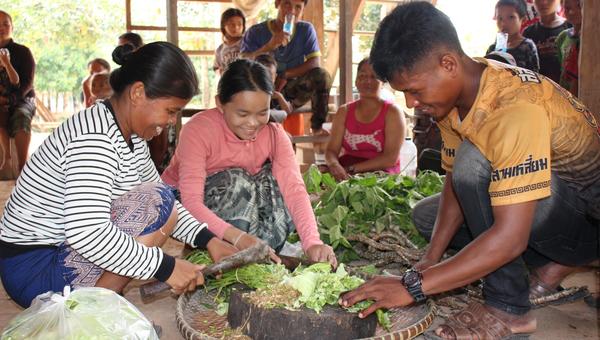
- Improved competitiveness and market integration of WOBs and GREs: Between 20–30 WOBs receive tailored business advisory and capacity-building support to strengthen their operational capacity, financial management, and market readiness, enabling them to compete more effectively for procurement opportunities.
- Increased access to procurement markets and value chain integration: supported WOBs and GREs will secure procurement contracts, becoming meaningfully integrated into local, regional, and selected international value chains, demonstrating strengthened market linkages and improved business sustainability.
Key Achievement to date:
- The most recent draft of the Procurement Law introduces new provisions for preferential consideration of women-owned businesses (WOBs) in cases where evaluation standards and conditions are equal, strengthening the regulatory foundation for more inclusive procurement practices and advancing the institutionalization of Gender-Responsive Procurement (GRP) within national systems. Additionally, provisions have been added.
- Lao PDR’s first-ever “Ring the Bell for Gender Equality” event, held on 10 March 2026, convened public and private sector stakeholders and development partners to elevate the role of the private sector in advancing women’s economic empowerment, while positioning GRP as a strategic priority within the national inclusive growth and procurement reform agenda.
Project Details
- Status: Ongoing
- Start date: 15 November 2025
- End date: 28 November 2029
- Geographic coverage: Huaphan, Luang Prabang, Vientiane Capital
- Focus Area: Women’s Economic Empowerment, MSME Development
- Total project budget: USD 499,867.2
- Implementing Partners: MOIC (DOSMEP), LNCCI, HPCCI, LPBCCI
- Donors: UN Women, DFAT
Contacts:
United Nations Development Programme
Lane Xang Avenue
P.O. Box 345 Vientiane, Lao PDR
Email: info.la@undp.org
Tel: +856 (0) 21 267 777
Fax: +856 (0) 21 267 799