

 Locations
JPO Story - Timo Schmidt
September 4, 2024

United Nations General Assembly, New York
What is your educational background?
I hold a Master’s degree in Migration Studies from the University of Oxford and a Bachelor’s degree in International Studies from Leiden University, with a specialization in Middle Eastern studies.
What made you apply to the JPO programme/what is your motivation to work with your UN agency?
My UN journey started in the summer of 2018, when I interned with UNDP’s Programme of Assistance to the Palestinian People in East Jerusalem. During this time, I was able to support an educational programme for students of underserved backgrounds in the West Bank and Gaza Strip. These first insights within the UN system left me deeply impressed by the dedication of my colleagues and their achievements despite working in challenging contexts.
After a few years of focusing on migration policy at Migration Policy Institute (MPI) Europe in Brussels, where I had the opportunity to work with and learn from brilliant colleagues and migration experts, I sought to combine my interest in migration and displacement with the UN’s mission. The JPO programme presented the perfect opportunity, and I was able to secure a position at the Platform on Disaster Displacement (PDD), hosted by UNOPS. This role offered a blend of policy and programmatic work, coordinating with governments, other UN agencies, civil society, and various partners. With a focus on human mobility in the context of disasters, climate change, and environmental degradation, the position fell squarely within an area I had increasingly focused on during my time at MPI, and where I recognized its growing importance.
Now in my final year as a JPO, I am grateful for the opportunity to join the UN family through this programme, recognizing the many insights and experiences I was able to gain. From missions in East Africa to supporting policy dialogues in Geneva and New York, and from specialized humanitarian training to participating in my organization's SDG Leadership Programme at UNOPS, the work has been both demanding and immensely rewarding.

Timo at the international migration review forum in New York May
What are the main activities/tasks you are working on? What is a day at the office/in the field like?
Within the PDD Secretariat, I act as the focal point for our policy portfolio on migration and displacement, specifically as regards the implementation of the Global Compact for Migration (GCM) and the Global Compact for Refugees (GCR), along with associated policy processes and programmes.
That said, being part of a relatively small team means that my tasks can vary and often cut across relevant portfolios, including those on disaster risk reduction and climate change, particularly when working on cross-cutting issues such as climate finance in human mobility contexts. As such, I rarely (and fortunately) have a typical day at the office and enjoy the dynamic nature of my work.
In geographic terms, besides the policy engagement in Geneva and strategically in New York, I have worked extensively in East Africa, coordinating together with our partners activities on disaster preparedness, data and risk modelling.
In your day-to-day work, what SDG(s) are you helping to implement?
My responsibilities span the entire Agenda 2030, but if I had to highlight specific SDGs particularly relevant to my role, they would be SDG 10 on Reduced Inequalities, especially Target 10.7, which focuses on facilitating orderly, safe, and responsible migration, as well as SDG 13 on Climate Action.
What is the most challenging project that you have worked on/are working on?
One of the most challenging yet rewarding projects I have worked on recently was organizing a series of disaster preparedness workshops and cross-border disaster displacement simulation exercises in East Africa. This project brought together a diverse range of actors, including national and local governments to the military and NGOs. Coordinating logistics—often from afar—and creating simulation scenarios required flexibility, creativity, and stamina. The collaboration with my regional partners, specifically from the Intergovernmental Authority on Development (IGAD), and other UN colleagues was critical to making this work a success. While it always takes time to fully evaluate and understand the lessons learned and outcomes achieved in any given project, this experience underscored for me the critical importance of building partnerships across and beyond the UN family.
What has been the most rewarding experience to date for you at your duty station? (work and/or non-work related)
Within the PDD Secretariat, I act as the focal point for our policy portfolio on migration and displacement, specifically in regards the implementation of the Global Compact for Migration (GCM) and the Global Compact for Refugees (GCR), along with associated policy processes and programmes.
That said, being part of a relatively small team means that my tasks can vary and often cut across relevant portfolios, including those on disaster risk reduction and climate change, particularly when working on cross-cutting issues such as climate finance in human mobility contexts. As such, I rarely (and fortunately) have a typical day at the office and enjoy the dynamic nature of my work.
In geographic terms, besides the policy engagement in Geneva and strategically in New York, I have worked extensively in East Africa, coordinating together with our partners activities on disaster preparedness, data and risk modelling.
My responsibilities span the entire Agenda 2030, but if I had to highlight specific SDGs particularly relevant to my role, they would be SDG 10 on Reduced Inequalities, especially Target 10.7, which focuses on facilitating orderly, safe, and responsible migration, as well as SDG 13 on Climate Action.
One of the most challenging yet rewarding projects I have worked on recently was organizing a series of disaster preparedness workshops and cross-border disaster displacement simulation exercises in East Africa. This project brought together a diverse range of actors, including national and local governments to the military and NGOs. Coordinating logistics—often from afar—and creating simulation scenarios required flexibility, creativity, and stamina. The collaboration with my regional partners, specifically from the Intergovernmental Authority on Development (IGAD), and other UN colleagues was critical to making this work a success. While it always takes time to fully evaluate and understand the lessons learned and outcomes achieved in any given project, this experience underscored for me the critical importance of building partnerships across and beyond the UN family.
During my first year as a JPO at the PDD Secretariat, I was tasked with launching and overseeing a small research project funded by Germany through GIZ to assess the implementation of GCM commitments on human mobility and climate change. Almost three years later, with the ongoing support of a dedicated research team and joint leadership with International Organization for Migration (IOM),this small project grew into a comprehensive data repository with dedicated analyses and indicators embedded in the UN Network on Migration. It also culminated in the CLIMB Database on Human Mobility in the Context of Disasters, Climate Change, and Environmental Degradation, hosted on the Migration Network Hub. It has been extremely rewarding to see and actively shape the catalytic development of a relatively small project into something much larger.
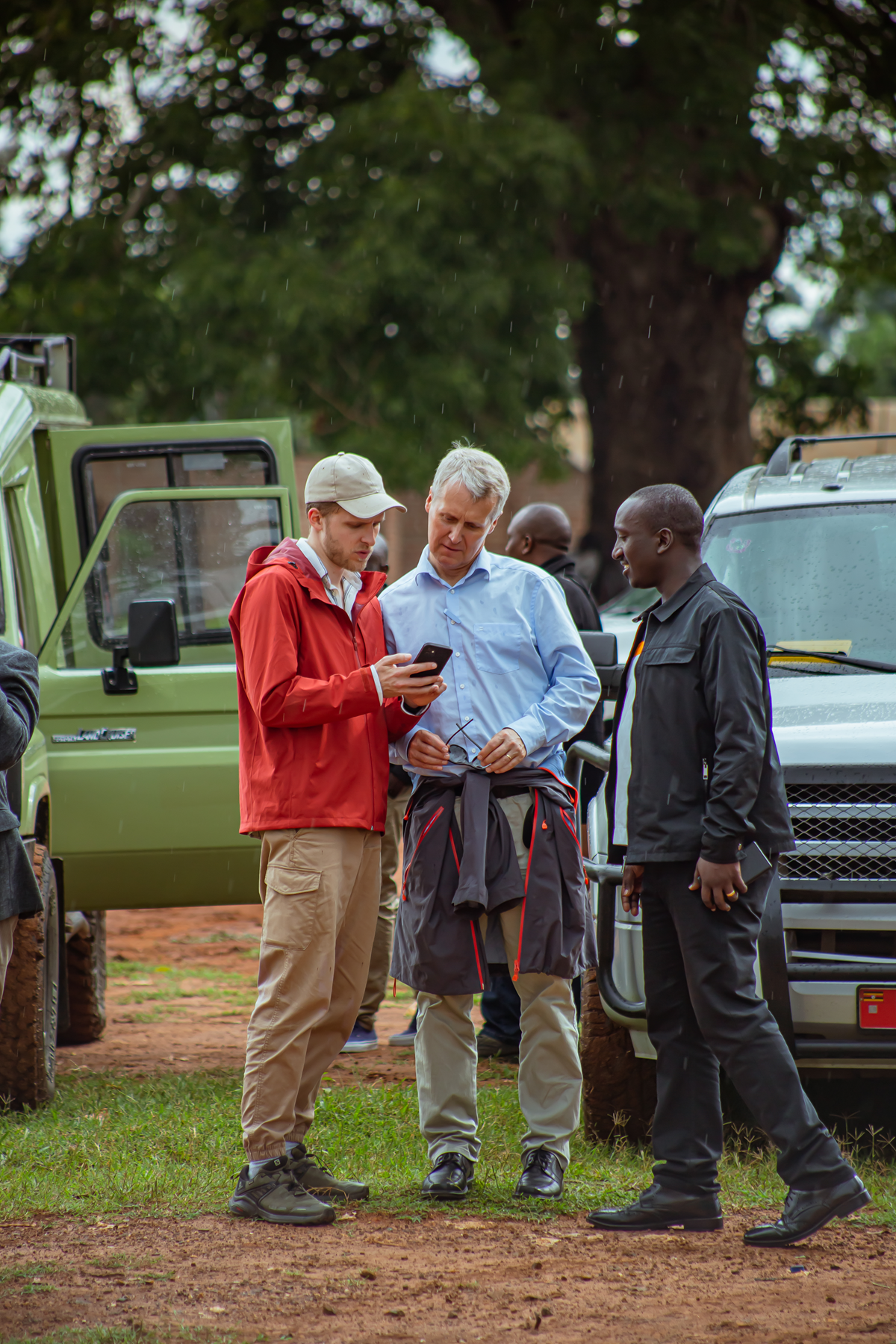
With my supervisor and Head of Secretariat, Atle Solberg, as well as my regional colleague Ndahiriwe Innocent from Uganda, during a cross-border disaster displacement simulation exercise in 2022
What set of skills have you developed most throughout your assignment?
Policy coordination, development, implementation – and typically in that order. Or in other words, the ability to firstly agree on and then operationalize a few words written in a policy framework into concrete action on the ground. It is an ongoing learning process that touches on a wide variety of skillsets: soft skills such as consensus-building, communication, and liaison, as well as hard skills like technical expertise on specific topics and the granular details of project managing (think logframes, Gantt charts and MEAL frameworks). While my assignment has focused on certain stages of this process more than others, I feel confident in saying that I see the entire process much more clearly now. I am better equipped to identify where I can add value and where I need to learn more. A case in point for me is supporting the implementation of GCM commitments to minimize adverse drivers and facilitate pathways for regular migration in climate change and disaster contexts.
What piece of advice would you give to those who are considering applying to the JPO Programme?
Firstly, if you are lucky enough to qualify for the JPO programme by nationality and academic and professional background, do not miss out on this opportunity, or rather privilege! Secondly, I think it is important to consider how you envision your career and personal growth beyond the JPO programme. The programme is designed to develop professional skills within the UN system, often with the aim of retaining JPOs in that system depending on the country that sponsors you. Reflect beforehand on how this opportunity aligns with your professional and personal ambitions. At the same time, be mindful that retention is not a guarantee and that regardless of the outcome, the experience and connections you make will be invaluable.
How do you feel your JPO assignment will influence your career choices/opportunities within the UN?
The JPO programme is a great entry point to the UN system. My assignment has deepened my expertise and knowledge in my areas of interest and opened the door to new and exciting learning opportunities. I now have a more complete profile and have expanded my professional network, which has increased my career options. I also feel more affirmed in my ambitions and my ability to contribute to the humanitarian and development sector.
Do you feel that you are part of a community of purpose?
Yes, on several different levels. This counts for my team of course, but then also more broadly for my organization, the JPOs, the UN family, and all those working in my field. We may not always be working directly together on all these levels, but there is a common purpose of shaping a better tomorrow.
What is the biggest motivator for you when it comes to your work?
The continuous learning, the ability to actively take part in world affairs, and the diversity of perspectives and experiences I interact with on a day-to-day basis are extremely motivating. This is particularly true given that I work at the intersection of two mega trends—climate change and migration—which are shaping the world we live in. I feel proud to use my skills to support causes I believe in, and I see the positive change our collective efforts in this field can translate into.
In what ways do you feel you are part of an organization that fosters people’s development?
There are various opportunities for development as part of the JPO programme and as part of my organization specifically. I participated in the UNOPS SDG Leadership Course, and I was also able to benefit from discussions on career development along with other opportunities during my time so far as a JPO.
Could you tell us about a funny anecdote or a curious tradition that you have experienced in your duty station?
There was somewhat of a tradition during my visits to Uganda: after arriving, my IGAD colleagues and I would drive to Café Javas to eat tilapia and drink smoothies before eventually heading further to Mbale in the Eastern Region. These visits were a wonderful opportunity to learn a few phrases in Luganda, which I still remember today. Coincidentally, I would run into the same staff, which meant I couldn't avoid placing my order in Luganda. It was always great fun, and I’m thankful for these memories—jebaleko!
My JPO experience has been incredibly enriching, offering continuous learning and the opportunity to make tangible contributions to policy development and implementation. The skills and connections I have cultivated will support me throughout my careerTimo Schmidt
Related
content
content


