

 Locations
A Path Forward: Sustaining Momentum for Equality and Peace
August 21, 2025
By Sundus Abbas
Women Empowerment Specialist, Peace Pillar Lead OIC
UNDP Iraq

Over the past four decades, generations of Iraqi women have endured difficult and exhausting periods, marked by continuous transitions through war, crisis, and post-war recovery. Most of their lives have been spent either in the midst of conflict, under the threat of it, or grappling with its devastating consequences. Women's memories carry the pain of losing husbands, brothers, and sons, alongside fleeting moments of joy. The trauma of what occurred in Sinjar still lingers vividly in the collective memory.

As of 2024, nearly 11 percent of Iraqi households are headed by women, many of whom struggle with the daily challenges of life. Despite this, women have made significant progress in political participation. Women now hold 29 percent of parliamentary seats, and approximately 12,000 women serve in the security sector. Iraq is also among the few countries that developed a NAP III for UNSCR 1325. However, the rate of women's involvement in peacebuilding remains limited.
I often ask myself, why is this the case? Are Iraqi women unable or unqualified to play an active role? Or is the system itself designed to exclude them? Could it be a lack of interest, or something deeper? Each of these questions leads to a series of sub-questions I continue to explore.
The pursuit of lasting peace in Iraq is inextricably linked to the empowerment of women and their full participation in peacebuilding, not simply because women oppose war, but because the past 40 years have equipped them with deep resilience and a unique understanding of peace. Since 2014, Iraqi women have demonstrated a renewed belief in their capacity to lead, protect their families, and contribute meaningfully to society.
The UNDP Iraq Country Office has made considerable progress in promoting women’s roles in building sustainable peace and security. Guided by principles of inclusivity and equality, UNDP’s multi-pronged approach emphasizes the critical roles women play as community peace mediators, young peacebuilders, and advocates for justice. From developing inclusive security institutions to advancing the Women, Peace, and Security (WPS) agenda, UNDP continues to reframe the narrative around women’s contributions to peace and stability.
Moving forward requires sustained collaboration with government agencies, international partners, and civil society. These combined efforts will ensure that women’s voices are not only heard but also central to decision-making processes that shape Iraq’s future. UNDP reaffirms its belief that sustainable peace can only be achieved when women are empowered to lead, mediate, and build a resilient and just society.
A Journey of Collaboration and Empowerment

Establishing Women Mediators for Conflict Resolution
Recognizing the power of dialogue and mediation, UNDP Iraq has prioritized the establishment of women mediators across the country. In partnership with UN Women and the National Directorate of Iraqi Women (NDIW), this initiative aims to build a national network of skilled women mediators capable of navigating complex disputes at both community and national levels.
This groundbreaking, nationally led initiative follows a phased approach to ensure thorough capacity-building. Initial online sessions engaged 150 women from diverse regions, ensuring inclusivity. A competitive selection process identified 75 participants for advanced training, culminating in specialized mediation training for 24 outstanding women in collaboration with the Clingendael Institute for Mediation in December 2024 , followed by another session in April 2025.
These women were equipped with both theoretical understanding and practical tools for effective conflict resolution. They are now prepared to take active roles within their communities, championing social cohesion and strengthening the social fabric. The initiative has been officially launched during the International Women’s Day 2025, marking a significant milestone in Iraq’s journey toward inclusive peace.
With continued support from UNDP and UN Women, these mediators will implement action plans to tackle root causes of conflict and promote sustainable peace. Their contributions will be essential in promoting dialogue, fostering reconciliation, and addressing disputes from a women-centered perspective.
Establishing Women Peace Teams

Sundus Abbas, Women Empowerment Specialist, Peace Pillar Lead OIC, UNDP Iraq
In parallel, UNDP Iraq is spearheading the formation of Women Peace Teams, a platform to amplify women’s voices in local and national peace processes. These teams aim to institutionalize women’s roles in dialogue, conflict prevention, and post-conflict recovery.
By integrating inclusive strategies into peacebuilding frameworks, the Women Peace Teams ensure that proposed solutions are effective, sustainable, and representative of all segments of society.
So, why do women’s voices matter in peacebuilding?
Because women offer unique perspectives, often grounded in reconciliation, community cohesion, and long-term healing. This initiative recognizes and harnesses that potential, making Iraq’s peacebuilding efforts more holistic and sustainable.
Supporting Women and the WPS Agenda in Security Sector Institutions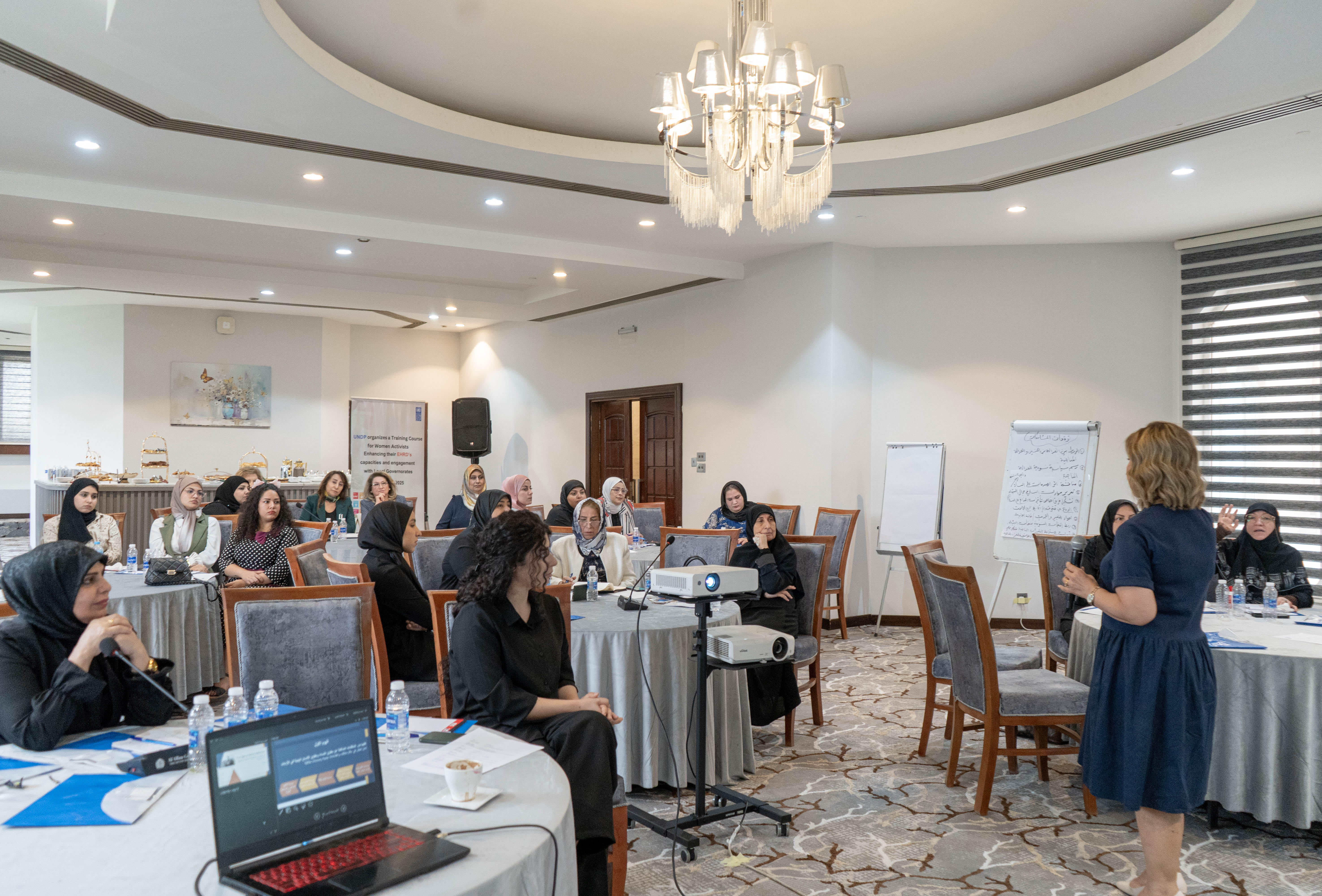
UNDP Iraq’s commitment to equality extends to the security sector, a vital arena for advancing the WPS agenda. Through capacity-building, policy advocacy, and the development of inclusive protocols, UNDP supports increased representation and leadership of women in security institutions.
By fostering inclusive and accountable security structures, UNDP helps ensure that these institutions both protect and empower women and girls.
Reviewing Iraq’s National Action Plan (NAP) II
At the core of UNDP Iraq’s WPS efforts is the review and revision of Iraq’s National Action Plan (NAP) II, a roadmap for implementing UNSCR 1325. In collaboration with government and civil society, this process integrates lessons learned, addresses emerging challenges, and aligns with global best practices.
The revised NAP will reaffirm Iraq’s commitment to advancing women’s roles in peace and security, reinforcing national ownership and international accountability.
Supporting Women-Led Climate Justice Initiatives
UNDP Iraq acknowledges the intersection of equality, climate justice, and peacebuilding. Women-led organizations are essential in addressing climate-related vulnerabilities that often contribute to conflict.
By offering technical support, UNDP empowers these organizations to lead initiatives that reduce climate risks, build resilience, and promote equitable resource management. This integrated approach connects climate justice with sustainable peace, underlining the essential role of women in achieving the Sustainable Development Goals.
In conclusion, UNDP Iraq’s multi-faceted, ongoing efforts reflect not only a commitment to women’s empowerment, but it is also about creating a sustainable, inclusive framework where women’s voices are integral to Iraq’s journey toward stability, resilience, and prosperity.
