

 Locations
From Dialogue to Action: Strengthening Environmental Integrity in Iraq
July 2, 2026

Baghdad/Erbil, Iraq – June 2026: The recent decision by Iraq's Supreme Judicial Council to activate Article 32 of the Iraqi Law on Environmental Protection and Improvement marks an important step towards strengthening environmental accountability and protecting Iraq's natural resources. By reinforcing the "polluter pays" principle, the decision strengthens legal accountability for environmental harm, enhances deterrence, and provides affected communities, particularly those who are disproportionately impacted by pollution and environmental degradation with clearer avenues for justice and redress.
This milestone comes at a key moment, closely following two national consultations convened by UNDP Iraq to advance Environmental Integrity Systems that promote transparent, accountable and effective environmental governance. The consultations formed part of UNDP's Anti-Corruption and Arbitration Initiatives for Environmental Justice project (ACAI II), funded by the European Union, which supports Iraqi institutions in strengthening integrity, accountability and environmental justice.


On 23 June, UNDP Iraq convened a consultation in Erbil on the proposed Local Environmental Integrity System (LEIS) for the Kurdistan Region of Iraq. The event brought together representatives from government institutions, oversight bodies, environmental authorities, civil society organisations and development partners to explore how stronger environmental integrity can advance environmental justice, attract sustainable investment and contribute to long-term economic development. Participants reviewed proposed institutional arrangements and implementation options, providing valuable recommendations that will help shape the next phase of the initiative.
On 24 June, UNDP Iraq, in partnership with the Anti-Corruption Academy of the Federal Commission of Integrity, convened a second consultation in Baghdad on the proposed National Environmental Integrity System (NEIS) for Iraq.
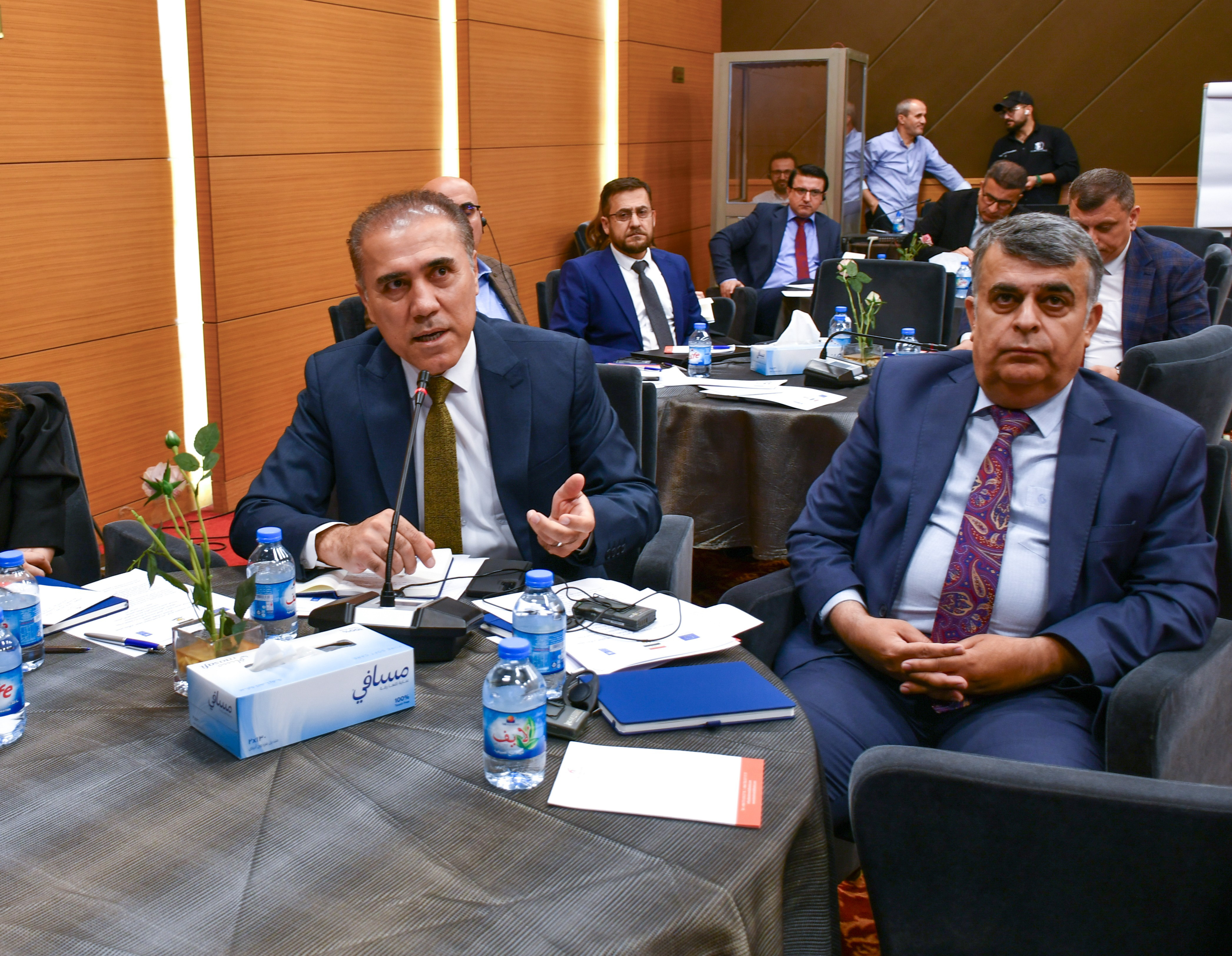

The consultation gathered representatives from key government institutions, oversight bodies, environmental authorities and civil society organisations to discuss how environmental integrity can strengthen governance, reduce corruption risks, advance environmental justice and support sustainable economic growth. It also provided a platform to examine the strategic role of the NEIS within Iraq's broader governance and sustainable development agenda, while reviewing proposed institutional arrangements and an implementation roadmap.
The Supreme Judicial Council's recent action reinforces many of the principles underpinning ACAI II. Together, these efforts contribute to building a national environmental integrity system that strengthens transparency, accountability and the rule of law in environmental governance. Integrating integrity measures with climate and environmental action is essential for safeguarding Iraq's natural resources while building public trust and supporting sustainable development.