

 Locations
UNDP Pakistan holds a dialogue for developing a national strategic framework for transgender protection and political inclusion
July 10, 2023

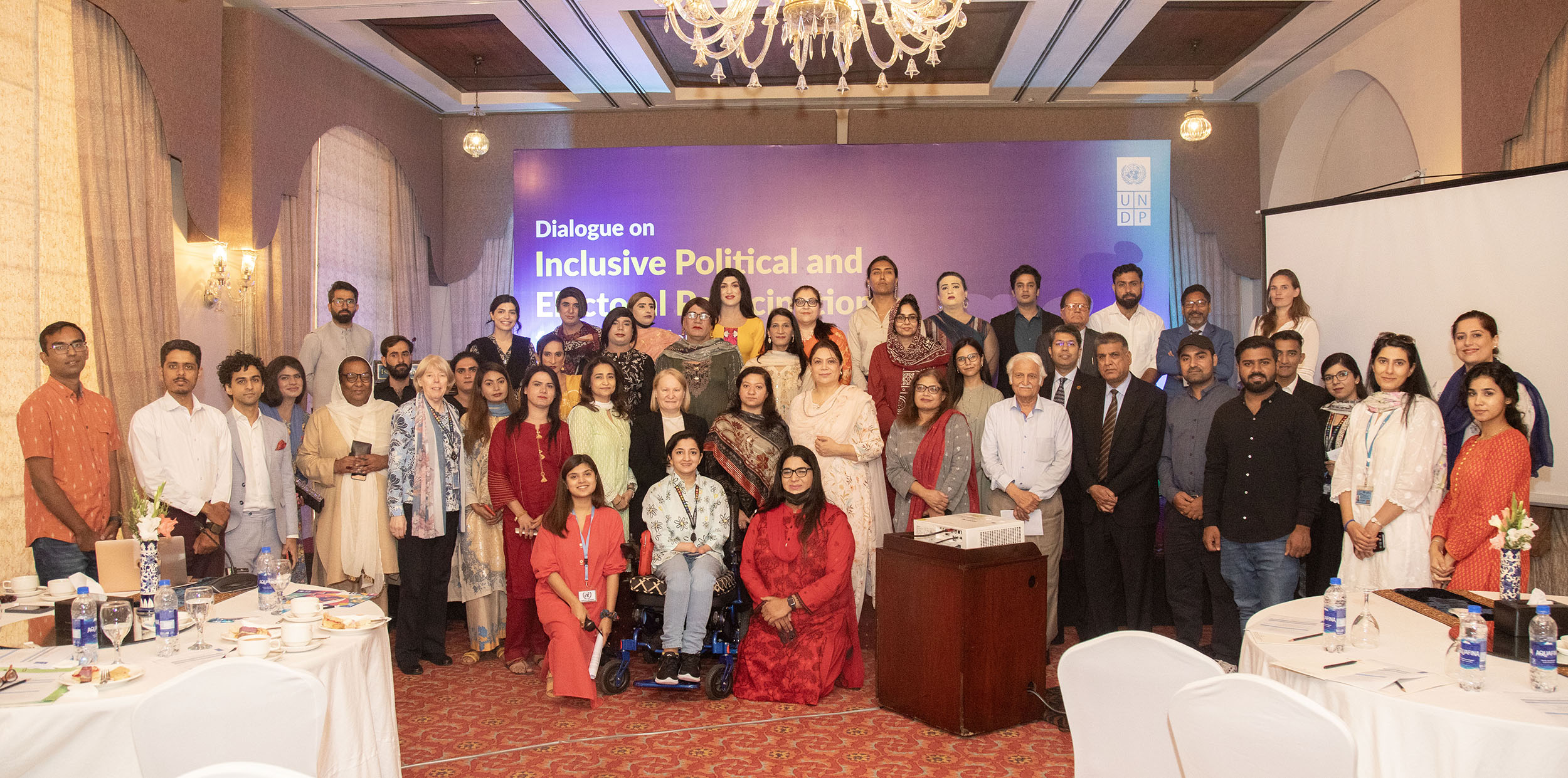
Islamabad, 10 July 2023—UNDP Pakistan held a dialogue for developing a National Strategic Framework for political inclusion and participation of transgender persons. The event was the last in a series of provincial consultations on transgender rights and included a panel discussion on the issue of inclusive political space for the transgender community.
The panel members for the dialogue included Mr Farhatullah Babar, Former Senator of Pakistan People’s Party (PPP); Dr Shahida Rehmani, Ms Nilofar Bakhtiar, Chairperson National Commission on the Status of Women; Mr Sharafat Ali Chaudhry, Advocate High Court; Ms Reema Aftab, DG Inclusive Registration Department, NADRA and Ms. Nayab Ali, Transgender Inclusion Expert at UNDP Pakistan.
UNDP Pakistan’s Officer-in-Charge, Ms. Aliona Niculita, opened the event and emphasized the need to build national consensus on a way forward to ensure the mainstreaming of the transgender community and reiterated UNDP’s commitment to leave no one behind.
During the panel discussion, Mr. Farhatullah Babar, General Secretary of the Pakistan Peoples Party (PPP), recognising the importance of ‘strength in numbers’ and highlighted the need to increase CNIC registration for the transgender community. Mr Babar also shed light on the vital role of civil society in promoting and protecting the rights of the transgender community.
Ms. Nilofar Bakhtiar, Chairperson National Commission on the Status of Women, highlighted the need for reforming the electoral system to enhance its fairness, transparency, and effectiveness. She shared a comprehensive two-pronged approach; namely, voters’ protection and community engagement, that aims to address the existing challenges through a democratic process.
Furthermore, Mr Sharafat Chaudhry, Advocate High Court, spoke of the rights of transgender individuals to inheritance and emphasized the importance of ensuring a more robust framework that instils guidelines for protecting the transgender community.
In parallel, Ms Reema Aftab, DG Inclusive Registration Department, NADRA, provided an overview of the policies at NADRA for transgender individuals and how their recent interventions like the Transgender Helpline, Sensitization Trainings for Staff etc. and correspondence with the relevant government agencies have paved the way towards building an inclusive landscape.
Ms Nayab Ali, Transgender Inclusion Expert, UNDP, reflected on the key challenges and needs of the community related to inclusion in the electoral processes. Through narrating her success story, she stressed on the notion of behavioural change, its impact and how the community needs to educate itself on addressing the needs of this segment in a much more sustainable way.
Further, insight was gained into the barriers experienced by the transgender community in accessing the political space both as first-time voters and candidates. The panellists emphasized the pivotal role of the community in strengthening democratic norms and fostering peace in society.
The dialogue is part of UNDP Pakistan’s Strengthening Electoral and Legislative Processes (SELP) programme. The programme seeks to develop more inclusive, and accountable democratic institutions, systems and processes. It improves the supply side of governance by enhancing the capacity of the Election Commission of Pakistan (ECP), the Senate and the Provincial Assemblies of Khyber Pakhtunkhwa (KP) and Balochistan. Moreover, it supports the demand side by developing the capacity of civil society in advocacy and civic engagement. Increasing the representation of women, youth, and minorities, the project informs all aspects of programming.
For additional information, please contact Tabindah Anwar at tabindah.anwar@undp.org or +92 (51) 835 5650
* * *
UNDP is the leading United Nations organization fighting to end the injustice of poverty, inequality, and climate change. Working with our broad network of experts and partners in 170 countries, we help nations to build integrated, lasting solutions for people and the planet.
Learn more at undp.org or follow at @UNDP


