

 Locations
Malawi Advances Gender Responsive Governance Through Gender Equality Seal Training
May 22, 2026
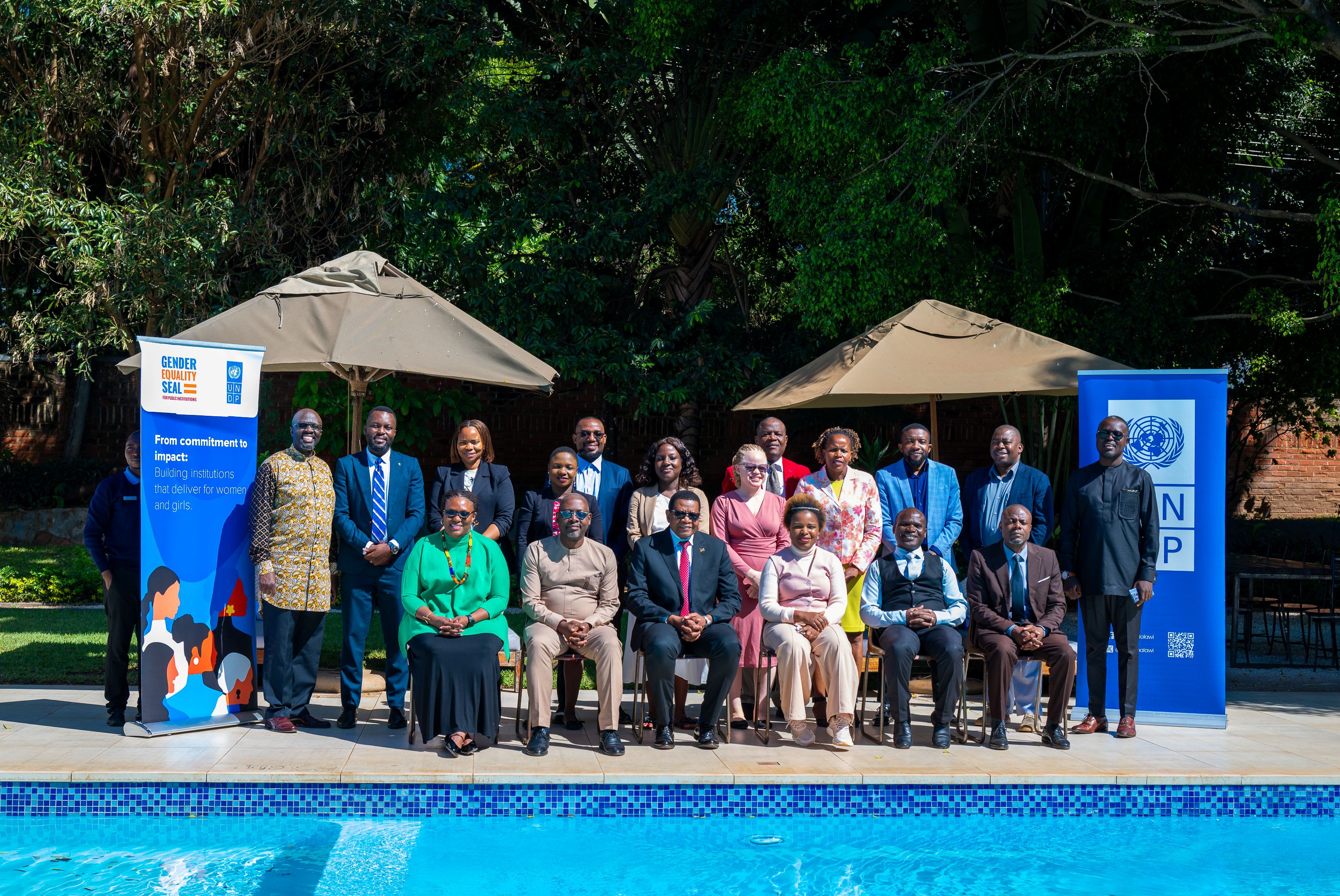
Participants at the Gender Equality Seal Training for the Ministry of Gender, Community Development and Social Welfare.
The Government of Malawi, with support from the United Nations Development Programme (UNDP), UN Women, and partners, strengthened efforts to advance gender responsive governance through a two-day Gender Equality Seal for Public Institutions training held in Lilongwe for the Ministry of Gender, Children, Disability and Social Welfare.
The training brought together directors, deputy directors, and senior managers who form part of the Ministry’s Gender Equality Committee, a leadership structure tasked with driving implementation of the Gender Equality Seal within the Ministry.
The Gender Equality Seal for Public Institutions is a globally recognised UNDP initiative that supports governments and public institutions to strengthen gender equality through institutional reforms, accountability systems, policy integration, and inclusive public service delivery.
The Seal helps institutions assess their internal systems, policies, budgets, operations, and services from a gender equality perspective while building institutional capacity to deliver measurable results for women, girls, men, boys, and vulnerable groups.
Opening the training, UN Women Deputy Country Representative Ms. Fatma Abdelkarim Mohamed emphasised that advancing gender equality requires more than policy commitments alone.
“Gender equality requires strong political will, transformative institutional change, accountability at all levels, increased domestic resources, an effective gender architecture, coordinated action across government, civil society, the UN, and a vibrant feminist movement to hold governments to account,” she said.

Dr. Rowland Cole, UNDP Chief Technical Advisor for Rule of Law and Human Rights, delivering remarks at the Gender Equality Seal Workshop.
Speaking on behalf of the UNDP Resident Representative, Chief Technical Advisor for Rule of Law and Human Rights, Dr. Rowland Cole, described the Seal as a transformational process aimed at strengthening institutions and ensuring accountability.
“The Gender Equality Seal is more than a certification. It is a commitment to transformation, ensuring that policies translate into real change, institutions are accountable, and development is inclusive and equitable,” he said.
Principal Secretary for the Ministry of Gender, Children, Disability and Social Welfare, Dr. Oliver Kumbambe, stressed the importance of the Ministry leading by example before supporting other government institutions in implementing gender equality reforms.
“The Gender Equality Seal is not simply a programme; it is a transformational journey. Before we support other Ministries, Departments and Agencies, we must ensure that we are setting the standard,” he said.
Speaking to members of the media on the sidelines of the workshop, UNDP Gender and Development Specialist Ms. Juliet Sibale emphasised the importance of strengthening institutional systems to ensure gender equality commitments translate into measurable impact.
“This workshop is important because sustainable gender equality can only be achieved when institutions themselves become more accountable, inclusive, and responsive. The Gender Equality Seal provides a practical framework for strengthening systems, leadership, planning, and service delivery so that gender equality is institutionalised across government operations and policies,” she said.
The workshop came at a critical time as Malawi continues implementing the National Gender Policy, the Malawi 2063 development agenda, and commitments under the Sustainable Development Goals and the Beijing Platform for Action.
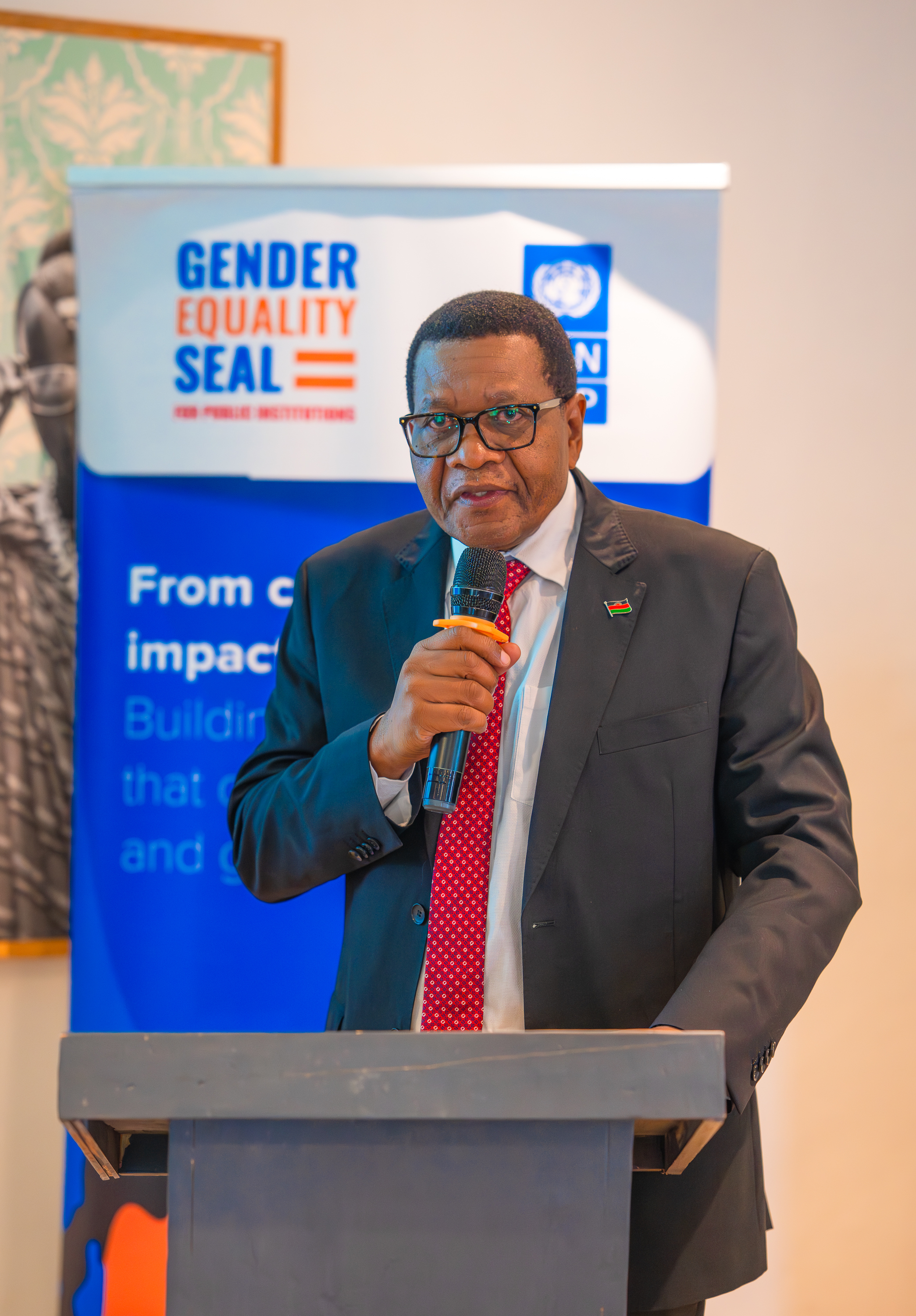
Dr. Oliver Kumbambe, Principal Secretary for the Ministry of Gender, Children, Disability and Social Welfare, addressing the Gender Equality Seal Workshop.
The training equipped participants with knowledge and practical tools to implement the Seal roadmap and conduct the Ministry’s institutional self-assessment baseline.
Participants explored several thematic areas, including gender responsive planning and budgeting, institutional gender architecture, enabling working environments, accountability systems, partnerships, participation, and measuring results and impact.
Facilitators from the UNDP Regional Service Centre for Africa, together with the UNDP Malawi Gender Team and technical experts, guided the sessions through presentations, group work, discussions, and experience sharing.
The Gender Equality Seal initiative also builds on lessons and progress made through the Spotlight Initiative, which significantly strengthened grassroots engagement and accountability systems in Malawi. Through collaboration with traditional leaders and local structures, the initiative contributed to the annulment of more than 4,000 child marriages and strengthened efforts to prevent harmful practices affecting women and girls.
The Ministry of Gender plays a central role in coordinating Malawi’s gender agenda and supporting Ministries, Departments, and Agencies to mainstream gender across policies and programmes. Through the Seal, the Ministry is expected to strengthen internal systems and create a model for gender responsive governance across the public sector.
The training resulted in a strengthened and capacitated Gender Equality Committee, a roadmap for implementation of the Gender Equality Seal, and progress toward the Ministry’s baseline assessment process.
By investing in institutional transformation and accountability, Malawi continues reinforcing efforts to build inclusive public institutions that promote equality, dignity, participation, and empowerment for all.