Locations
Bridging the Justice Gap
Strengthening Legal Access for Marginalized Communities in Malawi
Project Overview
The Bridging the Justice Gap: Strengthening Legal Access for Marginalized Communities in Malawi project aims to ensure that marginalized populations, particularly women, youth, and persons with disabilities, can access equitable, timely, and rights-based justice. The project takes a people-centred approach, placing justice seekers rather than institutions at the centre of the justice pathway: it brings judicial services closer to underserved communities through mobile and camp courts, strengthens legal aid and paralegal services at the community level, and builds referral mechanisms that connect traditional leaders, community-based organizations, and formal justice institutions.
Implemented by UNDP Malawi with funding from the Government of the Netherlands through the Justice Action Coalition (JAC) Catalytic Fund, the project contributes to UNDP's Global Programme on Strengthening the Rule of Law, Human Rights, Justice and Security (GP4). It operates in Salima, Mzimba, Machinga, and Nsanje. Core activities are complete across all four districts.
Project outcome and outputs
Outcome: Marginalized communities in Malawi, particularly women, youth and persons with disabilities, experience more equitable, timely, and rights-based resolution of their justice needs through accessible legal services, mobile courts, and community-based support.
- Output 1: Mobile justice services expanded to underserved areas
- Output 2: Legal aid and paralegal services strengthened and localized
- Output 3: Community engagement and CSO capacity strengthened for inclusive justice
- Output 4: Business and human rights engagement strengthened to support access to remedy for vulnerable communities
Total Budget
$250,000
Duration
2025 to 30 June 2026
Target Districts
Salima, Mzimba, Machinga and Nsanje
Key partners
- Malawi Judiciary
- Legal Aid Bureau
- Malawi Law Commission
- Traditional Authorities
- Civil society and community-based organizations (CSOs/CBOs)
- Centre for Human Rights Education, Advice and Assistance (CHREAA)
Key achievements
Mobile courts and legal aid:
- 217 cases heard, exceeding the project's 200-case target. 40 cases determined and 57 detainees released through bail grants, acquittals, and withdrawals.
- 61% of mobile court beneficiaries were women.
- 81% of participants now feel confident seeking justice through formal courts, above the 75% target.
- 65% average increase in community legal knowledge, above the 50% target, with the sharpest gains on disability rights (+322%) and customary land rights (+280%).
- 6,594 people reached with legal awareness education by the Legal Aid Bureau across 8 community sessions, including 1,296 women and 4,230 children.
- 58 paralegals trained (30 women), delivering legal advice to 93 individuals and 6 court representations.
Community-based justice referrals:
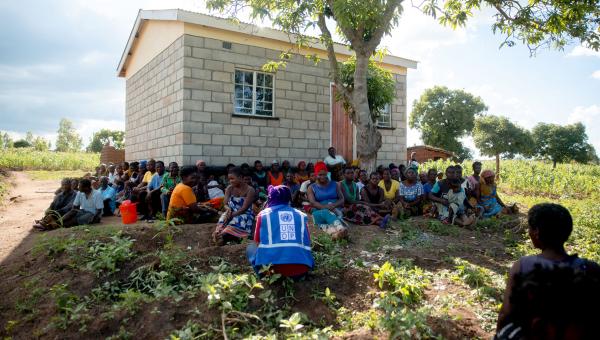
- 33 CBOs and 18 traditional chiefs trained jointly (200 participants, 65.5% women) and positioned to reach an estimated 2,100 people across four traditional authorities.
- 1,500 people reached (655 men, 845 women) through four community awareness campaigns.
- 66 community justice cases received through new referral pathways.
- Documented behaviour change: traditional chiefs are now formally referring GBV and Child Protection cases to the formal justice system.
Business and human rights:
National Action Plan on Business and Human Rights has been formally adopted by the Government of Malawi.
Environmental Justice Assessment is underway, to address community grievances and determine formal remedy pathways.