

 Locations
UNDP Malawi and partners showcase transformative human rights progress through storytelling, data, and community voices
Voices of Change: A Journey into Human Rights in Malawi
July 15, 2025

Partners gathered at UNDP Malawi for a powerful advocacy event, showcasing milestones and lived experiences from the Strengthening Human Rights project.
In a powerful show of solidarity, storytelling, and innovation, partners gathered at the UNDP Malawi Country Office for a one-of-a-kind advocacy and media event, highlighting the milestones and lived realities of the Strengthening Human Rights for Vulnerable Populations in Malawi project.
The event, titled “Voices of Change – A Journey into Human Rights in Malawi”, brought together project beneficiaries, community leaders, government officials, civil society actors, media, and diplomats—including ambassadors from Iceland, Norway and Ireland—united by a common cause: the protection and promotion of human rights in Malawi.
This project, co-funded by the Governments of Iceland and Norway and implemented by UNDP in partnership with the Malawi Human Rights Commission (MHRC), the National Statistics Office (NSO), and civil society organisations, is enhancing how Malawi protects the rights of its most vulnerable populations.

UNDP Resident Representative, Ms. Fenella Frost.
“This event allows us to engage on our shared values and to advocate for continued efforts to address human rights issues in Malawi, particularly sexual and gender-based violence, harmful cultural practices, child marriage, and discrimination against people with disabilities and those living with HIV/AIDS,” said Ms. Fenella Frost, UNDP Resident Representative.
Bringing Human Rights Stories to the Capital

Head of Mission at the Embassy of Iceland, Dr. David Bjarnason.
What began as a plan for a donor field visit evolved into an innovative exhibition that “brought the field to Lilongwe” through videos, photos, and testimonials. The event provided a glimpse into the work being carried out in remote communities across Mangochi, Nkhotakota, Salima, Mzimba, and Dowa, communities that are often overlooked.
“Human rights are not elusive ideals—they are the everyday fundamentals of a full and dignified life,” said David Bjarnason, Head of Mission at the Embassy of Iceland. “This project bridges the macro and the micro, supporting reforms while empowering grassroots change where people live.”
A Call to Rethink and Recalibrate

Executive Secretary of the Malawi Human Rights Commission, Ms. Habiba Osman.
Delivering a compelling reflection on the current human rights landscape, Ms. Habiba Osman, Executive Secretary of the Malawi Human Rights Commission, emphasised the importance of using the upcoming electoral cycle as an opportunity to recalibrate Malawi’s human rights trajectory.
“The elections must give us the opportunity to reshape, reimagine, rethink the space of human rights,” she said. “If we do not take advantage of what is happening, that space will continue shrinking. Let’s pull up the gains and work together to hold those who want to lead accountable”.
She further urged all stakeholders to resist the normalisation of impunity and suppression of dissent:
“From 2019, we’ve seen unprecedented levels of violence and impunity. Shrinking civic space, donor fatigue, and disinformation are weakening the very institutions we need to uphold human dignity. The real test of our progress is whether we streamline efforts and embrace innovation to build a more just world”.
Empowering Institutions and Communities Alike
With support from Iceland and Norway, the project takes a holistic approach, strengthening institutional frameworks and simultaneously empowering individuals to claim their rights. Through innovations such as the expansion of the National Sexual and Gender-Based Violence Observatory Hub, Malawi is becoming a regional model for digital case tracking and survivor-centred services.
The Observatory Hub—now covering 11 districts—has been internationally recognised and is under consideration for replication at the continental level through the African Union and other regional bodies.
“Over 398 people have accessed mobile courts and legal services through the project. More than 50 child marriages were intercepted. These are not just numbers—they are lives transformed,” said Frost.
A Shared Responsibility
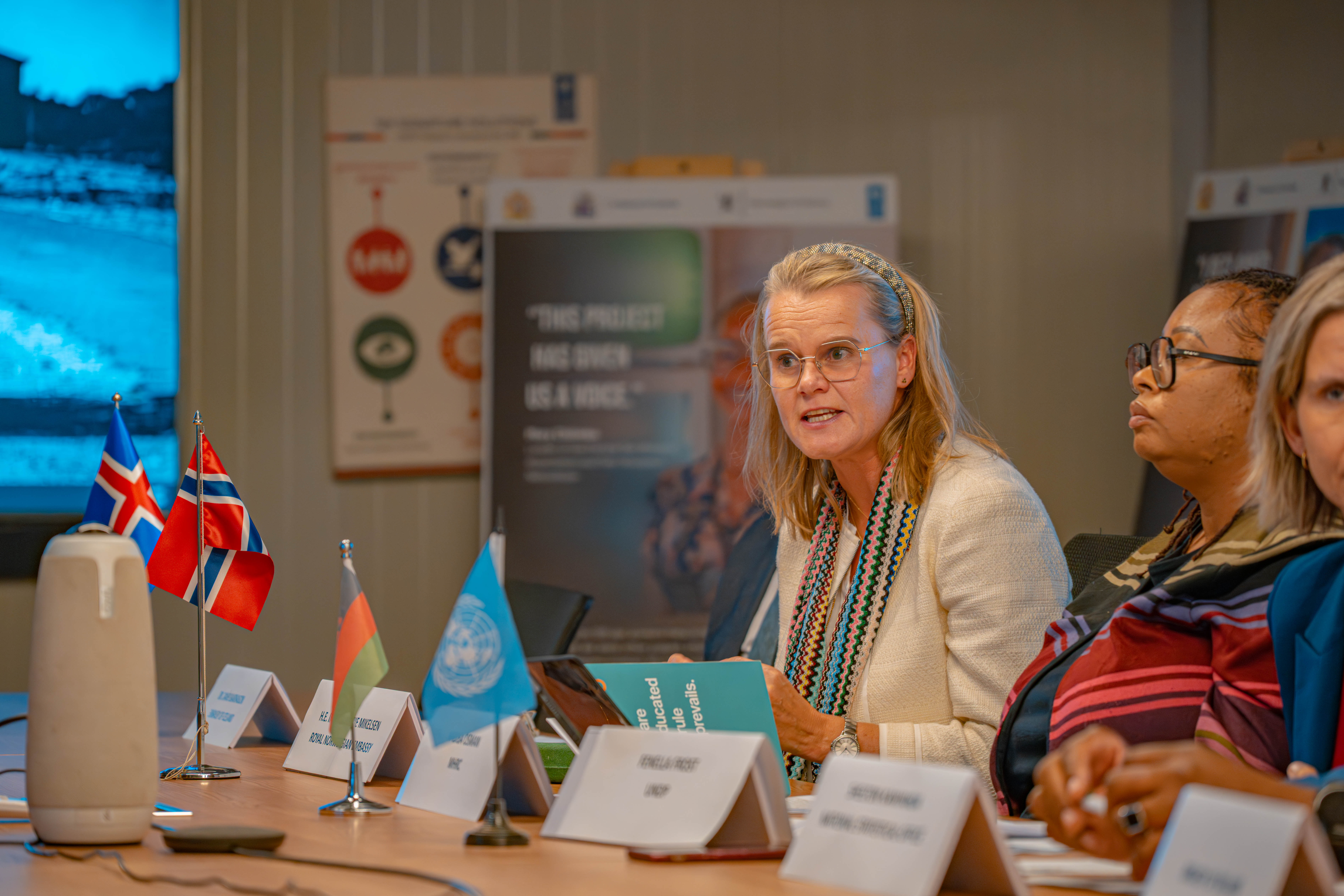
Norwegian Ambassador to Malawi, Ms. Ingrid Mikelsen.
Speakers emphasised the critical role of civil society and the media in defending rights. Ambassador Ingrid Mikelsen of Norway, who was honoured during the event for her commitment to human rights in Malawi, stressed that partnerships must continue to dismantle the harmful structures that exclude vulnerable populations.
“This is not just a policy objective—it is a moral obligation. Every Malawian—regardless of gender, age, identity or circumstance—is entitled to rights, respect, and opportunity,” Ambassador Mikelsen said.
The project also champions access to sexual and reproductive health and rights (SRHR), with CSOs such as the Centre for Youth Empowerment and Civic Education supporting girls and young women through referral systems and community-based services.
Looking Ahead to Malawi’s UPR Review

2025 is a defining year as Malawi prepares for its Universal Periodic Review (UPR) at the United Nations Human Rights Council. The project has supported the development of the Government’s national report and shadow reports by MHRC and civil society groups, strengthening Malawi’s readiness and demonstrating collective ownership of its human rights progress.
“The realisation of human rights is critical for sustainable development, peace and prosperity. As we approach the elections, coordination among human rights and oversight institutions will be key to safeguarding democratic processes,” Frost emphasised in her closing remarks.
Conclusion: A Shared Mission for Dignity and Justice
The event concluded with a renewed call to deepen partnerships, amplify grassroots voices, and scale innovations like the Observatory Hub to further advance justice, inclusion, and dignity for all Malawians.
“Let us return to our roles with a shared sense of urgency and resolve, knowing that the progress we seek is possible if we walk this path together,” said Ambassador Mikelsen.
Project at a Glance:
- 11 districts covered by the Observatory Hub
- 51 child marriages intercepted
- 194 people accessed legal services via paralegals
- 36 GBV cases successfully prosecuted
- 398 individuals accessed justice via mobile courts
- CSOs supported to deliver SRHR, legal aid, mental health and economic empowerment services