

 Locations
Bringing Transparency Closer to the Territory: Digital Reporting and Mobile Units in Honduras’ Electoral Process
April 13, 2026

The Challenge: Strengthening Political Finance Oversight in a Complex Electoral Context
During the electoral process in Honduras, one of the key challenges identified was the limited institutional capacity to receive, systematize, and follow up in a timely manner on reports submitted by obligated subjects regarding political financing and campaign propaganda oversight. The Financing, Transparency and Oversight Unit (Unidad de Financiamiento, Transparencia y Fiscalización, hereafter UFTF) faced difficulties in processing information in an agile, standardized, and verifiable way, affecting both transparency and the ability to respond to potential non-compliance.
This challenge was even more pronounced in territories with limited awareness and limited permanent institutional presence, where obligated subjects faced greater barriers in fulfilling their reporting obligations. In this context, it became essential not only to develop a digital reporting platform, but also to deploy mobile technical support units to bring the tool closer to local actors and facilitate its direct use in the field.
In a Honduran context marked by public distrust in electoral processes and risks associated with the misuse of campaign resources, establishing an accessible digital mechanism—combined with territorial strategies such as mobile units—was critical to strengthening accountability, improving data traceability, and contributing to a more transparent and credible electoral process.
From Concept to Deployment: Designing a Practical Digital Solution
The initiative was conceived through a joint analysis process between the United Nations Development Programme (UNDP) EUROELECT-H project, financed by the European Unión (EU), the UFTF, and the technical team of UNDP’s Digital, AI and Innovation Hub , with the objective of developing an accessible, secure, and functional reporting platform for obligated subjects. The platform was built by UNDP’s Digital Studio — an in-house team within UNDP’s Chief Digital, AI and Innovation Hub that takes ideas from concept to fully functioning digital products, using a human-centred design approach to ensure the solution genuinely works for the people using it.
The design was grounded in the operational needs of the UFTF and the existing regulatory framework for electoral oversight, allowing the tool to align with institutional procedures. Throughout development, technical working sessions, pilot tests, and iterative adjustments were conducted to ensure usability and relevance.
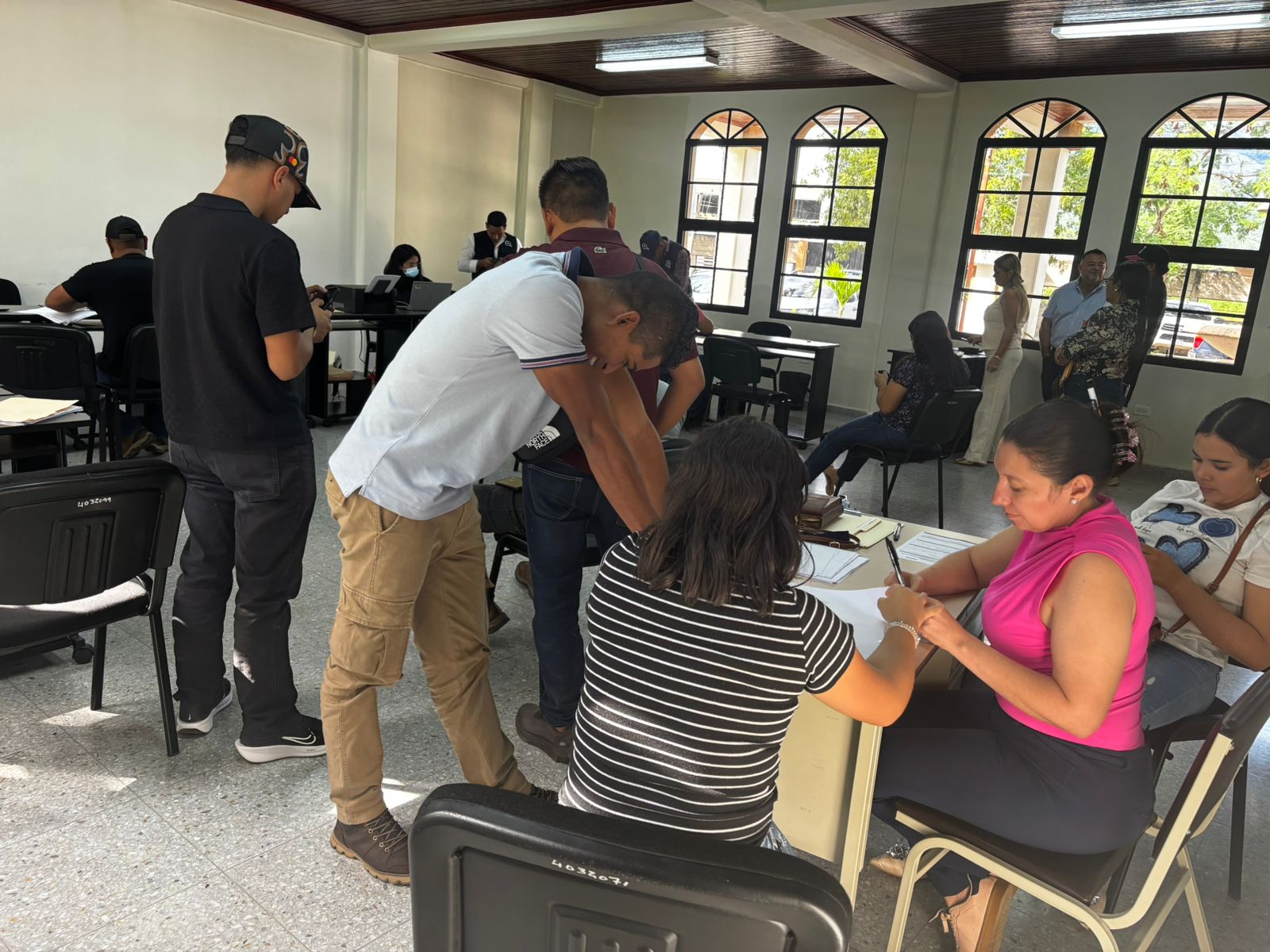
Complementing the digital solution, a mobile support strategy was deployed across multiple regions of the country. Teams composed of UFTF staff, with support from UNDP personnel, worked directly with obligated entities to collect physical documents and facilitate the platform’s first hands-on use by users in December 2025. These mobile units thus functioned as on-site technical assistance spaces, enabling obligated subjects to learn how to use the platform and submit their reports directly from their territories.
Implementation included training sessions for UFTF staff on platform management and mobile unit deployment, as well as ongoing technical assistance from UNDP’s Chief Digital, AI and Innovation Hub Office to resolve issues, optimize processes, and strengthen institutional digital information management capacities.
How It Worked in Practice: Digital Reporting with On-the-Ground Support
In operational terms, the platform enabled obligated subjects to submit their reports digitally and in a standardized format, reducing reliance on physical documents and minimizing data entry errors. The UFTF was able to receive, classify, and review information in a more organized and real-time manner, largely removing the institution’s need for scanning and uploading documents after reception.
Mobile units played a critical operational role by serving as itinerant support hubs where obligated subjects could:
- Access the platform with direct technical assistance,
- Upload information directly from their regions and municipalities, and
- Receive guidance on reporting requirements at the moment of submission.
Concrete outputs generated through this initiative include:
- Systematic reception of financial and campaign propaganda reports.
- Structured databases with traceable and verifiable information.
- Historical records facilitating future audits and analysis.
- Internal monitoring dashboards supporting decision-making during the electoral process.
- Reports submitted and validated directly from mobile units in the field.
The combination of a digital platform and territorial deployment significantly expanded reporting coverage and streamlined the UFTF’s review processes.

Results That Matter: Faster Processing, Broader Coverage, Stronger Compliance
As a result of the initiative, the UFTF’s institutional capacity to manage information more efficiently, transparently, and in a timely manner was strengthened. Tangible improvements included broader coverage in the reception of reports and reduced processing and data verification times.
Mobile units contributed to higher compliance rates among obligated subjects, particularly in areas with limited technical capacity or connectivity. By providing direct assistance, they enabled more actors to submit reports within established deadlines and with improved data quality.
From an inter-institutional coordination perspective, the platform and mobile units facilitated better communication between the UFTF and territorial actors, fostering closer engagement between the institution and those subject to oversight.
While public trust is built progressively, the existence of a reinforced digital reporting system—supported by territorial presence through mobile units—contributes to improved perceptions of transparency and professionalization in electoral oversight, laying the groundwork for stronger accountability in future electoral cycles.
Innovation Beyond Technology: A Model for Sustainable Electoral Oversight
What distinguishes this initiative is the combination of a technological solution with an active territorial strategy. It did not merely digitize a previously manual process; it ensured accessibility through mobile units, expanding both its reach and its relevance within the Honduran context.
The platform introduced data management standards that can be replicated and expanded to other areas of electoral administration. At the same time, the mobile unit model established a territorial accompaniment practice that can be reactivated in future processes.
In terms of sustainability, the technical and operational capacities developed within the UFTF extend beyond a single electoral cycle. The institution is now better positioned to continue using and refining both the platform and the mobile deployment model in future processes.
Moreover, lessons learned from the combined design and implementation of the platform and mobile units provide valuable insights for the development of other transparency and accountability systems, contributing to stronger democratic governance and information integrity in Honduras.
Related
content
content


