

 Locations
Before the rains come, Somali youth volunteers prepare their neighbours
July 19, 2026

The Disaster Volunteer Network is strengthening community preparedness, response, and recovery from disasters.
Mogadishu, Somalia — Flooding remains one of the most frequent climate-related hazards affecting communities across Somalia, damaging homes, disrupting livelihoods, and limiting access to essential services. The 2023 Deyr floods affected more than 2.48 million people and displaced over 1.2 million, reinforcing the importance of strengthening disaster preparedness and resilience at community level.
Recognizing that effective disaster management begins before emergencies occur, UNDP, through the Strengthening Disaster Risk Governance and Recovery Capacities Project, established the Disaster Volunteer Network (DVN) to strengthen community-based disaster preparedness, response, and recovery. Following extensive training in disaster preparedness, response and recovery, 61 trained community disaster volunteers were deployed to carry out a five-day household awareness campaign across four flood-prone districts of Banadir Region: Hodan, Wadajir, Boondheere and Kahda.
Through door-to-door outreach and community discussions, the campaign reached approximately 400 households with practical messages on disaster preparedness, response, and recovery.
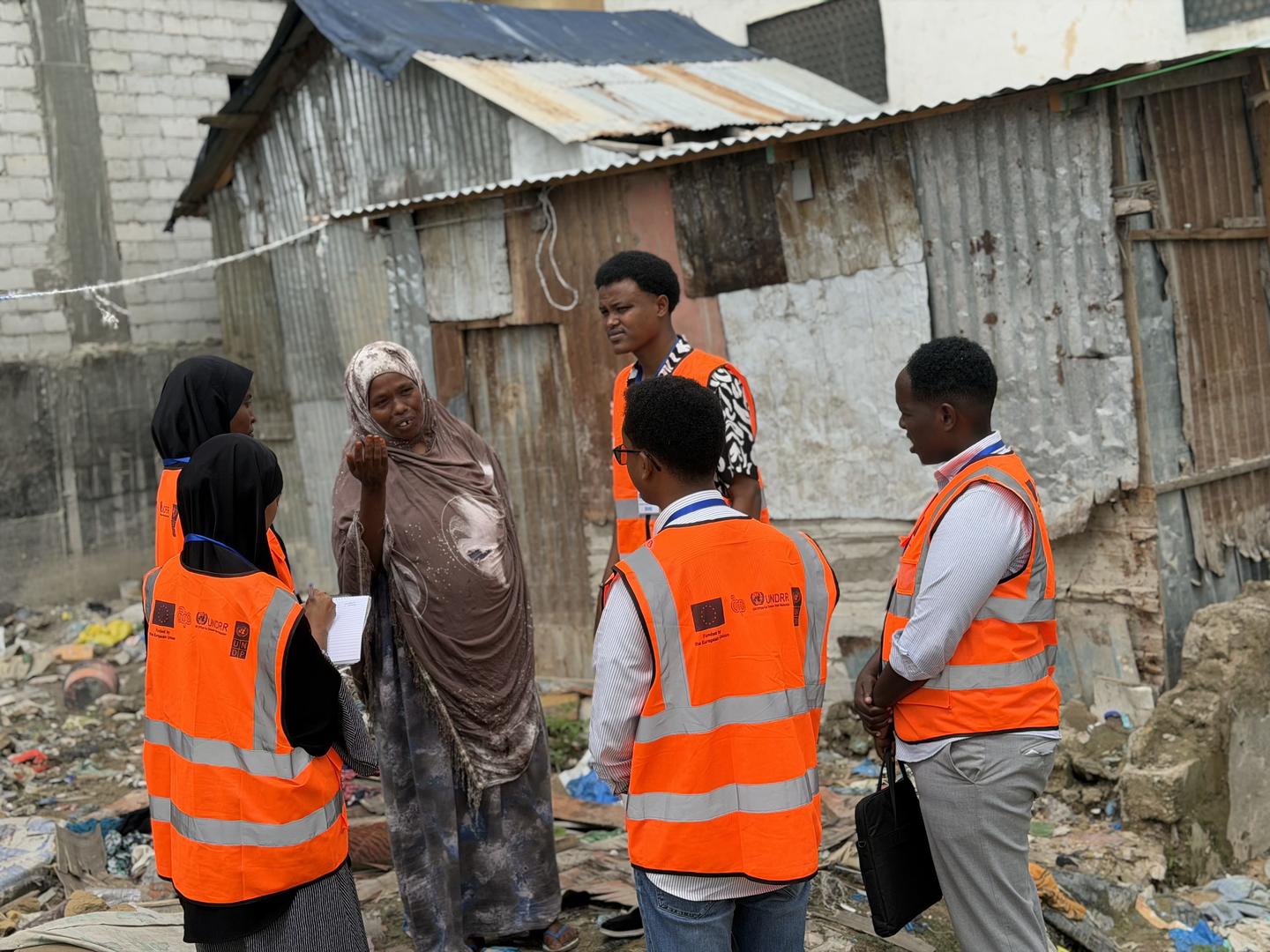
Travelling from one neighbourhood to another, the community disaster volunteers engaged directly with households through door-to-door visits and community discussions, sharing practical information on flood preparedness, emergency planning, health and hygiene, and actions families can take to better protect themselves before, during, and after disasters. The campaign combined technical preparedness messages with direct community engagement, allowing volunteers to both share knowledge and better understand the challenges residents face during the rainy season.
For many of the volunteers, the campaign was their first opportunity to apply their training while working alongside communities affected by recurrent flooding.
"We realized that many families were not aware of how to prepare for floods before they happen," said Aniso Hussein Ali, a member of the Disaster Volunteer Network. "That is why we shared the knowledge and preparedness measures we learned during our training, so communities can better protect themselves and reduce the impact of future disasters."
Throughout the campaign, volunteers also listened to the experiences of residents whose homes and livelihoods had been affected by flooding. These conversations highlighted not only the physical impacts of disasters but also the importance of ensuring that communities have the knowledge and confidence to respond when emergencies occur.
"During this campaign, we met communities that had been severely affected by flooding. Many families had lost their homes, their belongings, and even places to sleep," said Hawa Hussein Abdullahi, another volunteer. "We supported these communities by sharing practical information on how they can prepare before the rainy season begins."
Beyond raising awareness, the campaign provided practical field experience for the volunteers while strengthening collaboration between communities, local authorities, and disaster management institutions. It also marked an important step in operationalizing the Disaster Volunteer Network as a sustainable, community-based mechanism for disaster risk reduction.
"We help communities understand how to prepare before disasters happen, respond during emergencies, and recover afterwards," said Bashir Mohamud Hashi, a Disaster Volunteer Network volunteer. "As volunteers, we are committed to serving our communities and raising awareness about floods, droughts, and other disasters."

Jele Mohamed Ali, Secretary to the Wadajir District Commissioner of Banadir Regional Administration (BRA), who led the campaign in his district, said community awareness is key to disaster resilience. “By working closely with the Community Disaster Volunteers, we have equipped households with practical knowledge to prepare for floods, take early action, and protect the most vulnerable.”
Leading the campaign from UNDP was its Project Manager, Abdi Sadik. According to him, the campaign forms part of a comprehensive disaster reduction efforts linked with Somalia’s 2023 Post-Disaster Needs Assessment (PDNA), which highlighted the importance of strengthening community-based disaster risk reduction. These volunteers, he said, are turning this vision into reality by empowering communities with the knowledge and awareness needed to build lasting resilience.
Supported by the European Union through UNDP Somalia, the Disaster Volunteer Network is helping strengthen local capacities for disaster preparedness by empowering young people to promote awareness, support community resilience, and contribute to disaster risk reduction efforts across Somalia.
About the Initiative
The Strengthening Disaster Risk Governance and Recovery Capacities Project is funded by the European Union (EU) and implemented by UNDP in partnership with the United Nations Office for Disaster Risk Reduction (UNDRR) and the Organisation of African, Caribbean and Pacific States (OACPS). The project strengthens disaster risk governance, builds recovery capacities, and supports resilience in vulnerable communities through community-based disaster risk reduction, capacity building, and post-disaster needs assessments.
Related
content
content


