

 Locations
Scaling up local solutions to power Somalia’s economic transformation
November 4, 2025


Earlier this year, I had the pleasure of inaugurating a newly constructed water dam in Dangorayo District, one of the driest areas in Puntland State of Somalia. In the first four months since then, we have reports that the dam benefited over 4,000 pastoral and agro-pastoral households with free drinking water.
The structure —100 meters long, 70 meters wide, and 3 meters deep — is fitted with a solar-powered water elevator system, water kiosk, storage tank, and two animal troughs, all securely fenced to ensure sustainability. Rains in the region are painfully rare. But when it rains, it literally pours. The geological settings of the topography do not allow the surface to hold rainwater, and as a result, it washes away the topsoil, leading to “gully erosion” and floods. The dams, therefore, present an immediate solution to trap the runoff water, save the soil, and water for the thirsty.
Notably, the local solution is available at an incredibly low cost: costed below US$ 200,000. The impacts are immediate and visible: it has reduced the distance women and children travel to fetch water, and supported local agriculture through improved water availability.
It is an example of climate action that perfectly captures how community-led solutions are directly impacting livelihoods and driving economic resilience across Somalia.

Photo: UNDP Somalia
In a region long affected by recurring droughts, the new Dangorayo water catchment has brought new hope to pastoral and agro-pastoral households.
“We need more of such dams to collect more rainwater. That way, we would not have to buy water from the private suppliers in high prices,” a local resident shared, when asked about the community’s aspirations.
This is just one example of what’s possible when local communities, government institutions, and development partners work together. The Dangorayo dam is part of the Integrated Water Resource Management (IWRM) Project, implemented by UNDP in partnership with the Puntland Water Development Agency (PWDA) and the Federal Government of Somalia, with funding from the Global Environment Facility (GEF).

Photo: UNDP Somalia
Through this project, UNDP has implemented around fifty water-harvesting infrastructures across Somalia, while rehabilitating degraded rangelands and training communities to better manage water resources. The project’s achievements, however, go far beyond infrastructure. It is transforming how Somalia manages its most precious resource.
The GEF project has strengthened water governance by supporting the creation of River Basin Management Authorities (RBMAs), providing the institutional backbone for equitable and sustainable water use across regions. At the national level, it contributed to the development of Somalia’s Integrated Water Resources Management Strategy, laying a foundation for long-term, coordinated water planning.
The project also helped establish the National Hydro-Meteorological Service (NHMS), a milestone that enables Somalia to forecast and respond to droughts and floods with greater precision. Through new early warning systems, more than 525,000 agro-pastoralists (52% women) now receive or have been receiving timely alerts to prepare for extreme weather events, significantly reducing climate-related losses.
At the community level, the impact has been equally transformative. It has empowered women and marginalized groups, ensuring their participation in water management committees and providing training in fodder production, dairy processing, and other income-generating activities. By locating water points closer to communities, the project has also reduced risks of gender-based violence and freed time for women to engage in livelihoods. Persons with disabilities have been included throughout implementation, helping to ensure that water management in Somalia is both inclusive and equitable.
On the environmental front, afforestation and rangeland rehabilitation efforts have reduced soil erosion, improved land productivity, and enhanced water retention, which contribute to reversing decades of land degradation. These interventions are already contributing to food security, livelihood recovery, and rural stability, key elements in Somalia’s broader economic transformation agenda.
However, given the scale of the need and the depth of climate crisis facing Somalia, what have been done is still too little. More than 3.5 million Somalis today are internally displaced, mainly due to climate shocks and conflicts. Only 52% of the population in Somalia has access to a basic water supply. Many of the existing water sources are controlled by private sector . For a rural Somali household, fetching water from private water tankers could cost up to $3-4per barrel per day, depending on season and distance, an expense beyond the reach of 73% of Somalis who earn less than $1.25 a day.
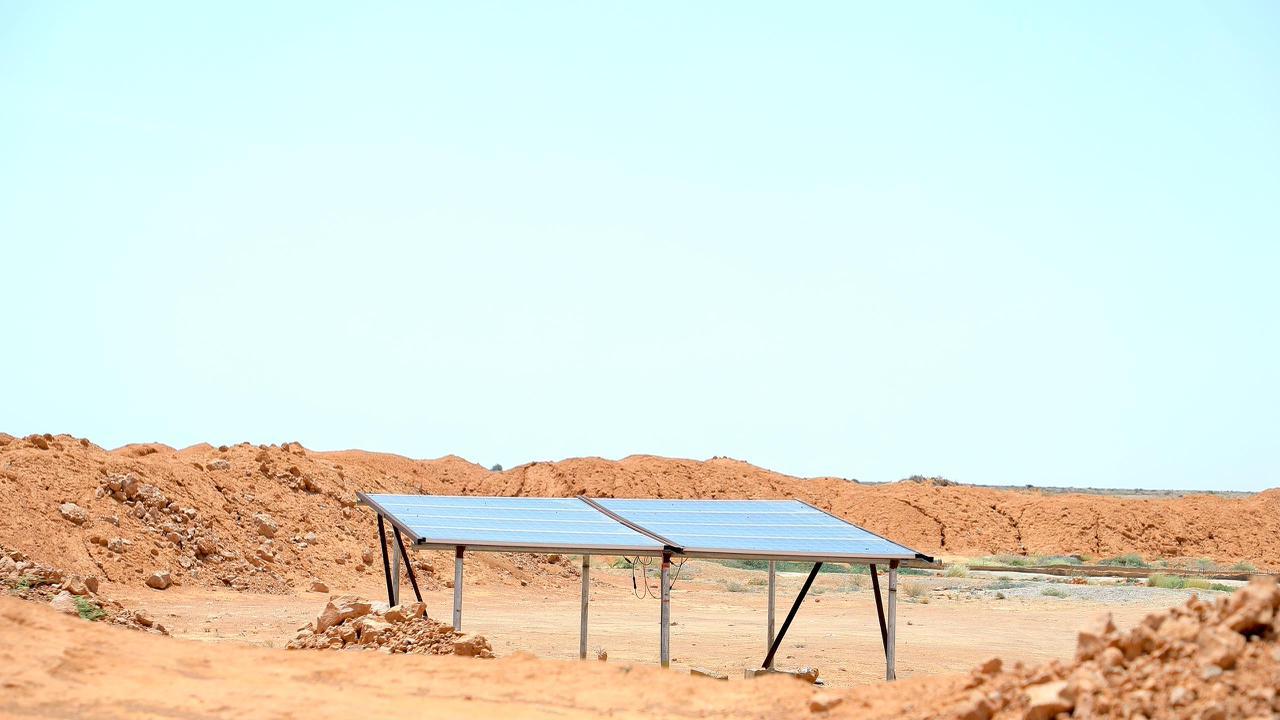
Photo: UNDP Somalia
On the other hand, Somalia is also one of the countries with highest number of sunny days. Solar system, just as harnessed in the Dangorayo dam, could provide almost free energy to pump groundwater from boreholes, and even desalinate the unlimited waters form the Indian ocean and Red Sea, over 3,300 km of which surrounds Somalia.

But implementing these solutions and sustaining these gains requires an investment that domestic resources may not suffice. For Somalia to scale up such locally driven climate actions nationwide, greater international support is essential.
As the world prepares for COP30, Somalia’s experience underscores a pressing truth: climate justice must mean empowering the most climate-vulnerable countries to adapt and thrive. Despite contributing less than 0.03% of global greenhouse gas emissions, Somalia is among those suffering the severest consequences, including prolonged droughts, devastating floods, land erosion, and the erosion of rural livelihoods.
Imagine the transformation if we could build, say 1000 such dams, strategic water-scarce locations across Somalia—low-cost, locally designed, and community-managed. These are replicable, high-impact solutions that can drive climate adaptation, strengthen local economies, and foster peace—provided there is adequate financing.
Somalia’s experience tells that investing in resilience is investing in stability. With the right partnerships and sustained international financing, Somalia can scale up proven solutions like the Dangorayo dam—bridging the gap between climate ambition and real impact on the ground.

Photo: UNDP Somalia
Thanks to recent strides in governance, economic reform, and security, including debt relief, joining the East African Community, the lifting of the UN Arms Embargo, and the rollout of the National Transformation Plan, Somalia is now ready to absorb international climate finance and implement large-scale climate actions effectively. With this progress as our foundation, we are ready to partner. Let us invest in Somalia's home-grown climate solutions—efficient, sustainable, and community-led—to secure a stable, resilient future for all.
(The author is Deputy Resident Representative at UNDP Somalia and can be reached at X @ChrisLaker_)