

 Locations
Investing in Capacity for a Greener Future: Why Green Technology Training Matters for Vanuatu and Beyond
October 8, 2025


The Government of Vanuatu has set itself an ambitious but an essential target: universal renewable energy-based electrification by 2030, as articulated in the National Energy Road Map (NERM 2016–2030). Achieving this goal requires not only investment in infrastructure, but also the systematic development of a skilled national workforce capable of sustaining and expanding the green transition.
At Ranwadi Collee on Pentecost Island, the Vanuatu Institute of Technology under the Vanuatu Green Energy Transformation (VGET) Project, the first ever Certificate I in Electrotechnology training was launched. The 41-day training delivered in three blocks emphasizes practical skills in safety, electrical theory, solar applications, wiring, and troubleshooting.
The VGET project is directly contributing to the NERM targets through the construction of three pico-hydro power stations on Pentecost Island. Once operational, these systems will deliver clean, reliable energy to approximately 700 households—directly benefitting more than 2,300 residents and indirectly reaching an additional 6,000.
Yet the sustainability of such investments depends fundamentally on the capacity of local communities to operate, maintain, and eventually expand these systems. The newly launched training program addresses this critical need by equipping participants with essential technical knowledge and practical skills to manage green technologies at the community level including small supervised household wiring work and troubleshooting.
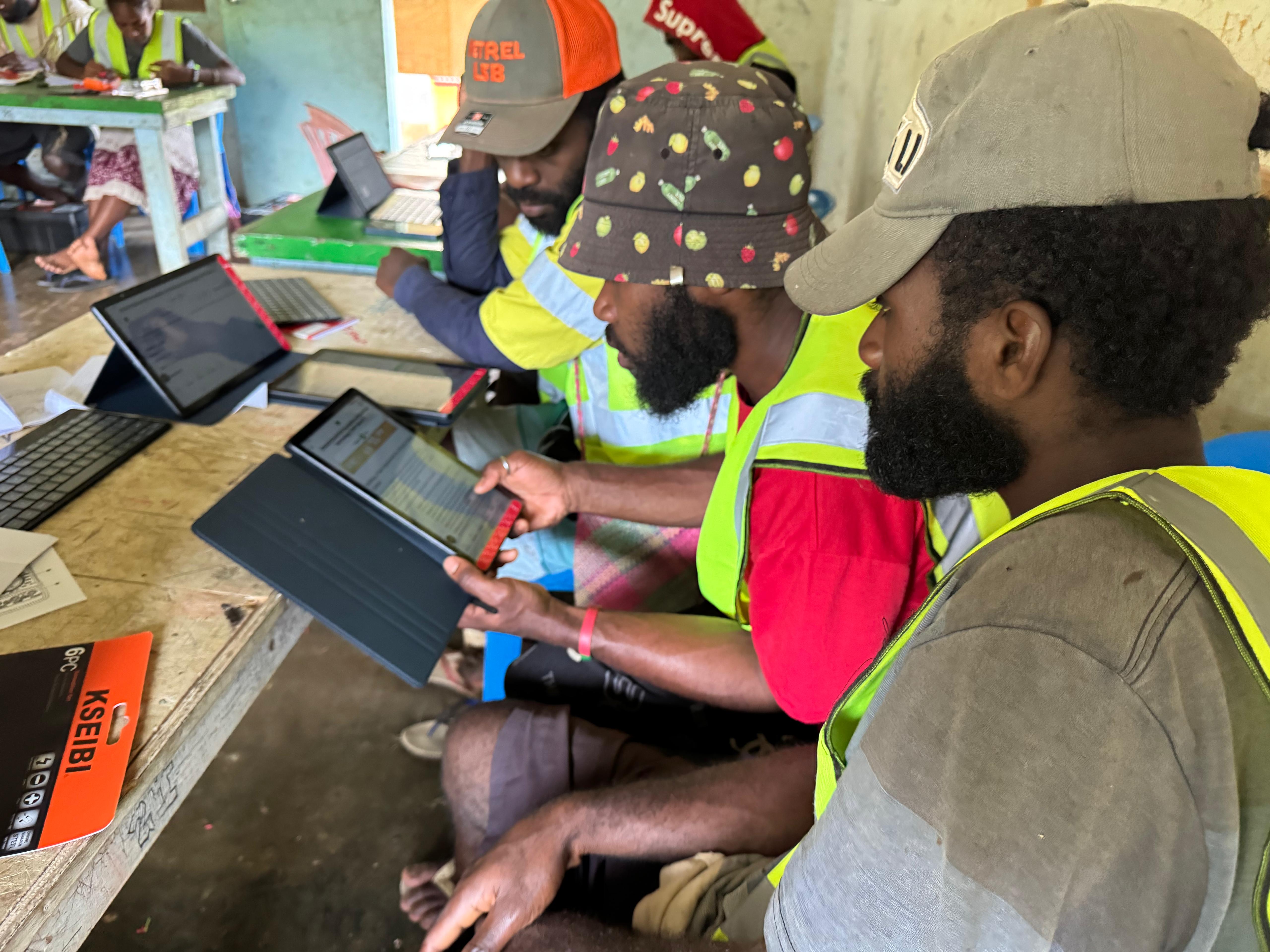
The Certificate I in Electrotechnology programme has been designed to be both practical and inclusive. It employs learner-centred methodologies tailored to rural participants, including those with varying literacy levels. Importantly, the training program also promotes gender inclusion. Of the 23 inaugural participants, four are women—an encouraging sign that barriers to women’s participation in technical and green sectors in Vanuatu are being actively dismantled.
The VGET initiative aligns with broader policy imperatives, including the National Human Resource Development Plan and the National Sustainable Development Plan, which call for the expansion of technical and vocational education and training (TVET), the promotion of inclusive growth, and the development of human capital to meet future labour market demands.
Globally, the transition to green and blue economies is projected to create up to 180 million jobs by 2050. However, experts caution that demand for skilled labour in renewable energy and climate-resilient sectors is already beginning to outpace supply. For small island developing states such as Vanuatu—where exposure to climate risks is acute and reliance on imported fossil fuels is unsustainable—the urgency of developing a skilled green workforce cannot be overstated.
Through capacity building initiatives like this training, Vanuatu is not only preparing communities to sustain energy infrastructure but also positioning its youth to participate in emerging opportunities across the Pacific and beyond. Green jobs are not the future—they are the present, and they are central to delivering on climate commitments, energy security, and sustainable development.

Ranwadi College provides a unique platform for piloting TVET in Schools, especially in rural and remote areas. Its size, boarding facilities, and provincial reputation make it an ideal site to integrating vocational education into secondary curricula. Insights from this pilot will inform broader TVET expansion efforts across the country, reinforcing the Government’s commitment to equitable access to education and skills development.
The launch of this training exemplifies how infrastructure, capacity building, and inclusive participation must progress hand-in-hand if Vanuatu is to meet its renewable energy and development goals. It also highlights the value of strong partnerships—between the Government of Vanuatu, international partners such as Japan, UNDP, and national institutions like the Vanuatu Institute of Technology.
As Vanuatu advances toward its 2030 electrification target, continued investment in human capital development will be eseential. Building the workforce of tomorrow is not an ancillary activity—it is the foundation upon which the country’s energy transition and broader sustainable development will succeed.
The VGET Project is supported by the Government of Japan and implemented by United Nations Development Programme as part of the Pacific Green Energy Transformation Initiative.
This work is in support of SDG: Affordable and Clean Energy for All.