

 Locations
Beyond the Game: How sports, culture and community activities are building peace, healing communities, and fostering inclusion in Northern Ghana
August 18, 2026


In communities facing the challenges of social tensions, insecurity, and vulnerability to violent extremism, peacebuilding requires more than dialogue alone. Increasingly, innovative approaches that bring people together in informal and engaging ways are proving effective in building trust, healing divisions, and strengthening community resilience.
Under UNDP Ghana-supported peacebuilding initiatives, sports, physical activities, cultural exchanges, and interactive learning platforms are emerging as powerful tools for promoting social cohesion, trauma healing, recovery, and active citizenship. By creating safe and inclusive spaces where people from different backgrounds can interact, communities are finding new ways to build relationships, address mistrust, and work collectively towards peace and development.
Using sports to strengthen communities
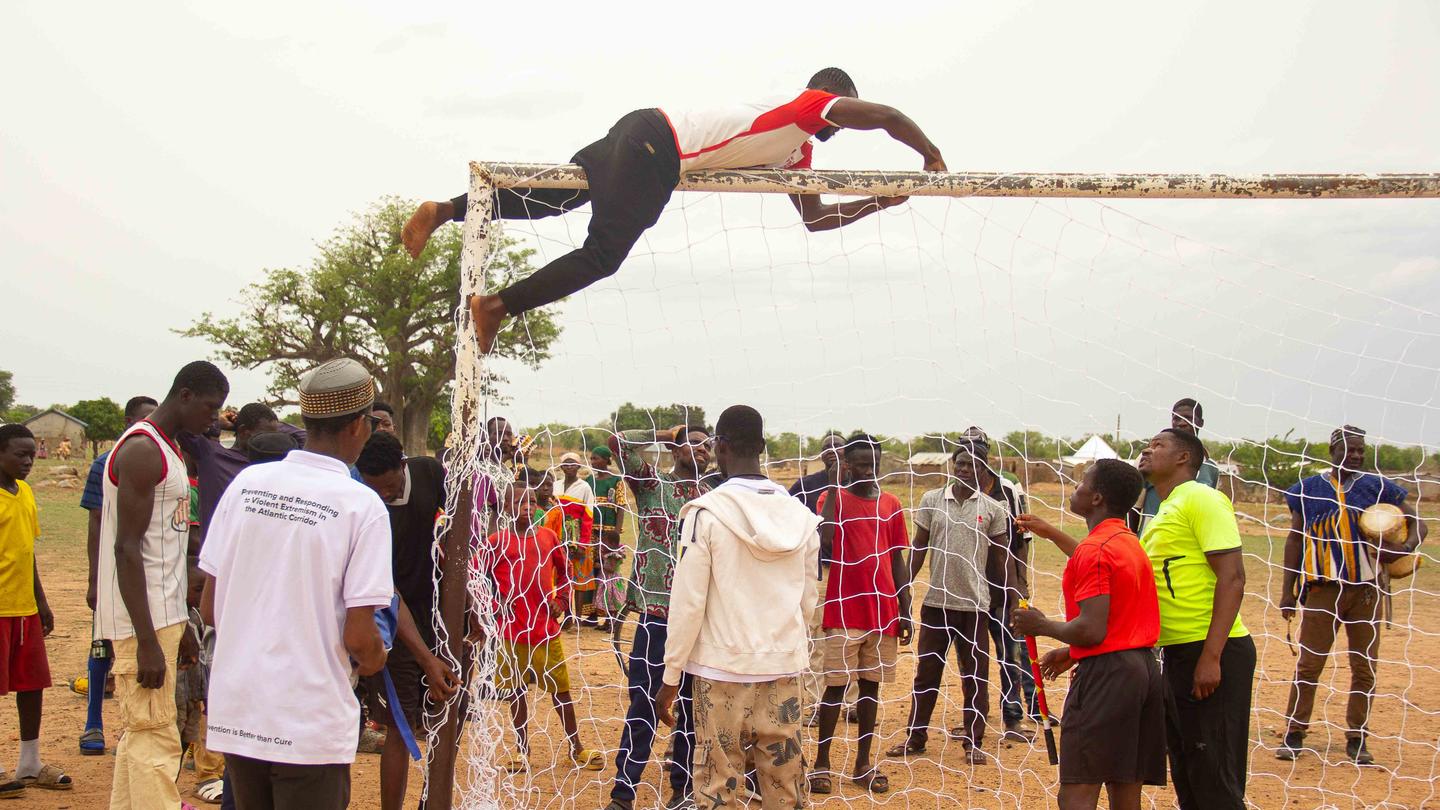
Sport has become much more than recreation in many communities. In project communities where peacebuilding initiatives have been implemented, football matches, fun games, and community sporting events have evolved into avenues for dialogue, inclusion, and collaboration between community members, local leaders, and security agencies.
These activities help break down barriers that often exist between different groups, creating opportunities for positive interactions and strengthening mutual understanding. In communities where residents may have previously interacted only during periods of tension or crisis, sporting events provide a shared experience that encourages teamwork, trust, and collective problem-solving.
By bringing together women, youth, traditional authorities, religious leaders, community members, and security personnel, these activities reinforce the understanding that peace and security are shared responsibilities. They also contribute to psychosocial well-being by creating moments of joy, connection, and healing that are essential for fostering resilience in communities affected by conflict and uncertainty.
The Yunyoo Peace Ladies: From spectators to champions of social cohesion
One of the most inspiring examples of the power of sports emerged from Yunyoo, where a group of young women known as the Yunyoo Peace Ladies transformed a recreational activity into a movement for empowerment and social cohesion.
The group, composed largely of hairdressers and dressmaking apprentices, was initially formed in 2021 to support one another during graduation ceremonies and community events. During the implementation of the United Nations Peacebuilding Fund (UNPBF) project, ‘Enhancing social cohesion and social contract, through empowerment of women and youth in three northern regions of Ghana’, UNDP and West Africa Network for Peacebuilding (WANEP) Ghana identified the group as an important constituency for engagement and invited them to participate in community security dialogues and football activities.
What began as participation in a community football match soon grew into something much bigger. Encouraged by overwhelming support from chiefs, elders, youth leaders, and other community members, the young women established their own football club and now train regularly every Saturday under the supervision of a local referee.
According to Sophia, a leader of the hairdressers' association, the football club has strengthened bonds among the young women and increased their sense of belonging within the community. She noted that the local chief consistently supported the initiative by ensuring that footballs were available whenever the team needed them.
Today, the football club serves not only as a recreational outlet but also as a space for friendship, confidence-building, teamwork, and community engagement. Through sport, the young women have become visible agents of peace and inclusion, demonstrating how recreational activities can contribute meaningfully to community recovery and resilience.
Promoting inclusion through shared experiences
The Atlantic Corridor project funded by Governments of Denmark and Norway’s impact extends beyond strengthening relationships within host communities. It has also helped bridge divides between different social and ethnic groups, creating opportunities for inclusion and economic cooperation.
..., a soap maker from the Fulbe community and participant, described the intervention as a truly inclusive initiative that has strengthened relationships and cooperation between the Fulbe community and the host population. According to him, the project created opportunities for people from different backgrounds to interact, learn together, and build trust, contributing significantly to peaceful coexistence and joint economic activities.
He emphasized that the benefits of the project would continue beyond the immediate intervention. Having acquired soap-making skills through the project, he expressed his commitment to transferring the knowledge to other Fulbe community members who were unable to participate directly. This would help extend the project's impact and promote economic empowerment within the wider community.
Charles Barkindo* also highlighted the important role that sports played in fostering social cohesion. He observed that the football matches organized under the project provided an effective platform for interaction and unity, enabling community members from diverse backgrounds to engage positively with one another. Through these shared experiences, communities began to see one another as partners rather than strangers, strengthening social bonds and collective commitment to peace.
According to him, the initiative has inspired communities to work together more closely and continue advocating against violence and conflict, reinforcing a shared vision of peaceful coexistence and sustainable development.




Celebrating diversity through culture
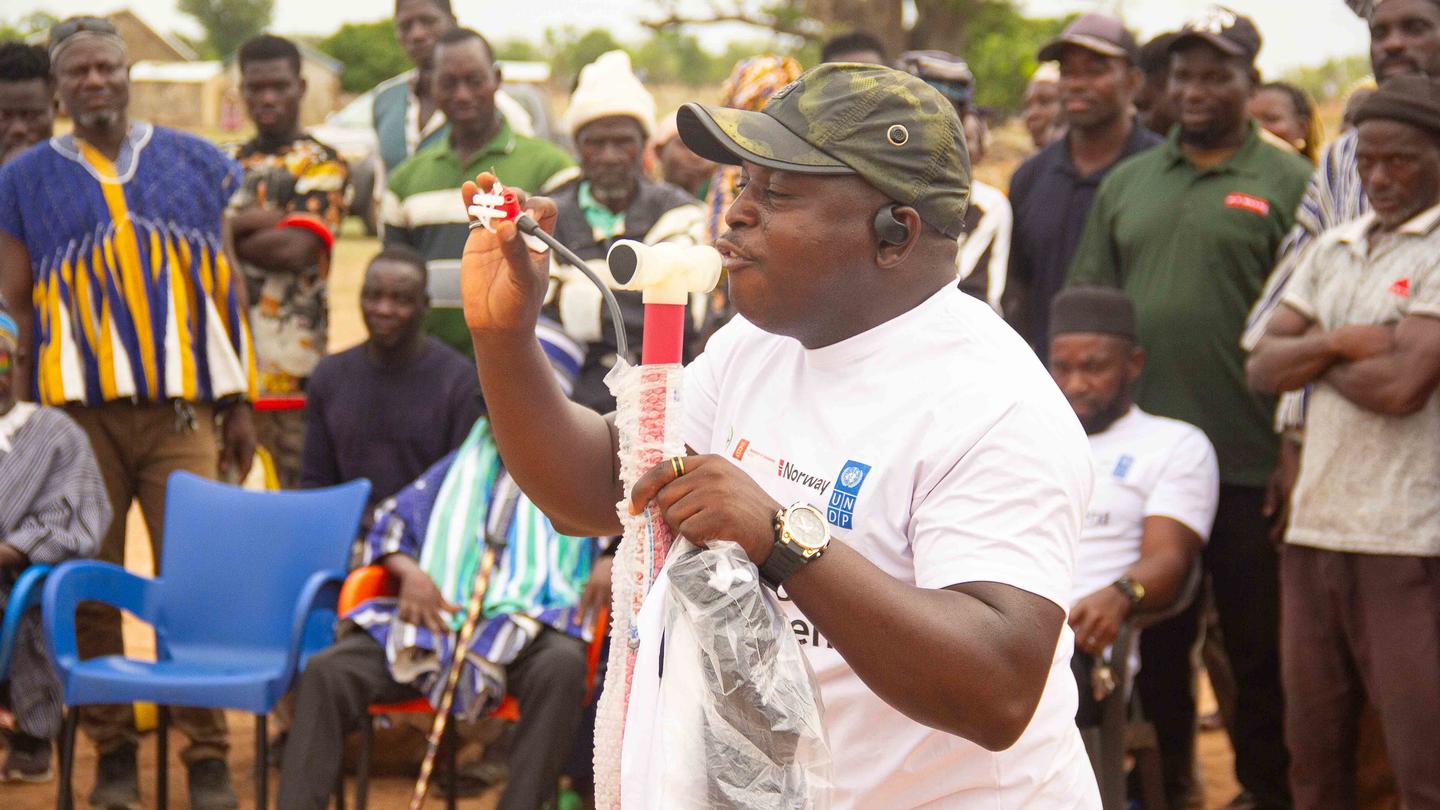
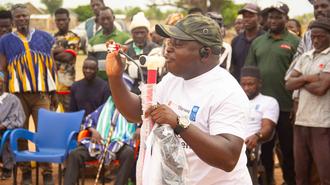
Beyond sports, the project has also leveraged culture as a unifying force. In the North-East Region, UN Peacebuilding Fund-supported interventions used music, drumming, and traditional dance to showcase the rich cultural heritage of different groups while creating safe spaces for dialogue and mutual learning.
These cultural exchanges enabled community members to share their traditions, challenge stereotypes, and foster greater appreciation of diversity. As participants celebrated their differences, they also discovered common aspirations for peace, security, and prosperity.
Learning peace through play
Innovation has also extended to civic education. Through an interactive board game based on Ghana's electoral cycle, participants engage with real-life scenarios related to the pre-election, election-day, and post-election periods.
Players are challenged to make decisions, reflect on consequences, and discuss peaceful responses to electoral disputes and tensions. The activity encourages dialogue, critical thinking, and non-violent problem-solving while reinforcing democratic values and responsible citizenship.
The discussions that follow the game provide opportunities for participants to share experiences, seek clarification, and deepen their understanding of peaceful conflict resolution.
Building a lasting culture of peace
The success of these initiatives demonstrates that peacebuilding goes beyond formal meetings and workshops. By integrating sports, recreation, culture, and experiential learning into community engagement, UNDP Ghana and its partners are creating innovative pathways for healing, inclusion, and resilience.
Whether on a football field, around a board game, or through the rhythms of music and dance, communities are finding new ways to connect, build trust, and work together. These shared experiences strengthen social cohesion and laythe foundation for stronger, more peaceful, and more inclusive communities for generations to come.