

 Locations
Malawi Secures US$8.9 Million to Strengthen Climate Resilience in the Bua River Basin
August 18, 2025
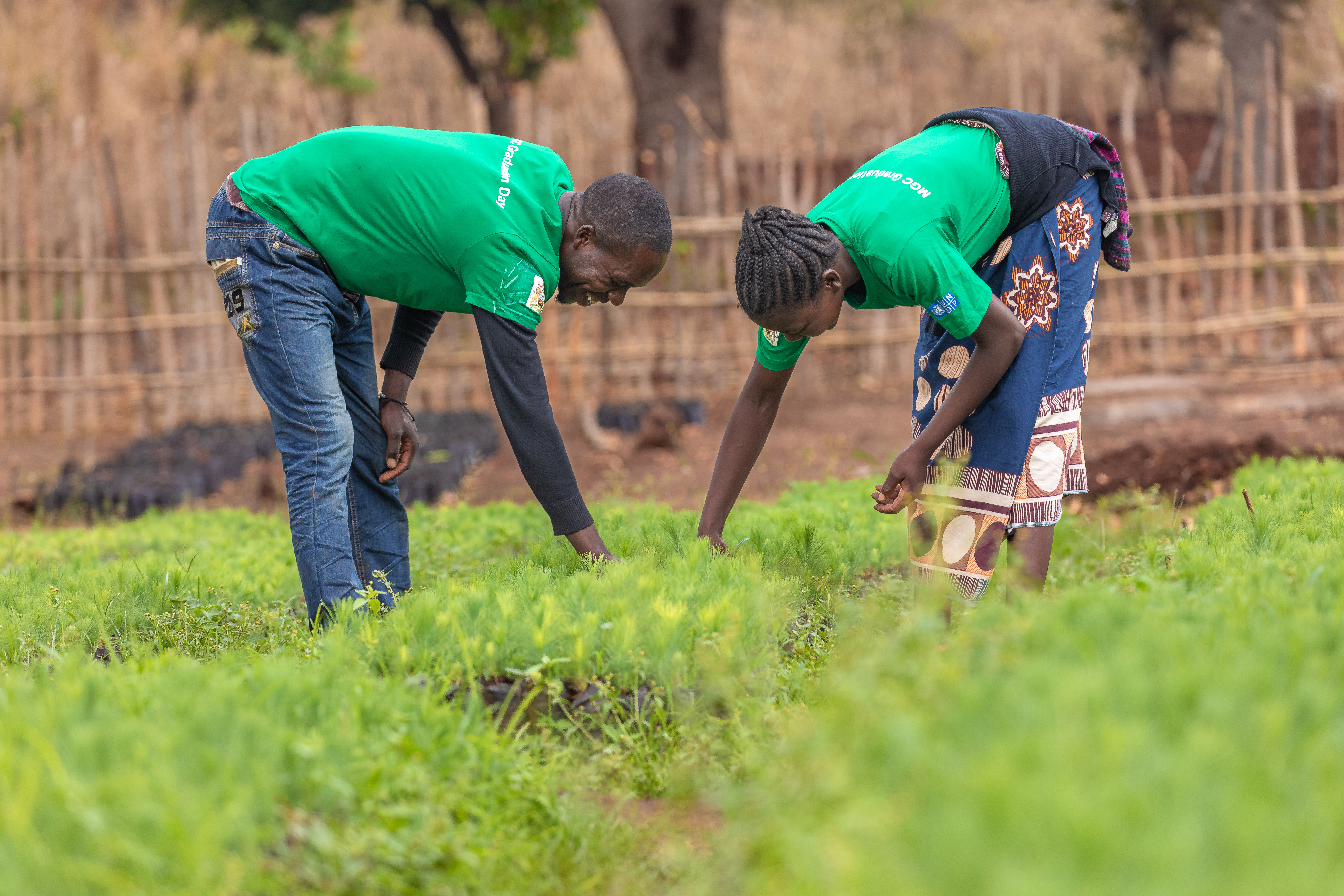
By restoring ecosystems, diversifying livelihoods, and enabling inclusive governance, CLAP for Resilience Project will reduce community vulnerability to climate shocks.
Malawi has secured US$8.9 million in grant financing from the Global Environment Facility (GEF) under its Least Developed Countries Fund (LDCF) to implement a new climate adaptation project aimed at strengthening community resilience in the face of climate change.
The project, Championing Local Adaptation for Productive Ecosystems and Enhanced Resilience (CLAP for Resilience), will be implemented by the Environmental Affairs Department under the Ministry of Natural Resources and Climate Change, with technical support from the United Nations Development Programme (UNDP).
Focusing on the Bua River Basin in Malawi’s Central Region, particularly the districts of Mchinji, Kasungu, and Nkhotakota, the six-year initiative will directly benefit 28 vulnerable rural communities. These communities, heavily dependent on rain-fed agriculture and natural ecosystems, face increasing threats from climate change, deforestation, land degradation, and biodiversity loss. The situation is especially dire for women, youth, and other marginalised groups whose livelihoods are most at risk.

By tackling the barriers that restrict communities’ ability to adapt, the project seeks to build long-term resilience.
“This project reflects Malawi’s continued commitment to enhancing climate resilience and sustainable development,” said Dr. Yusuf Nkungula, Principal Secretary in the Ministry of Natural Resources and Climate Change. “By working with communities, the private sector, and development partners, we are laying the foundation for a climate-resilient future in the Bua River Basin.”
CLAP for Resilience will adopt an integrated, watershed-based approach that combines ecosystem restoration, climate-resilient agriculture, inclusive local governance, and private sector engagement.
It aims to strengthen gender-responsive grassroots efforts for climate change adaptation, promote climate-smart and nature-based agricultural practices, encourage private sector investment in economic value chains and climate-resilient livelihoods, and develop participatory planning and knowledge management systems that support sustainability. By tackling the barriers that restrict communities’ ability to adapt, the project seeks to build long-term resilience and ensure vulnerable populations can thrive under current and future climate conditions.
The GEF funding will be supplemented by substantial co-financing of US$54.9 million from the Government of Malawi and other partners, including UNDP core resources of US$800,000. This investment will support initiatives that not only bolster local resilience but also align with Malawi’s national development agenda and the global Sustainable Development Goals.

The project will adopt an approach that combines ecosystem restoration, climate-resilient agriculture, inclusive local governance, and private sector engagement.
“UNDP is proud to continue its long-standing partnership with the Government of Malawi,” said Ms. Fenella Frost, UNDP Resident Representative. “We remain dedicated to helping the government secure a more prosperous, inclusive, low-carbon future. This includes advancing adaptation, increasing access to (renewable) energy in remote areas, climate-informed policy development and planning, and, ultimately, raising and realising the country’s climate targets under the global Paris Agreement.”
The project will also receive support from the Global Environment Facility. “The GEF is proud to partner with Malawi to advance locally led solutions that protect vital ecosystems and strengthen livelihoods,” GEF CEO Carlos Manuel Rodríguez said. “This collaboration with UNDP exemplifies how targeted investments from the Least Developed Countries Fund can unlock long-term resilience, foster inclusive development, and help communities thrive in the face of mounting environmental pressures.”
Implementation of the project will be led by the Environmental Affairs Department and will involve close collaboration with district councils, community-based organisations, and private sector actors. It will also align with and complement other national initiatives, including the Malawi Watershed Services Improvement Programme, the Enhanced Climate Smart Public Works Programme, and the Growth Accelerator Programme.
By restoring ecosystems, diversifying livelihoods, and enabling inclusive governance, CLAP for Resilience will reduce community vulnerability to climate shocks and advance sustainable development in one of Malawi’s most climate-vulnerable regions. The project’s practices and lessons are designed to be adaptable and scalable, providing a model that can be replicated across the country and contributing to a broader vision of resilience and prosperity for Malawi.