

 Locations
Malawi’s Cabinet Retreat Marks a Defining Moment in the Country’s Transformation Journey
December 5, 2025

The Malawi Cabinet with UNDP senior management and development partners at the 2025 Cabinet Retreat in Mangochi.
For three days in Mangochi, the leadership of Malawi stepped away from the daily pressures of governing to confront, together and without illusion, the hard truths shaping the nation’s future.
Held from 28 to 30 November 2025 with the technical and financial support of UNDP, the Malawi Cabinet Retreat unfolded against a backdrop of economic strain, rising expectations, and a renewed national mandate. Yet by the time the final session closed, a spirit of honest reckoning and shared determination had begun to reshape what is possible for the country.

Vice President Dr Jane Ansah officially opens the Cabinet Retreat.
From the outset, the tone was direct. Delivering the official opening on behalf of President Arthur Peter Mutharika, Vice President Dr. Jane Ansah reminded Members of Cabinet of the weight of the moment.
Speaking plainly, she described a country grappling with “deep macroeconomic pressures which include forex shortages, fuel, fertiliser, food, medicine and the rising cost of basic necessities.” Businesses were not operating as they once did. Millions of Malawians remained below the poverty line. “These Malawians have entrusted us to change this story,” she said, urging the Cabinet to take bold decisions grounded in integrity and service rather than personal gain. “This is the time to serve Malawians, not to enrich ourselves.”

A panel discussion on governance and digitilization.
The retreat theme, Delivering the Promise: Building a Resilient Economy, Accountable Governance and Strategic Partnerships for Malawi’s Transformation, framed the discussions that followed, sessions that stretched long into the night and demanded rigorous engagement from every Minister present. According to the official programme, the retreat was designed to enable a “shared understanding of the state of the economy,” deepen leadership alignment, examine Malawi’s catalytic sectors for growth, and strengthen systems required to turn policy ambition into practical delivery.
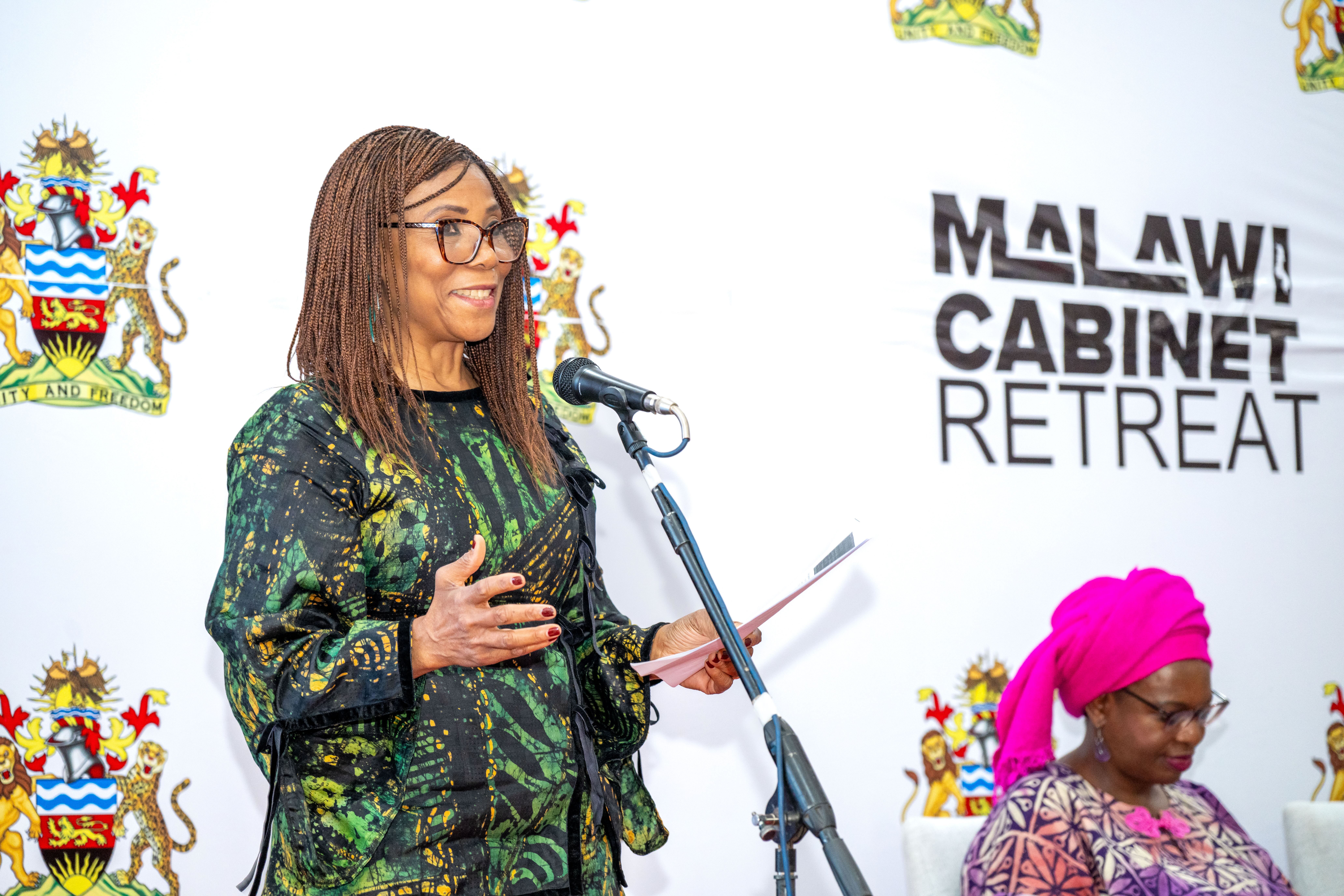
UN Assistant Secretary General and UNDP Regional Director for Africa, Ms. Ahunna Eziakonwa.
UN Assistant Secretary General and UNDP Regional Director for Africa, Ms. Ahunna Eziakonwa, offered an equally forthright challenge in her keynote address. She began by congratulating Malawi on its peaceful elections, describing the country as a beacon of democratic resilience. Yet she also underscored that democracy must translate into tangible improvements in people’s lives. “What does delivering on democracy demand now?” she asked. “It demands people-centred, inclusive and accountable delivery that Malawians can feel in their daily lives, where all Malawians, whatever their place of origin, political affiliation, age or gender, can benefit and contribute to.”
Her remarks celebrated Malawi’s strengths, its young population, its digital potential, and its agricultural promise, but pressed the point that transformation requires courageous, disciplined governance. She highlighted innovations such as the UNDP supported University Innovation Pod (UniPod) at the Malawi University of Business and Applied Sciences (MUBAS) in Blantyre, which has “manufactured essential generator components when imports were unavailable,” as evidence that Malawi already possesses the ingenuity needed for national renewal. She reminded leaders that “no nation moves from vulnerability to prosperity unless women and girls move with it,” describing inclusive economic empowerment as a non-negotiable pillar of development.

The audience, including senior government leaders and development partners, listens attentively during the discussions.
Throughout the retreat, the Cabinet returned repeatedly to one central question: how does Malawi move from vision to results? Across sessions on macroeconomic stabilisation, agriculture, industrialisation, mining, digitalisation, development financing and decentralisation, the underlying challenge was implementation. Vice President Ansah acknowledged this directly. “As a country, we are good at making policies but we don’t implement them, as is expected,” she noted, calling for a shift in culture and a new discipline within Ministries. Reform, she argued, must be driven by Ministers themselves, who must “champion it, coordinate it, and drive it relentlessly.”
The discussions on digital governance proved particularly resonant. Ministers explored how technology, when paired with strong governance, could modernise Malawi’s public service, improve transparency and strengthen identity systems, procurement and payments. But they also acknowledged that technology alone is insufficient without secure systems, national digital leadership and sustained institutional investment.
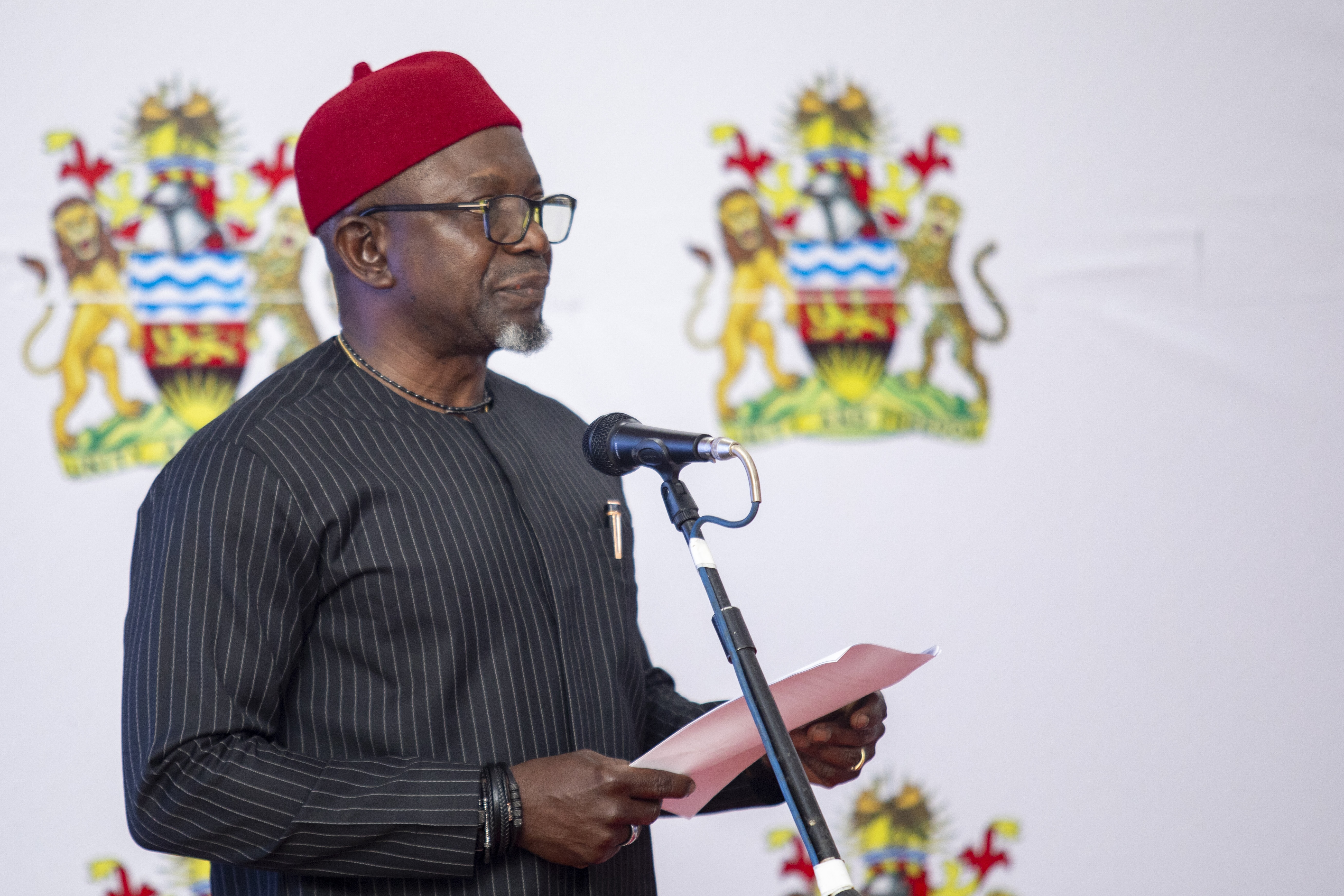
Dr. Matthias Naab, Director of the UNDP Regional Service Centre for Africa
By the final day, the intensity of the conversations had left a clear impression on observers. In his closing remarks, Dr. Matthias Naab, Director of the UNDP Regional Service Centre for Africa, reflected on the Cabinet’s willingness to confront the country’s challenges with rare candour and resolve. “Over these two days, I saw a Cabinet that has taken the ball and started running with it,” he said. “Transformation begins not with speeches, but with sweat; not with slogans, but with sleepless nights.” He encouraged the Government to translate the retreat’s outcomes into a time-bound Cabinet Leadership Response Plan and proposed quarterly mini-retreats to sustain the momentum witnessed in Mangochi.
As the retreat drew to a close, Vice President Ansah returned once more to the commitments made. She thanked the Cabinet for enduring “the gruesome three days characterised by long days that ended into the night,” describing their dedication as “awe-inspiring and unparalleled.”
Looking ahead, she called upon her colleagues to avoid the old habit of endless meetings and instead commit to disciplined action. “We have reached a consensus that it can be done, and it will be done indeed,” she affirmed, before officially declaring the retreat closed.
The 2025 Cabinet Retreat may well be remembered as a moment when Malawi’s leadership paused, reflected and reset its course with renewed clarity. It brought into sharp focus both the urgency of the country’s challenges and the real possibilities ahead. It also made one thing unmistakably clear: Malawians are ready for a government that delivers, and their leaders have now pledged to meet that expectation.
Whether this retreat becomes a genuine turning point will depend on what happens next—in Ministries, in Departments, in Cabinet, and across the public service. But in Mangochi, for three demanding days, Malawi’s leaders made a promise to their people. The work of living up to it has begun.