

 Locations
Multi-Stakeholder Dialogue Advances Women’s Priorities Through Political Accountability and Legislative Engagement
June 25, 2026
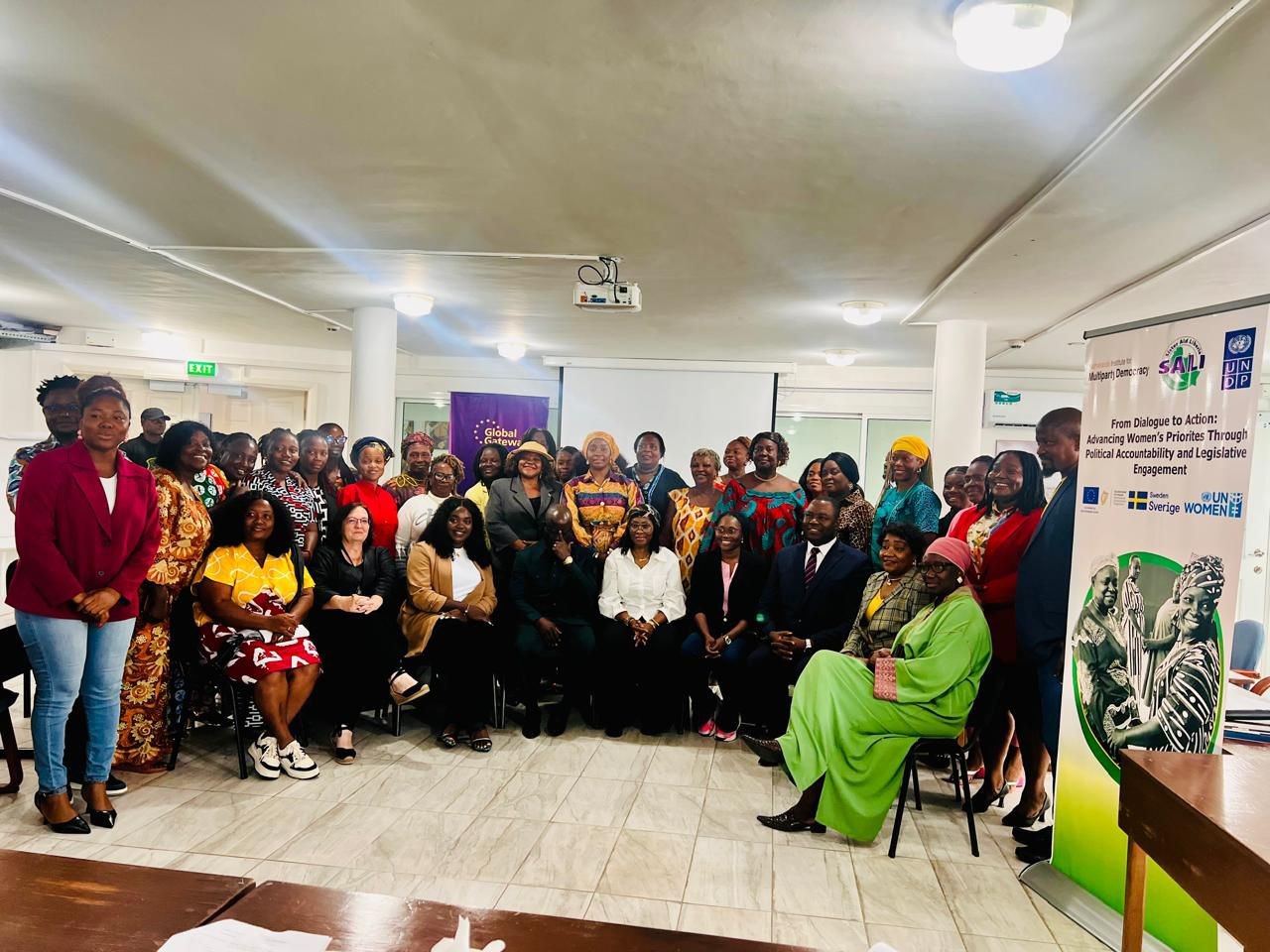
The Netherlands Institute for Multiparty Democracy (NIMD) is supporting Sister Aid Liberia (SALI) to advance the participation and inclusion of women and young people in Liberia’s democratic and governance processes. On 19 June 2026, SALI convened a multi-stakeholder dialogue in Monrovia to identify practical solutions for improving women’s access to essential social services and rural livelihood opportunities, while strengthening collaboration among women’s organizations, lawmakers and public institutions.
Held under the theme, “From Dialogue to Action: Advancing Women’s Priorities Through Political Accountability and Legislative Engagement,” the dialogue, brought together members of the Legislature, government officials, political parties, development partners, civil society organizations, women’s leaders and technical experts to discuss priority issues affecting women across Liberia and identify policy and legislative responses.
The dialogue contributes to a key objective of NIMD’s programme, which seeks to enhance the participation and inclusion of women and other marginalized groups in political processes. The activity builds upon NIMD’s regional consultations which took place in 2024 and documented the perspectives and priorities of women across Liberia.
These consultations identified key challenges affecting the well-being of women and participation, including limited access to affordable healthcare, inadequate road connectivity, barriers to agricultural production and rural livelihoods, and constraints affecting trade and commerce. The dialogue provided a platform to elevate these priorities within the national development agenda while promoting greater civic and political engagement among women and young people.
Through a series of presentations and interactive panel discussions, participants examined the structural barriers limiting women’s access to essential services and economic opportunities and identified practical policy, legislative and institutional measures to address these challenges.
Delivering remarks at the dialogue session, Minister of Agriculture, Dr. J. Alexander Nuetah underscored the central role of women in transforming Liberia’s agricultural sector, noting that sustainable progress in agriculture depends on women’s empowerment. He highlighted ongoing government initiatives aimed at improving agricultural productivity and supporting farmers, particularly women, and reaffirmed the Ministry’s commitment to working with partners to advance women’s economic empowerment.
A key feature of the dialogue was the presentation of firsthand experiences by women leaders working in the agriculture, health and trade sectors. The Executive Director of SANKOFA Farm, Nyamah Dunbar highlighted the challenges confronting women farmers, including limited access to finance and inadequate farm-to-market road infrastructure.
Additionally, the Executive Director of the Community Healthcare Initiative, Naomi Tulay Solanke, drew attention to persistent gaps in healthcare delivery, including limited access to health information and services for women and girls.
The President of the Women Cross-Border Traders Association, Saybah Dunyan also shared the challenges faced by women engaged in cross-border trade, including language barriers that weaken their bargaining power, limited access to affordable financing and high lending costs.
The testimonies reinforced the findings of NIMD’s 2024 regional consultations and highlighted the continued need for responsive policies, increased public investment and stronger institutional support to address the longstanding barriers affecting women’s socio-economic empowerment.
A key outcome of the dialogue was the development of a national action agenda that will serve as an advocacy framework for engaging Liberia’s political leadership to advance policy and legislative actions that respond to the priorities and needs of women.
The activity was executed under the Liberia Electoral Support Project (LESP), co-funded by the European Union, the Embassy of Ireland and the Embassy of Sweden, managed by UNDP and implemented in partnership with UN Women and NIMD. The Liberia Electoral Support Project continues to support national institutions and processes to promote inclusive, transparent, and accountable governance across Liberia.


