

 Locations
Waves of Change: How Local Media Are Rewriting Narratives for Peace in Ghana
January 2, 2026

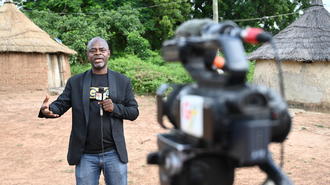
Community members in Bole tune in to Yabon Radio’s morning show, where host Fatawu Duwari leads conversations on peace and social cohesion.


Across Northern Ghana, local journalists and community radio hosts are using their platforms to foster dialogue, challenge harmful stereotypes, and promote peaceful coexistence. Through training supported by the United Nations Development Programme, media practitioners are strengthening conflict-sensitive reporting and ensuring that diverse voices—from youth to traditional leaders—are heard. These stories highlight how community media are helping to build understanding and resilience in communities facing complex social tensions.
Reframing the Fulbe Narrative – The Journey of Suala Abdul Wahab
A Fulbe settlement in Tendarian, near Wa in the Upper West Region Ghana, senior journalist Suala Abdul Wahab of the Ghana Broadcasting Corporation (GBC) reflects on a turning point in his career. Holding a copy of a story he produced for the Fulbe community years ago, he recalls the moment when his reporting approach fundamentally changed.
For many years, Suala had covered issues of local politics, security, and community development. However, after a personal encounter at a police checkpoint where he was mistakenly identified as a Fulbe while on national assignment, he began to re-examine the way the media depicted this community. That experience reinforced a troubling reality: across Ghana, the Fulbe are disproportionately associated in public discourse with labels such as “criminals, cattle rustlers, or armed robbers.”
Such portrayals, frequently repeated in media coverage, have entrenched stigma, reinforced prejudice, and fueled social divisions.
“Until recently, I had never intentionally done a story on the Fulbe community,” Suala acknowledges. “The media, myself included, played a role in reinforcing stereotypes without giving the other side of the story.”
The turning point came in 2024 when Suala participated in a UNDP-supported training on conflict-sensitive journalism, hate speech prevention, and fact-based reporting. The training urged media professionals to recognize how narratives can either escalate tensions or foster understanding. “What stood out for me,” he reflects, “was learning that the media are often the worst perpetrators of stereotyping. There are two sides to every issue: the truth and the lie. Until you give opportunity to the other side, your report will be one-sided.”
Armed with this insight, Suala decided to reframe his reporting. Instead of focusing on negative stereotypes, he highlighted the Fulbe’s contributions to Ghanaian society and their ongoing struggles against marginalization. He drew on the expertise of colleagues such as journalist Emmanuel Missa, who had long reported on minority issues, and a lecturer from Simon Diedong Dombo University of Business and Integrated Development Studies (SDD UBIDS), whose research on the Fulbe provided critical context. These perspectives ensured balance and credibility.
His producer approved the pitch immediately, and the story aired on Real Time Live, one of GBC Wa’s leading radio programmes. The impact was swift and significant. Listeners called in with positive feedback, colleagues recognized the importance of the coverage, and members of the Fulbe community welcomed a more accurate and dignified representation of their lives.
“Through the training and the story, many of my colleagues in the Upper West Region have changed their perceptions,” Suala notes. “At least now, they know not to take a one-sided story against the Fulbe as the gospel truth.”
Suala said, the experience was transformative, adding that, journalism is not only about reporting facts, but rather a powerful tool for building understanding, promoting inclusion, and strengthening peace.
Across Northern Ghana, other journalists trained under UNDP initiatives are also reshaping narratives and using their platforms to foster dialogue and cohesion.
This work underscores the critical role of media in divided societies. When supported with training and guided by ethical reporting principles, journalists can move beyond entrenched stereotypes to amplify marginalized voices, promote inclusive dialogue, and strengthen community resilience.




Giving Youth a Voice – Rahanatu’s Community Radio Impact
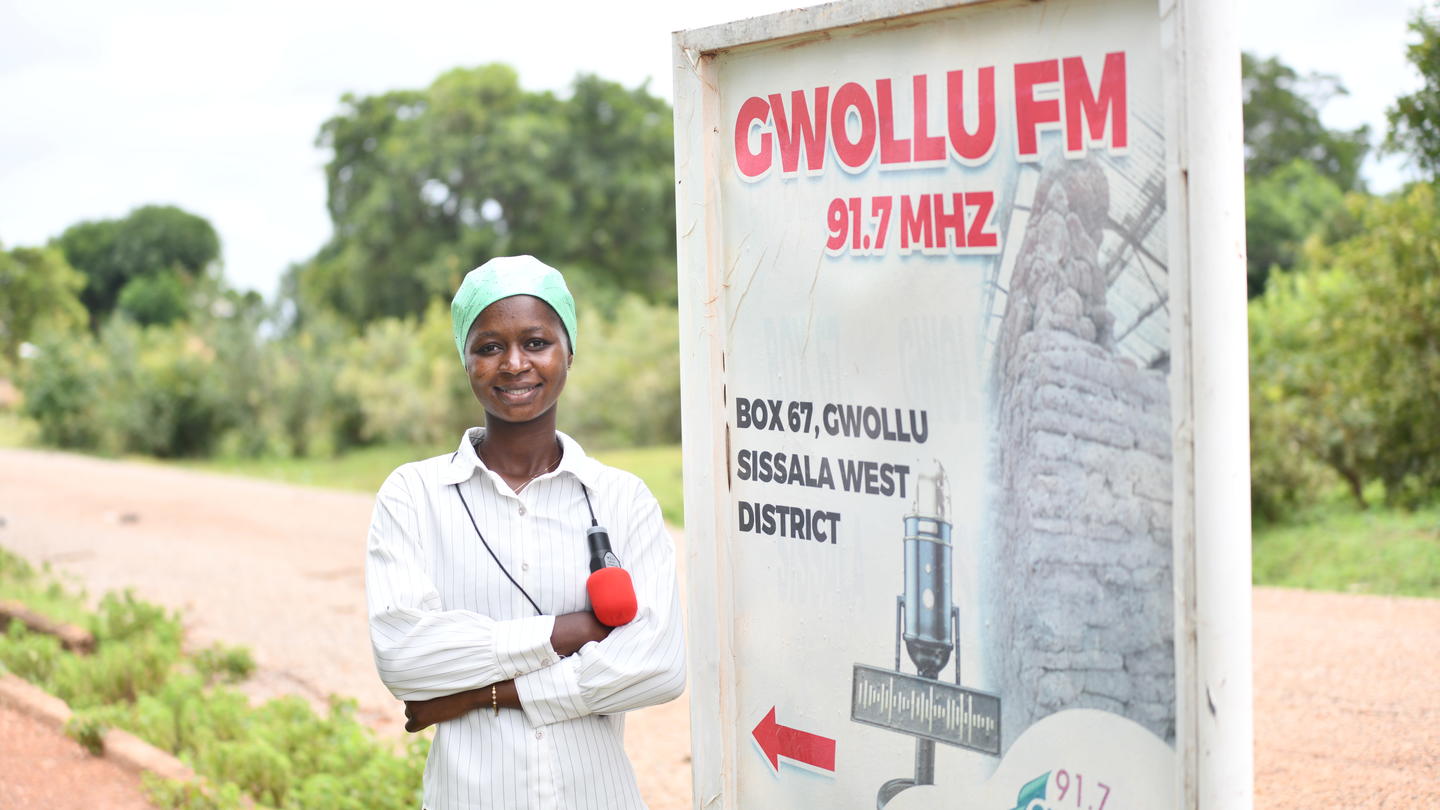
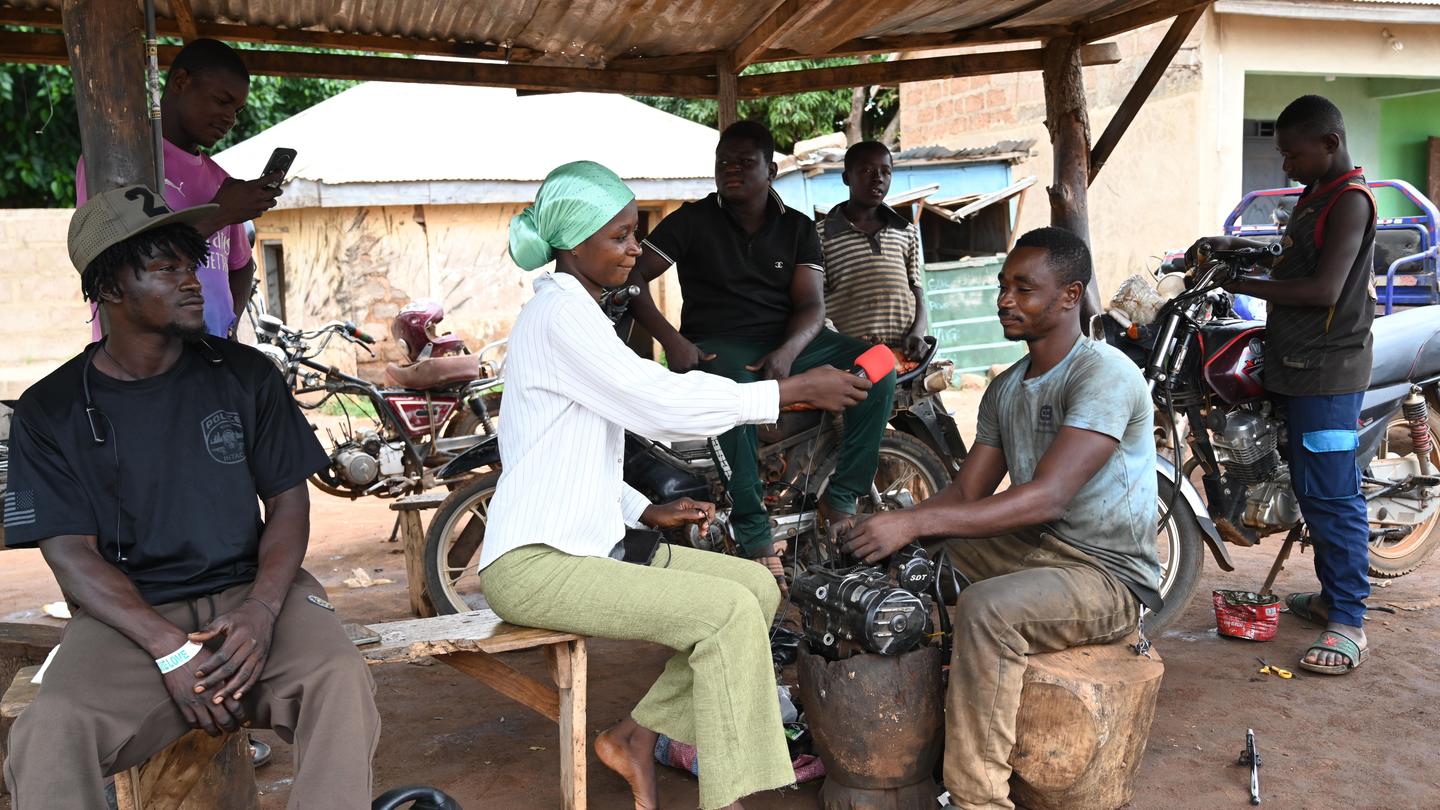
In Gwollu, a small town in Ghana’s Upper West Region, Rahanatu, a level 400 journalism student from the University for Development Studies, balances her studies with her work as a volunteer reporter at Gwollu YM Community Radio. With her microphone in hand, she brings voices from the community to the airwaves—and then goes back into the community to listen again.
For Rahanatu, journalism is not just about broadcasting information. It is about creating dialogue. After every radio programme she hosts, she walks through the community and speaks directly with young people. She asks what they heard, how they understood the messages, and most importantly, what they are doing with the information. “It’s not enough to put information on air,” she explains. “We need to know how it is received, and whether it inspires action.”
Community radio in Northern Ghana plays a critical role in bridging divides. In many places, mistrust and misinformation have fueled tensions between groups. But when youth like Rahanatu take the lead, radio becomes more than a source of news—it becomes a safe space for dialogue, reflection, and problem-solving.
Supported by UNDP’s work on conflict-sensitive journalism and inclusive media, Rahanatu has learned to approach reporting with care, ensuring her programmes give equal space to women, youth, and marginalized voices. Her shows address issues such as peacebuilding, social cohesion, and community development, always guided by the principle of “do no harm.”
The response has been powerful. After her broadcasts, young listeners have started forming small groups to discuss what they heard on radio and how it applies to their daily lives—from resolving disputes peacefully to participating in local development initiatives. Parents and community leaders, too, have praised her efforts to bring youth into the conversation.
“Journalism is not just for professionals in big cities,” Rahanatu reflects. “Even at the community level, radio can open doors for dialogue, change perceptions, and help us build peace together.”
Her story shows how young women in media can play a pivotal role as conveners of dialogue in divided societies. Through the right training and support, youth reporters like Rahanatu are amplifying local voices, breaking down barriers, and shaping the future of their communities.
Across Ghana and beyond, these stories illustrate UNDP’s commitment to positioning media not only as a watchdog, but as a partner for peace and inclusive development.




Voices in Harmony – Amadu Mubaric Convening Dialogue on Air
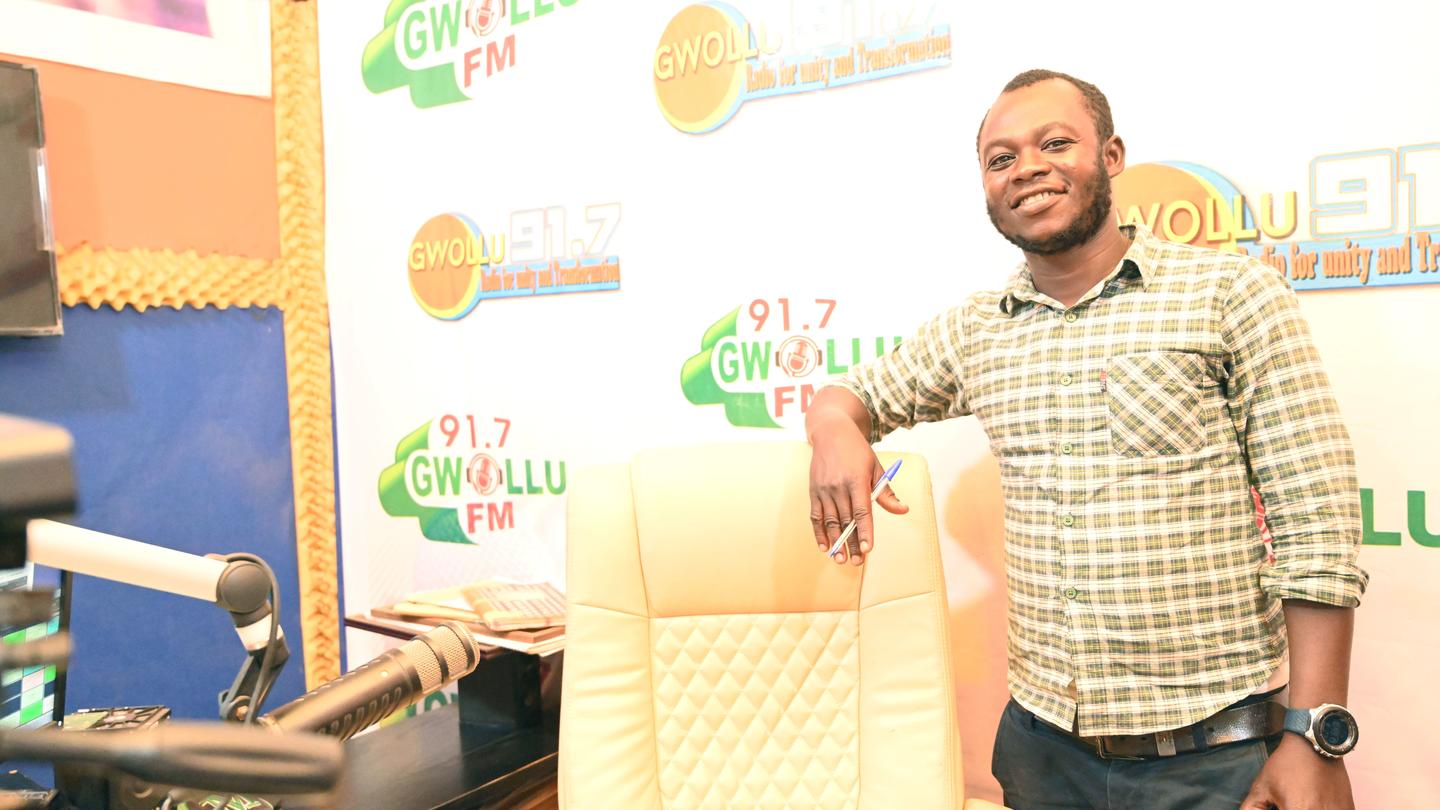
The small studio of Gwollu FM Community Radio hums with quiet energy. Around the wooden table, a panel of voices gathers, made up of a local imam, a man of God, a traditional leader, and a young woman activist. Their differences are clear of base on their faith, age, and background, but in this room, their microphones point in the same direction.
The host, Amadu Mubaric, a young presenter guiding the conversation. With headphones on and his fingers brushing the soundboard, Amadu weaves music, dialogue, and languages into a single broadcast. He fades out the latest track, greets his listeners in Sissali, then switches to Waale, Dagaare, and English, making sure every voice in the community feels included.
“Music opens the heart,” he explains, adjusting the mic for his guests. “Once people are listening, dialogue becomes easier, whether it’s about peace, development, or living together despite our differences,” he said.
Frequently, Amadu uses his programme to host panels that reflect the diversity of Gwollu. Religious leaders sit side by side with youth and women’s groups, discussing challenges like migration, unemployment, and social cohesion. In between discussions, he plays carefully chosen songs, sometimes a afro gospel, other times a traditional Sissali melody or a reggae track loved by the youth. The mix creates a rhythm of unity, where difference does not divide but connects.
Listeners call in, often switching languages mid-sentence, reflecting the multilingual spirit of the show. Some share concerns, others request songs, and many simply thank Amadu for giving them a voice. The radio waves carry not just music and conversation, but a subtle reminder: diverse voices can live in harmony.
Supported by UNDP’s peacebuilding efforts in Northern Ghana, Amadu has been trained in conflict-sensitive journalism, helping him frame discussions that address tensions without fueling division. His studio has become a safe space where people can openly share their views, knowing their words will be handled with fairness.
Community leaders note the difference. Conversations that might once have stayed locked in suspicion now flow across the airwaves, softened by Amadu’s music and inclusive hosting. For him, the reward is simple: “When I hear callers say they understand each other better because of what they listened to on my show, I know we are building peace.”
Through his platform, Amadu demonstrates the power of local radio as a convening tool, a space where faiths, languages, and generations come together, and where a young voice leads the way in shaping dialogue for peace. “When you hear something, say something,” Amadu’s slogan.
The studio of Yagbon Radio in Bole, Savannah Region, comes alive every morning with the voice of Fatawu Duwari, the morning show and drive-time host, where panels discuss relevant topics that promotes peace and harmony across the Savannah.
According to Fatawu, the work doesn’t end when the microphones are switched off. After his shows, he takes the time to travel long distances into remote communities, villages far from Bole where people rarely have direct access to important information. There, he meets chiefs and engages with community members, listening to their concerns and sharing knowledge.
Through these journeys, Fatawu sees firsthand how vulnerable many of his listeners are. This fuels his commitment to use Yagbon Radio not only for music and entertainment but also as a platform for education and empowerment. By blending the wide reach of radio with face-to-face interactions, he ensures that the campaign’s messages truly resonate and bring change to those who need it most.




Beyond the Studio – Fatawu Duwari Connecting Communities
The studio of Yagbon Radio in Bole, Savannah Region, comes alive every morning with the voice of Fatawu Duwari, the morning show and drive-time host, where panels discuss relevant topics that promotes peace and harmony across the Savannah.
According to Fatawu, the work doesn’t end when the microphones are switched off. After his shows, he takes the time to travel long distances into remote communities, villages far from Bole where people rarely have direct access to important information. There, he meets chiefs and engages with community members, listening to their concerns and sharing knowledge.
Through these journeys, Fatawu sees firsthand how vulnerable many of his listeners are. This fuels his commitment to use Yagbon Radio not only for music and entertainment but also as a platform for education and empowerment. By blending the wide reach of radio with face-to-face interactions, he ensures that the campaign’s messages truly resonate and bring change to those who need it most.


The Mobile Reporter – Rafiq Nungor Adam and the Power of Fact-Checking
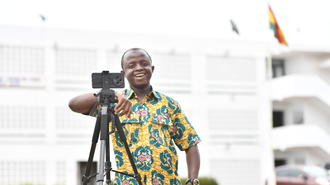
Armed with just his mobile phone and tripod, freelance reporter Rafiq Nungor Adam has become a trusted voice in the Upper West Region. For him, journalism is not about fancy equipment it’s about truth. “Fact-checking helps me report accurately,” he often says, and it is this dedication that has earned him respect among his audience.
Recently, his lens and words turned to the Fulbe Community in the Upper West Region, where a powerful call for peaceful co-existence echoed. At a stakeholders’ meeting in the Wa Municipality, traditional authorities and security agencies gathered to address tensions and foster unity.
Rafiq’s reporting highlighted not just the voices in the room, but the urgency of their message: peace is the foundation for development, and dialogue is the bridge to understanding. By verifying every detail before sharing, Rafiq ensured that the Fulbe community’s appeal reached the public with clarity and credibility.
Through his simple tools and unwavering commitment to accuracy, Rafiq proves that journalism, when grounded in truth, can help communities heal and move forward together.




Media as a Catalyst for Peace
Across Northern Ghana, these stories show how local media—whether through community radio studios, field reporting, or a mobile phone and tripod can become powerful tools for dialogue and social cohesion. They remind us that storytelling is not only about sharing information; it is about transformation. When journalists and broadcasters choose to prioritise empathy over division and facts over stereotypes, they help communities better understand one another and open space for meaningful dialogue.
From reframing narratives about marginalized communities to giving youth and local leaders a platform to speak, these journalists demonstrate the power of responsible reporting in building trust and strengthening community resilience. As misinformation and social tensions continue to challenge societies, media professionals have a unique opportunity and responsibility to shape narratives that promote understanding, inclusion, and peaceful coexistence. Through thoughtful storytelling and ethical journalism, they are helping communities listen, learn, and move forward together.