

 Locations
Strengthening Africa’s Innovation Ecosystems: Incubator Managers Bootcamp Kicks Off in Accra, Ghana
March 13, 2026

Some Incubator managers from across 37 African countries proudly display their certificates at the close of the Bootcamp for Incubator Managers in Accra.
Incubator leaders from across 37 African countries gathered in Accra this week for the Bootcamp for Accelerator Managers, a five-day programme designed to strengthen the capacity of Entrepreneurship Support Organizations (ESOs) that support early-stage startups across the continent.
The bootcamp, organized by UNDP’s timbuktoo in partnership with 500 Global, brings together incubator managers and ecosystem leaders to build practical skills, tools, and systems that enable incubators to deliver stronger programmes and help startups scale.
Supporting Africa’s growing innovation ecosystem requires strong ESOs thatESOs that can nurture entrepreneurs, guide them through early-stage challenges, and connect them to mentorship, markets, and capital. The bootcamp aims to strengthen that foundation.
Through a series of workshops, peer learning sessions, and one-on-one coaching engagements, participants are working to improve how incubators design programmes, select startups, manage mentors, and measure success.
Strengthening the institutions that support startups
Across Africa, innovation hubs and incubators play a crucial role in helping entrepreneurs transform ideas into viable businesses. Yet many ecosystems face challenges related to programme design, startup selection processes, mentorship management, and connecting startups to investment opportunities.
The Bootcamp for Incubator Managers addresses these challenges by equipping incubator leaders with practical methodologies and globally tested approaches to incubator management.
“A strong startup ecosystem begins with strong incubators,” said Astria Fataki, Ecosystem Architect and Section Lead for timbuktoo Tech Hubs. “By strengthening incubators, we are strengthening the entire support system that enables African entrepreneurs to innovate, grow, and scale.”
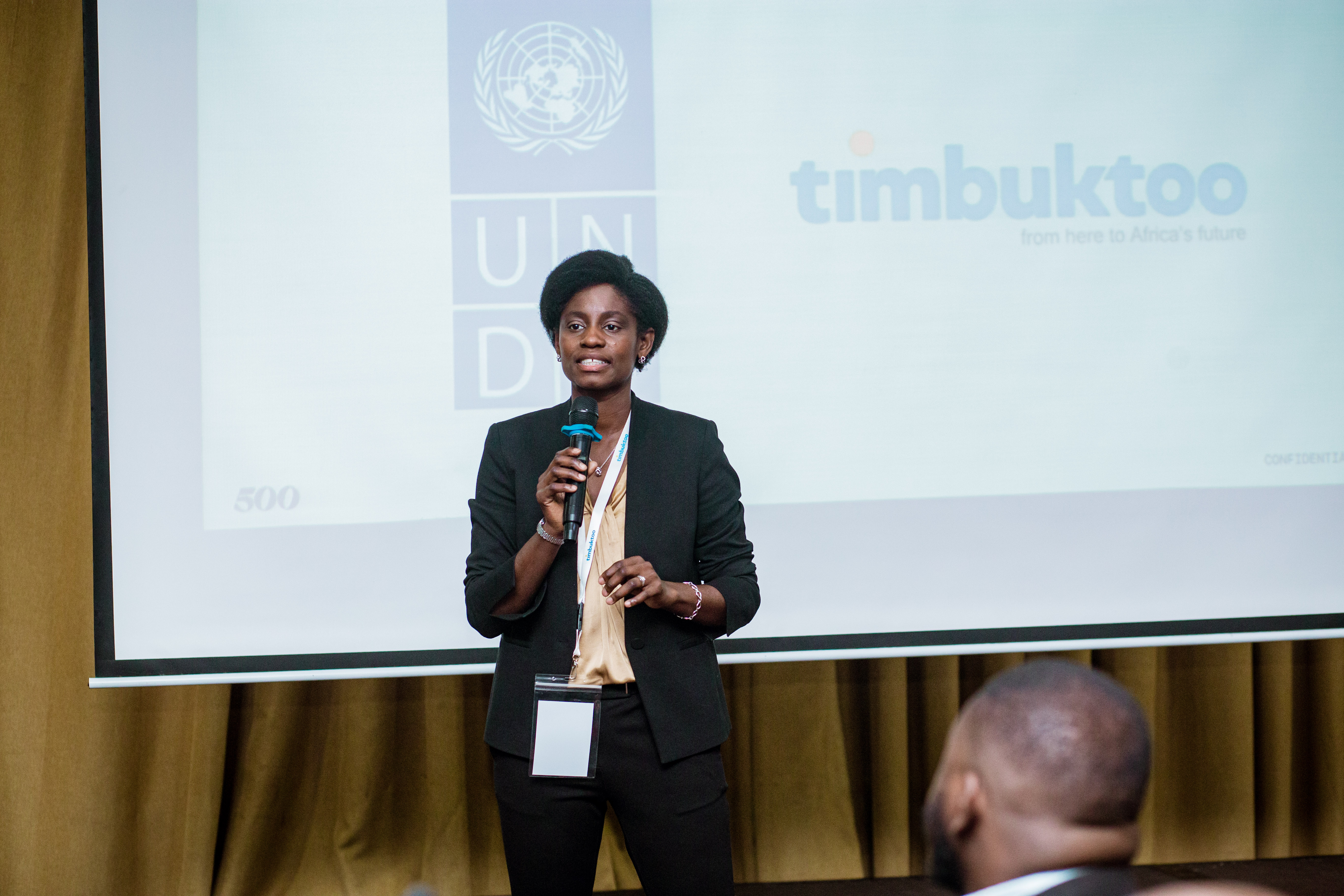
Astria Fataki, Ecosystem Architect and Section Lead for timbuktoo Tech Hubs delivering her keynote remarks
The training programme is hands-on and implementation-focused, equipping participants with practical operational tools they can immediately apply within their incubators beyond the programme.
Practical learning for real impact
Throughout the week, incubator managers are working on a range of practical components that form the backbone of effective incubation programmes including developing incubator positioning and strategic focus areas, designing structured incubation curricula that guide startups from ideation to growth, strengthening startup pipeline and selection frameworks and building mentor recruitment and management systems
Participants are also engaging in peer exchange sessions, sharing experiences from different African ecosystems and learning from one another’s successes and challenges.
“One key insight for me was the process of crafting compelling accelerator thesis. That session revealed important considerations that help accelerators and hubs stand out and attract the right startups into our programs,” said King David Amo, Corporate Communications and Marketing Lead, Innohub.
He added, “Stronger incubators can help startups scale by building a strong and diverse network of in-house and external mentors to provide expert support and insights to enrich programme delivery. Curriculum design must also be founder-focused, taking into consideration the level of growth of the startup.”


Reflecting on the collaborative dimension of the bootcamp, Rorisang Motlomelo from Vodacom Innovation Park in Lesotho says:
“The biggest insight from the timbuktoo BAM Bootcamp is the power of community. Through the Pan-African Incubator Network, incubators can collaborate, share mentors, and co-incubate startups across markets.
I am also introduced to Sigma, a digital tool that supports incubation from problem clarification to investment readiness. These tools and connections are already strengthening how we support entrepreneurs, I am collaborating with other incubators, sharing mentors, and onboarding my team onto Sigma.”


“Strong innovation ecosystems require collaboration and knowledge sharing,” noted Shaima Hussein, Deputy Resident Representative. “Initiatives like this bootcamp help build the systems and capacities that allow incubators to deliver high-quality support to entrepreneurs across Africa.”

Shaima Hussein, Deputy Resident Representative sharing her remarks
Building a pan-African network of incubators
The bootcamp forms part of the Pan-African Incubation Network, an initiative under the timbuktoo platform aimed at strengthening incubators across the continent and ensuring consistent, high-quality support for startups.
Launched by UNDP’s Regional Bureau for Africa, timbuktoo is a pan-African initiative designed to strengthen innovation ecosystems and mobilize catalytic and commercial capital to support scalable ventures aligned with the Sustainable Development Goals.
The initiative aims to support 10,000 startups, scale 1,000 of them, and ultimately impact 100 million livelihoods across Africa.
To achieve this, timbuktoo is developing an integrated innovation architecture that connects universities, incubators, accelerators, and investors across the continent.
Incubators participating in the bootcamp play a critical role in this architecture by identifying promising entrepreneurs, nurturing early-stage ventures, and helping founders prepare for the next stages of growth.
Strengthening innovation ecosystems through partnership
The Bootcamp for Accelerator Managers is delivered by 500 Global, which brings global experience in venture building, accelerator management, and startup investment.
UNDP’s timbuktoo initiative convenes ecosystem stakeholders and ensures that the training aligns with broader continental strategies to strengthen Africa’s innovation landscape.
The programme is made possible with support from the Government of Japan through the Japan Supplementary Budget, which contributes to strengthening innovation ecosystems and entrepreneurship across Africa.
By investing in incubators and the institutions that support startups, partners aim to unlock new opportunities for African entrepreneurs and accelerate innovation-driven development across the continent.
As participants return to their respective countries after the bootcamp, they will carry with them not only new tools and strategies but also a strengthened network of peers working together to support Africa’s next generation of entrepreneurs.