

 Locations
[Dialogue] Anne Juepner, Director of the UNDP Seoul Policy Centre; John Choi, Secretary General of the Hyundai Motor Chung Mong-Koo Foundation; and Timothy Dho, CEO of Impact Square: Tailored mentoring and investor connections with 'Global ImpactPreneur'
Building a growth ladder for solving Asia-Pacific's toughest challenges
August 18, 2026

Climate risk, healthcare gaps, and poverty are increasingly being addressed by "impact startups"—companies with ground-level solutions built for the communities they serve. However,scaling those solutions takes more than passion: it takes funding, real-world testing, and access to investors and corporate partners.
That is the gap UNDP Seoul Policy Centre (USPC), Hyundai Motor Chung Mong-koo Foundation (CMK), and Impact Square (ISQ) set out to close. Since March, the three organizations have run Global ImpactPreneur, discovering and nurturing early-stage startups tackling social and environmental problems across Asia-Pacific, combining UNDP's regional network, CMK's entrepreneur-development experience, and ISQ's investment expertise into a single growth pathway.
The first cohort brought together 20 impact startups from 10 countries, with 10 selected startups presenting their solutions at Demo Day in Seoul on 7 July. Four companies received a combined $50,000+ in grant funding through the Grand Prize, the Excellence Award, and two CVC Capital Partners Innovation Awards.
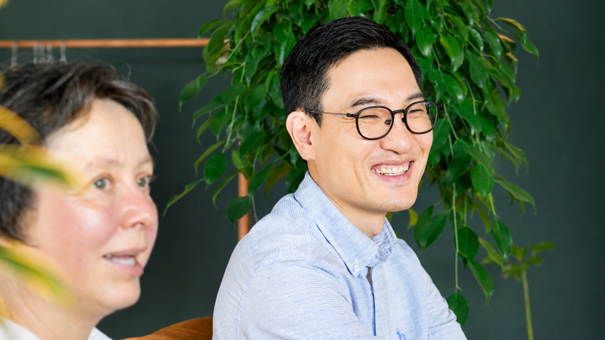
Anne Juepner (Director, USPC), John Choi (Secretary General, CMK), and Timothy Dho (CEO, ISQ) sat down to discuss what changed for the programme's first cohort—and what's next.
On what changed for participating impact startups

Anne Juepner: “It was meaningful to see founders from ten countries exchange experiences and recognize that many of the challenges they face are shared across the region, while exploring opportunities for collaboration beyond their domestic markets. They also had opportunities to meet local institutions, investors and business partners to discuss pilot testing and market entry.”
iGENETECH Inc., a Korean startup specializing in infectious disease diagnostics, needed local partners to participate in projects in the region. Through the programme, UNDP supported the company in connecting with potential partners through its regional network, including exploring opportunities to commercialize its dengue diagnostic technology in Sri Lanka.
John Choi: “The start-ups moved beyond simply expressing their commitment to solving social problems. They clearly defined whose problems their technologies address, how their results would be measured, and whether they could generate revenue while sustaining their businesses.”
Timothy Dho: “Some companies revisited their existing business direction during the mentoring process. They reassessed their initial solutions against actual market demand and cost structures and adjusted their scope of application accordingly.”
NUSEUM Inc. of the Republic of Korea is one such example. It initially developed an AI service recommending school meal menus and ingredient sourcing for children in developing countries. When questions arose over who would bear the cost and whether the school meal market could support growth, the company shifted its focus to governments and public institutions. Its solution now analyses local conditions, nutritional needs and budgets to recommend suitable crops, supporting agricultural and food policy rather than individual meal planning.
On what stood out about Asia-Pacific region impact startups
Anne Juepner: “We observed a clear shift from simply addressing climate change as an environmental issue to helping entire industries transition towards more sustainable ways of operating. In areas such as industrial decarbonization, the circular economy, food loss and waste reduction, sustainable agriculture and sustainable materials, start-ups developed practical solutions that reduce emissions while also improving productivity, efficiency and business competitiveness.”
Global Cerah of Malaysia, for example, uses an IoT-based system to convert agricultural waste into livestock feed and organic fertilizer. In doing so, it is building a circular food system that reduces waste and farmers’ costs while helping restore soil health.
John Choi: “The start-ups addressed interconnected challenges—such as the environment and health, or nutrition and income—through a single business model. Cambodia’s SUDrain uses wastewater treatment technology to tackle environmental and community health issues, while Indonesia’s Arummi Foods links alternative foods to consumer nutrition and smallholder farmers’ incomes.”
Timothy Dho: “Many participating founders had built markets and demonstrated results despite limited infrastructure—execution experience that investors value. Some also designed their businesses for international expansion from the outset because their home markets were small or similar to those of neighbouring countries.”
On what impact startups need to grow locally and scale globally
Anne Juepner: “It is important to help entrepreneurs who understand local contexts and needs firsthand build revenue-generating business models rather than rely solely on continued external support. Support should be tailored to different growth stages, helping start-ups adjust their business models, measure and manage their impact, and refine their products or services, while connecting them with mentors, investors, policymakers and corporate partners.”
John Choi: “Corporate foundations can look beyond short-term results and invest for the long term in innovative talent and social value. They can also broker collaboration among governments, international organizations, companies and investors.”
Timothy Dho: “Accelerators and investors should go beyond providing capital to identify local partners and co-develop projects.”

On lessons learned and what's next
Anne Juepner: “We need to facilitate deeper collaboration, knowledge exchange and partnerships among start-ups from Korea and across the Asia-Pacific region. When start-ups from the region visit Korea, we plan to create opportunities for them to engage with a broader range of Korean ecosystem stakeholders, including investors, corporates, accelerators and public institutions. We will also continue sharing follow-up support opportunities after the programme. At this stage, our key priority is to further strengthen the quality and depth of the support we provide rather than expand the programme’s scale.”
John Choi: “A three-month, largely online programme could not fully reflect each country’s market conditions or each company’s stage of growth. Future support will take a longer-term approach to understanding local regulations and markets, identifying pilot partners, securing follow-on investment, and supporting investment, collaboration and market entry after Demo Day. The Foundation also plans to develop a two-way programme that supports Korean impact enterprises entering overseas markets and international start-ups entering Korea.”
Timothy Dho: “Over the medium to long term, Impact Square is exploring a dedicated fund in Singapore or another Asian investment hub to expand regional investment. It also plans to broaden its investment and collaboration tools beyond equity to debt and project investment, as well as models that combine Korean technology with local impact start-ups.”
Source: The Better Future, July 31, 2026 “Building a Growth Ladder for Startups Tackling Asia-Pacific’s Toughest Challenges: International Organizations, Foundations and Investors Join Forces”
Written by: Yebin Chae, The Better Future journalist
Related
content
content


