

 Locations
By Jonathan de Araujo de Assis, Futures Fellow, UNDP Strategy & Futures Team, and Cleophas Torori, Deputy Resident Representative - Programme, UNDP Mozambique
Reimagining Frameworks: Embedding Foresight into the UN Strategic Cycle in Mozambique
February 27, 2026

To address the complexity of a “polycrisis” in the country, UNDP’s Mozambique Country Office (CO) pledged to transition from an approach based on isolated projects to a development model that acknowledges the interdependencies among sectors and the uncertainties inherent in complex social systems. This shift toward a systemic – and portfolio – approach is recognized by the UNDP Strategic Plan 2026-2029 as a comparative advantage for UNDP. By integrating future-focused investments in data analytics, digital transformation, and strategic foresight, the portfolio approach helps UNDP and its partners make sense of rapid change and manage complexity and uncertainty.
In line with this understanding, the Mozambique CO decided to incorporate strategic foresight as an initiative to strengthen its portfolio activities and inform the new Country Programme Document (CPD). However, the launch of this foresight exercise coincided with the start of the UN Country Analysis (UNCA), which also mandated the use of systems thinking and foresight. Accordingly, beyond strengthening the portfolio approach and informing the new CPD, a further key objective of the UNDP Mozambique foresight exercise was to support and enhance this collective UN effort.
“Foresight offers the insight that many factors influence the future. All these factors together form the complexity, and it is good to reflect on this and use new tools such as AI to help guide us through this complexity, while still of course maintaining a critical eye.” – Edo Stork, UNDP Resident Representative in Mozambique
What is the UN Country Analysis?
The UNCA serves as the UN development system’s independent, impartial, and collective assessment of a country’s context, forming the primary analytical foundation for the Cooperation Framework (CF). Under the latest guidelines, the UNCA has evolved from being a static, one-time document into a continuous “analytical tool.” The methodology for the UNCA is anchored in three key methodologies: Systems Thinking, Human-Centered Design (HCD), and Strategic Foresight.
The systemic analysis requires the CA to move beyond siloed sectoral analysis to understand how different development factors are interconnected and influence one another. Complementing this is the use of strategic foresight and forward-looking analysis. Instead of relying solely on historical data, the UNCA must employ foresight approach to explore plausible future scenarios, identify key trends and signals of change, and equip UNCTs to embrace uncertainty to design robust and resilient strategies and programming.
Foresight Process
Inspired by the University of Houston Foresight Framework and UNDP’s Foresight for CPD Toolkit, the foresight journey unfolded through four interlinked steps: Framing; Scanning; Futuring; and Visioning. The process was conducted over approximately three months (August-October 2025), with additional preparatory and finalization phases in July and November.
The first UNCA Task Team meeting focused on presenting the Foresight methodology. This session explored how Foresight, in conjunction with Systems Thinking and Human-Centered Design (HCD), could inform the development of the country analysis. As this represented a novel approach to the CA, it was a pivotal moment to align team expectations regarding the methodology, its integration with other analytical components of the CA – Desk Review and Inclusive Stakeholder Consultations – and the finalization of the roadmap.
“Foresight methodology is not about predicting one future – but about imagining many plausible futures. The benefits are that it is creative, open-ended thinking – and energizing, because it shifts us from reactive problem-solving to proactive exploration. It helps us step into a space of possibility rather than constraint” – Cleophas Torori, UNDP Deputy Resident Representative - Programme in Mozambique
Framing
The Framing phase enabled the UNCA Task Team to establish a shared understanding of the scope and focus of the analysis. The objectives of this phase were to: 1) Define the scope of the analysis; 2) Identify key stakeholders, their values and political interests - essential to understanding the ecosystem of actors involved in and affected by systemic dynamics; and 3) Structure a domain map showing the key pillars underpinning Mozambique’s sustainable development through 2035.
While the geographic scope was predetermined by the nature of the UNCA Mozambique exercise, the Framing phase provided the space for the team to collectively agree on priorities and boundaries, thereby establishing the foundational structure for the subsequent stages of the analysis. The domain map was structured around an array of economic, social, environmental, and institutional components (see Figure 1).
Following the identification of the subdomains and their key topics, the next step was a current assessment analysis, aimed at mapping each subdomain’s structure and functioning, the main actors involved – including their values, interests, and interrelationships – and recent events shaping present conditions. Each subdomain was assigned to at least two UN agencies to provide specialized inputs. By integrating cross-sectoral research and leveraging the diverse mandates of the UN system, the CA shifted the focus from isolated evaluations to a systemic perspective, promoting a valuable collaborative effort among the UNCA team in Mozambique.

Figure 1 – UN Country Analysis’ domain map
Scanning
Having established the scope and focus of the analysis and the current assessment through the domain map, the team then scanned the landscape for relevant signals and trends through two complementary efforts: 1) TIPPOs research (Trends, Issues, Plans, Projections, and Obstacles); and 2) Horizon Scanning. For TIPPOs research, the team leveraged the collective expertise of various UN agencies to identify dynamics already in motion across the eight subdomains. For Horizon Scanning, the core UNCA Task Team underwent training on signal scanning, provided by UNDP’s Strategy & Futures Team. This training defined signals, trends, and drivers and their practical applications. The Task Team then conducted a two-week “signal sprint.”
Futuring
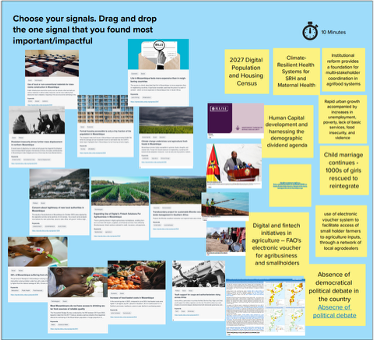
Figure 2 – UNCA Mozambique 2025 Signals Studio
Building on the Scanning phase results, the team shifted to analysis and sensemaking of the collected inputs to identify the key drivers shaping the future of Mozambique’s sustainable development. Identifying drivers is an act of synthesis, moving from individual signals toward interconnected systemic forces. These drivers function as thematic clusters of signals, trends, and TIPPOs (Trends, Issues, Plans, Projections, and Obstacles) that represent the primary forces shaping the future. To bolster signal collection and initiate the sensemaking process, a “Signals Studio” was held with the core UNCA Task Team to conclude the signal sprint (see Figure 2).
Once signals had been identified and organized, the next step was to identify the drivers of change. To this end, an online workshop was conducted, using the Futures Triangle [1] tool to facilitate a comprehensive and structured process. The value of this tool is that it enables teams to explore systematically the dynamics of change.

Figure 4 – Futures Triangle Template
Based on the analysis of three vertices of influence –Weight of the Past, Push of the Present, and Pull of the Future – the tool enabled the team to examine the set of forces that drive and constrain change. The first step consisted of identifying signals that reflect current trends, forces, and dynamics driving momentum within the system. Subsequently, team members were encouraged to surface signals that capture aspirations, visions, and preferred outcomes pulling the system toward a desired future state. Finally, the team identified signals representing structural barriers, historical legacies, and deeply embedded cultural norms that may inhibit or anchor transformation.
Following this initial mapping, the UNCA team clustered the signals into thematic groupings by identifying interconnections among Pushes, Pulls, and Weights. The workshop outputs were then consolidated, validated, and refined collectively.
Ultimately, the UNCA Task Team identified twelve key drivers of change shaping the future of sustainable development in Mozambique:
- Steering Rapid Urbanization;
- Strengthening Public Finance Management;
- Driving Inclusive Economic Diversification;
- Addressing Protracted Conflict and Restoring Social Stability;
- Transforming Agrifood Systems;
- Advancing Climate Resilience & Green Transformation;
- Advancing Gender Equality and Social Norms Transformation;
- Rethinking the Social Contract;
- Accelerating Digital Transformation;
- Harnessing the Demographic Dividend;
- Deepening Regional Integration & South–South Cooperation; and
- Managing Natural Resources and Ecosystems.
Visioning

Image 1 – Drivers Outcomes Workshop
With the twelve drivers identified, the team advanced to the final stage of the CA process: identifying the challenges and opportunities for Mozambique’s sustainable development. The Visioning phase was conducted through two complementary workshops. First, the core team explored potential plausible futures for each driver. Second, an external workshop was held with stakeholders – from academia, civil society organizations and think tanks – to examine the implications of these potential outcomes and to identify development challenges and opportunities.
This external workshop, conducted entirely in Portuguese – official language of Mozambique – was divided into two primary exercises: an implications analysis and the identification of key development challenges and opportunities.
For the implications analysis, the Futures Wheel foresight tool was used. This allows you to map the effects cascading from a specific event, trend, or driver of change outcome. In addition to revealing less obvious consequences of events, it shows the complexity of change and fosters collaborative thinking about its broader impacts.

Image 2 – Futures Wheel sample
To conduct this exercise, workshop participants were organized into groups, balanced by institutional background and aligned with each participant's specific expertise. Subsequently, each group synthesized the identified implications into thematic clusters and defined the resulting development challenges and opportunities.
For each identified challenge or opportunity, participants provided a brief description, the associated implications – derived from the Futures Wheel exercise – the most affected "Leave No One Behind" (LNOB) groups, and a strategic question to address the challenge or leverage the opportunity.
Following a subsequent consolidation conducted alongside members of the UNCA Task Team, the identified development challenges and opportunities were incorporated into the CA Report. Notably, these challenges and opportunities were integrated into brief narratives for each of the plausible futures identified by the team, showing the specific LNOB groups potentially most impacted by those future scenarios.
Learnings
Jonathan de Araujo de Assis, Futures Fellow, UNDP Strategy & Futures Team
Foresight as a participatory and collective process
The value of engaging in a foresight initiative is twofold. While the tangible product – the final report – informs high-level strategy, the process itself is equally transformative. It fosters a shift in the mindsets of participants, enhancing their “futures literacy” and their ability to manage uncertainty in daily decision-making. Furthermore, the CA journey demonstrated how foresight tools help to engage diverse stakeholders, fostering co-creation and ensuring that strategies reflect the perspectives of those traditionally left behind. Workshops with external stakeholders gathered diverse insights beyond those of the UNCA Task Team.
Foresight for establishing common understanding and leveraging collective intelligence
The foresight process proved instrumental in strengthening collective understanding, engagement, and strategic capacity within the team. The Framing phase, particularly the domain map, established a shared analytical foundation and clarified the system’s scope before advancing into more exploratory exercises. The Scanning phase fostered high levels of participation by democratizing signal collection and moving beyond traditional document-based reviews to capture emerging and unconventional sources of change – despite time constraints limiting deeper outreach in a context where knowledge is often orally transmitted. Finally, the Futuring and Visioning phases helped the team move beyond sectoral boundaries, identify cross-cutting Drivers of Change, and build a robust analytical basis for exploring plausible futures and their development challenges and opportunities. In doing so, the exercise not only informed immediate strategic choices but also equipped the UNCT with the foundational knowledge and capacities necessary to continue monitoring how the system unfolds, enabling the design of resilient strategies to achieve a transformative vision for the future.
Navigating uncertainty and embedding Foresight in practice
At the conclusion of the foresight journey, a survey was conducted with CO staff to assess its perceived impact. The responses suggest a positive shift in participants’ confidence in addressing uncertainty. Most participants reported feeling comfortable or very comfortable addressing alternative futures and emerging uncertainties. In addition, the vast majority agreed or strongly agreed that the initiative helped them think about and address uncertainties in new ways. This shift is reflected in forward-looking behavior: all respondents indicated they were likely or very likely to apply foresight tools in their future work. Taken together, these findings suggest that the foresight exercise not only increased confidence in navigating current and future crises but also fostered a determination to integrate foresight into strategic and operational processes.
UNDP Futures Fellow in the field
To have a UNDP Futures Fellow working in person with the Mozambique CO significantly strengthened the dissemination and practical application of foresight as a strategic planning tool. Direct engagement from the outset of the CPD update, the UNCA process, and Portfolio activities enabled closer alignment across initiatives that often operate in parallel, while allowing the foresight journey to be continuously adapted to evolving needs. Daily interaction with process leads and portfolio teams deepened contextual understanding and helped to integrate foresight into ongoing workstreams. In-person delivery of bilingual – English and Portuguese – workshops further enhanced participation and the quality of insights generated. Overall, this embedded approach underscores the value of integrating CPD, UNCA, and Portfolio processes, demonstrating how foresight – alongside Systems Thinking and HCD – can help unify the UN’s efforts and drive transformative, inclusive, sustainable, and resilient futures.
From a Beneficiary Country Office Perspective
Cleophas Torori, DRR/P, UNDP Mozambique
The deployment and embedment of a Futures Fellow in Mozambique for 6 months was very useful and timely. Jonathan’s work facilitated a significant shift in how teams approach uncertainty and long-term change, embedding foresight as both a mindset and a practical toolkit. He led multiple learning sessions and workshops, strengthening foresight capacity and fostering collaboration across UNDP, RCO, and the Strategy & Futures Team. His efforts ensured alignment with UNDP foresight guidelines and promoted futures literacy within the organisation.
As one of the pilot COs applying the Foresight Toolkit in the CPD design, the support couldn’t have been more significant. The design of the new CPD currently underway is already informed by this, helping to ensure a new programme that is not only grounded in today’s realities but intentionally shaped for the uncertainties of tomorrow. It has enabled the teams to stress‑test assumptions, map emerging disruptions and opportunities, and co‑create long‑term pathways with government, youth, civil society and private sector partners
In the broader context of our programming, UNDP Mozambique is leveraging strategic foresight and systems thinking to navigate complex risks—from climate volatility to economic transformation and social cohesion.
Mozambique’s experience demonstrates the unique value of embedding Futures thinking directly within a Country Office. Mozambique is already applying strategic foresight and systems thinking to understand emerging risks, anticipate long‑term shifts, and design more adaptive, resilient development pathways. This pioneering use of foresight in Mozambique provides a powerful story of innovation—bringing together global and country perspectives on why investing in Futures approaches is essential for development systems that must increasingly navigate complexity, disruption and rapid change.
[1] Developed in the mid-1990s by futurist Sohail Inayatullah, the Futures Triangle is a strategic foresight tool used to identify and understand the key forces influencing how the future unfolds.