

 Locations
The seventeeth session of the Conference of the Parties (COP17) of the United Nations Convention to Combat Desertification (UNCCD) will take place in Ulaanbaatar, Mongolia, from 17-28 August 2026
UNCCD ‘Land’ COP17
August 10, 2026

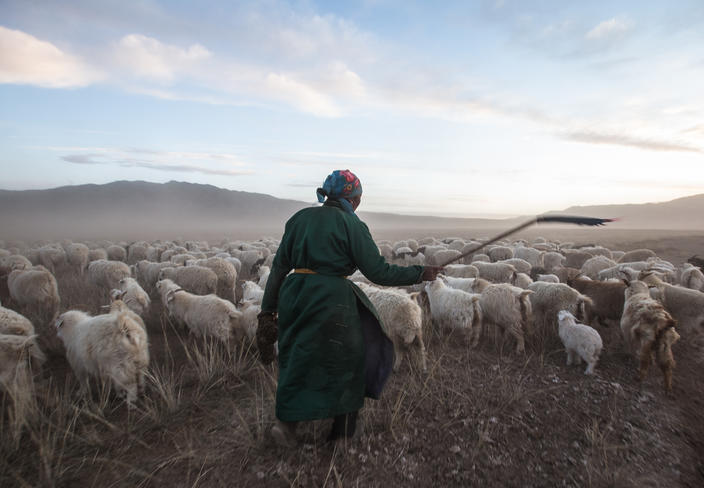
Herders in Bayangovi, in the Bayankhongor Province of southeastern Mongolia.
UNDP Mongolia / Asher Svidensky
Event Details
August 17, 2026
-
August 28, 2026
Ulaanbaatar, Mongolia
What to know about Land COP17
Theme: Restoring Land. Restoring Hope.
Official host country website: https://unccdcop17.org
UNCCD website: https://www.unccd.int/cop17
The United Nations Convention to Combat Desertification (UNCCD) is the global voice for land and one of the three major UN treaties known as the Rio Conventions, alongside Climate (UNFCCC) and Biodiversity (UNCBD).
The first of the three major environmental COPs of 2026, the UNCCD COP17, takes place in Ulaanbaatar, Mongolia, 17-28 August 2026.
UNCCD COP17 will focus on advancing action for healthy land as a cornerstone of global resilience, stability and prosperity. At COP17, countries are expected to decide on collective action on:
- Emerging and continued attention to themes of rangelands, land tenure, migration, Small Island Developing States (SIDS), synergies between the Rio Convention, policy coherence and innovative solutions.
- Agreeing on bold decisions related to rangelands, water and nature-based solutions.
- Enhancing mutually agreed decisions on a Future Strategic Framework, how to proactively address drought, and how to fill financial gaps.
- Galvanise support for the incoming COP17 Presidency’s ‘Steppe Action Agenda’
- Elevating and accelerating actions for healthy, restored land and drought resilience, alongside water and food security as drivers of peace and prosperity
- Scaling-up finance for land restoration and drought resilience, with the conference aiming to translate global commitments into measurable progress on the ground.

Why is Land COP17 so important
Land and drought resilience, alongside water and food security as drivers of peace and prosperity, anchors development in the pressing global priorities today: COP17 is an opportunity to elevate relevance and unlock accelerated action. Over the past decade, countries have committed to restoring one billion hectares of degraded land by 2030, and more than 70 now have national drought plans. COP17 is now where these commitments can turn into real change on the ground.
Scaled-up finance for land restoration and drought resilience, and the challenges facing rangelands and pastoralists will shape the COP17 agenda, with the conference aimed at translating global commitments into measurable progress on the ground.
UNCCD COP17 Events
UNDP AND PARTNERS’ OFFICIAL SIDE EVENTS IN THE COP17 BLUE ZONE
| Date | Event title | Session / Description | Event organisers / partners |
| Monday, August 17, 2026 | Unlocking Land Restoration Financing for Resilience and Stability in Fragile and Conflict-affected Settings | Side event #338 | UNCCD UNEP UNDP |
| Monday, August 17, 2026 | Establishing a Follow-up Mechanism for the Implementation of the UNCCD Gender Action Plan | Side event #122 | United Nations Entity for Gender Equality and the Empowerment of Women, The Kaschak Institute, Landesa, UNDP, National Committee for Gender Equality of Mongolia |
| Monday, August 17, 2026 | High-level dialogue on the path to an enhanced GAP under the UNCCD | Side event #107 | Kaschak Institute, UN Women, Women Land Rights Initiative, Panama and Germany / BMZ, UNDP, National Committee for Gender Equality of Mongolia |
| Tuesday, August 18, 2026 | Knowledge for Implementing the Rio Conventions | Side event #635 | WOCAT (CDE, GIZ, FAO, ICARDA, ISRIC, ICIMOD, CIAT), PANORAMA (GIZ, IUCN, UNDP) |
| Wednesday, August 19, 2026 | Film screening of food impact cut from Open Planet's new feature film, How to Live on Earth, and panel discussion | C02-08, Blue zone, UNDP-UNESCO Pavilion | UNDP, GEF SGP, screening an Open Planet Studios production, in association with Villars Institute Foundation and Silvania |
| Wednesday, August 19, 2026 | Harnessing Artificial Intelligence (AI) to Advance Policy Coherence between the Rio Conventions and National Development Plan | Side event #474 | UNDP GoM Government of Panama |
| Wednesday, August 19, 2026 | Land Tenure, Mobility and Financing: Advancing Rights-Based Investments for African Pastoralist Communities | Side event #180 | IMPACT Kenya, Ereto Solidarity Fund, Kenya State Department of Livestock Development (SDLD), UNDP, AfDB, ILC, Rights Resources Institute (RRI), FAO, MISEREOR, BMZ-GIZ |
| Thursday, August 20, 2026 | From Data to Decisions: Leveraging GEF Global Activities to Strengthen UNCCD Reporting and Achieve Land Degradation Neutrality | Side event #203 | GEF UNCCD Conservation International UNDP UNEP FAO |
| Thursday, August 20, 2026 | From Soil Health to Wealth: Research and Innovation Pathways for Regenerative and Climate-Resilient Food Systems | Side event #63 | Tottori University, Japan |
| Thursday, August 20, 2026 | Just Transitions in the Dust: Agents of Change Aligning Industry, Labor, and a Rights-Based Future | Side event #305 | UNDP Mongolia Mongolian Food Industry Union |
| Thursday, August 20, 2026 | Consultation and knowledge sharing session on Strengthening Capacity for Land Degradation Neutrality Monitoring and Decision Support | Side event #508 | WOCAT; UNDP; UNCCD STI; country Parties (Sri Lanka, Turkmenistan, Egypt and others); OSS |
| Friday, August 21, 2026 | Inclusive and gender-transformative ecosystem restoration in practice: lessons on land rights, governance, financing and community resilience in rangelands, small island developing states and conflict-affected areas | Side event #570 | Government of Mali; Government of Burkina Faso; Government of Uzbekistan; Government of Mongolia; UNDP; UNCCD Global Mechanism; International Land Coalition |
| Friday, August 21, 2026 | Financing locally-led solutions for resilience in rangelands and pastoralist landscapes: launch of two new initiatives in Africa and Asia-Pacific | Side event #302 | UNDP |
| Friday, August 21, 2026 | Advancing Rio Synergies Through Land Degradation Neutrality | Side event #714 | CI, WOCAT, UNDP, Colombia, GEO LDN, SANBI?, Dataterra? |
| Monday, August 24, 2026 | Folklore4Land – Living Knowledge for Land Restoration | Side event #208 | UNDP Mongolia GoM: Ministry of Culture, Sport, Tourism and Youth |
| Monday, August 24, 2026 | Multi-Stakeholder Dialogue "Mongolia’s Path from Coal to Clean Heating Solutions in Ger Districts" | Side event #495 | UNDP Mongolia UNCDF GoM Mongolia Development Bank |
| Monday, August 24, 2026 | Unlocking Private Investment for Environmental Growth: Scaling Capital for Global Impact | This high-level panel brings together government leaders, investors, and development finance institutions to explore how to unlock private capital for land restoration, sustainable land management, and drought resilience. | KSA Environment Fund |
| Tuesday, August 25, 2026 | Scaling Integrated Water and Land Resilience Solutions in Mongolia | Side event #315 | UNDP UNDP Mongolia SCALA global team FAO Ministry of Food, Agriculture and Light Industry, GoM |
| Tuesday, August 25, 2026 | Small Islands Developing States: Scaling Land Degradation Neutrality (LDN) Solutions for Whole-of-Island Benefits | SIDS Governments – Seychelles, Fiji, St Lucia, Papua New Guinea and Cuba, Partnership Initiative for Sustainable Land Management (PISLM), Caribbean Community (CARICOM), Asian Development Bank (ADB), Apacheta, GEF, and UNDP | |
| Wednesday, August 26, 2026 | Threads of Change: Regenerative Fashion, Land Restoration and Economic Opportunities | Side event #618 | UNDP BODIOS Untouched World |
| Wednesday, August 26, 2026 | Accelerating youth-led implementation of the Rio Conventions | Side event #535 | UNCCD Youth Caucus, UNDP, CBD Global Youth Biodiversity Network (GYBN), Youth Negotiators Academy (YNA), UNFCCC YOUNGO |
| Wednesday, August 26, 2026 | High-level Dialogue on Investing in Gender-Responsive Land Restoration: Mongolia, Global Lessons, and the Ulaanbaatar Roadmap | Side event #485 | UNDP Mongolia UNCCD Secretariat UN Women NCGE Mongolia |
| Wednesday, August 26, 2026 | Financing for Sustainable Rangeland Management: Mongolia's Participatory MRV System – A Replicable Model for Dryland Countries | Side event #335 | UNDP Mongolia PAGE ADB ASDIP Mongolian General Authority for Land Administration, Geodesy and Cartography (GALAGC) |
| Wednesday, August 26, 2026 | Scaling Dryland Restoration Through Regional Platforms: Innovation, Continuity, and Investment | Conservation International | |
| Friday, August 28, 2026 | Protected and Conserved Areas, Pastoralists’ Rights and Territories of Life: Towards Inclusive Conservation and Resilient Rangelands | Side event #364 | Yolda Initiative, Cenesta, Global Alliance for Rangelands and Pastoralists (GA4RP), ICCA Consortium, International Land Coalition (ILC), Shan Shui Conservation Center, JASIL / ICCA Mongolia Working Group, UNDP/GEF Small Grants Programme, United Nations University Institute for the Advanced Study of Sustainability (UNU-IAS), and the International Partnership for the Satoyama Initiative (IPSI) |
Throughout UNCCD COP17, UNDP is involved in 110+ events.
In addition, UNDP and partners will be hosting a range of events at the UNDP-UNESCO Pavilion in the Blue Zone and the UNDP GEF Small Grants Programme Pavilion at the Green Zone.
Please visit the UNCCD COP17 website for a full list of programming, including events in the Green Zone and the Blue Zone.
What is at stake?
Land degradation already affects up to 40 percent of the world’s land surface, undermining food production, water availability, biodiversity, livelihoods and economic stability. As climate impacts intensify, droughts become more severe and ecosystems continue to degrade, COP17 will test whether the global community can move from commitments to implementation at the scale and speed required.
The outcomes of COP17 will have major implications for global food security, resilience and sustainable development, particularly for vulnerable dryland countries and communities. Failure to accelerate land restoration and drought resilience would deepen poverty, displacement, fragility and ecosystem collapse, while undermining progress across climate and biodiversity goals.


What is UNDP’s role?
UNDP works with over 140 countries around the world to restore degraded landscapes, strengthen drought resilience, improve land governance and support sustainable livelihoods through integrated nature, climate and development solutions. Through its Nature Pledge and Climate Promise portfolios, UNDP supports countries in aligning land restoration with biodiversity, climate and development priorities.
At COP17, UNDP will help elevate integrated approaches that connect land restoration to food systems, water security, climate adaptation, biodiversity conservation and resilient rural economies. UNDP will also support countries in mobilizing public and private finance for sustainable land management and Land Degradation Neutrality targets, while amplifying locally led solutions and community-based restoration efforts.
Building on momentum from UNCCD Land COP16 in Riyadh, UNDP will continue advocating for stronger investment in drought resilience, ecosystem restoration and inclusive governance that recognizes the rights and leadership of women, youth, Indigenous Peoples and local communities.
How it connects
UNCCD COP17 will reinforce the growing recognition that land, biodiversity and climate are inseparable challenges that require integrated solutions across the three Rio Conventions. Healthy land systems underpin climate mitigation and adaptation, sustain biodiversity and support resilient economies and societies. And healthy, economically viable land solutions accelerate our transition to a Nature positive, low-carbon future.
The outcomes of COP17 will help shape the agenda for CBD COP17 and UNFCCC COP31 by elevating land restoration, drought resilience and sustainable food systems as foundational pillars of climate and biodiversity action. For UNDP, the conference represents an important opportunity to support countries in aligning land, climate and biodiversity commitments into coherent national implementation pathways that maximize development impact and financing opportunities.
Campaign

Visual story
One planet, one agenda: from land commitments to action
Land is where climate, nature and human development meet. Land degradation, biodiversity loss and climate change are interconnected crises, increasingly driving inequality, threatening food and water security and undermining sustainable growth. At this Tri-COP moment, UNDP is bringing these agendas together around one central imperative: moving from negotiation to implementation and into an era of action.
Healthy, productive land is fundamental to resilient communities, food security, livelihoods and economic prosperity. Restoring degraded land, protecting ecosystems and responding to climate change together can generate jobs, strengthen resilience and unlock new opportunities for sustainable development—particularly for communities on the frontlines of environmental change.
As the UN’s development agency, UNDP connects global commitments with national priorities and local action. Across the Rio Conventions, we help governments translate ambition into integrated policies, institutions, investments and solutions that work in real-world contexts.
This means strengthening public finance, unlocking private investment and building the capacities needed for implementation. It means ensuring action is inclusive and locally led, working alongside Indigenous Peoples, local communities, women and youth to develop solutions grounded in country realities.
The Tri-COP agenda is an opportunity to turn commitments on land into integrated action—for resilient landscapes, thriving communities and sustainable prosperity.


