

 Locations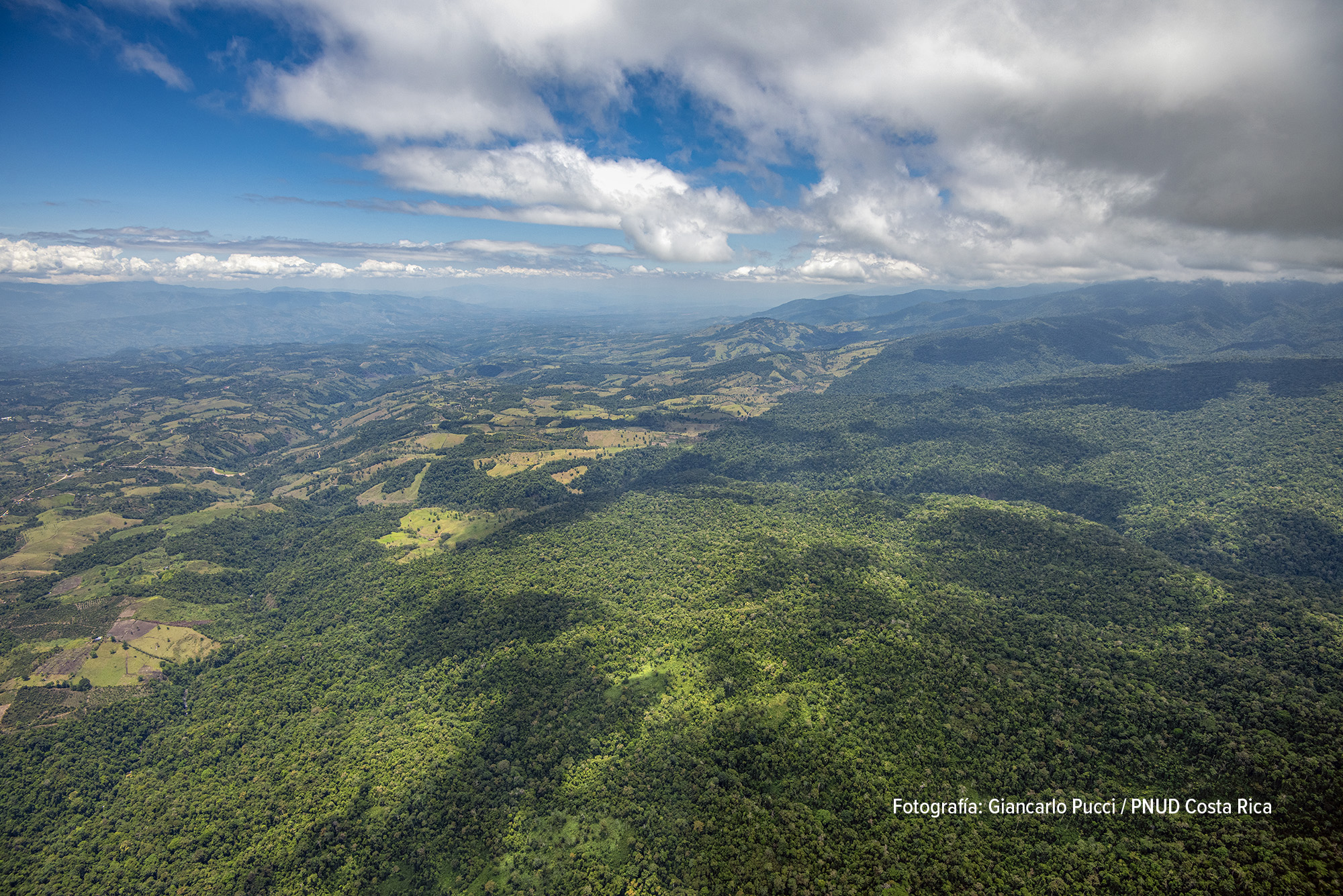
· Resources come from the Green Climate Fund (GCF), an entity that recognized 14.7 million metric tons of carbon dioxide captured in 2014 and 2015 by the Costa Rica's forests.
· UNDP supported Costa Rica in the mobilization of resources and will now provide technical support for the implementation of the REDD+ Results-Based Payments Project over the next 5 years.
· The initiative will bring financial and non-financial benefits to rural communities and some 33,000 indigenous people, expand the participation of rural women and youth in Payments for Environmental Services (PES) contracts, and strengthen forest fire prevention measures.

San José. Thanks to the conservation of its forests, Costa Rica will invest $54 million over the next five years from the Green Climate Fund (GCF), which last November recognized 14.7 million metric tons of carbon dioxide captured in 2014 and 2015 by the country's forests.
The resources will be executed by the REDD+ Results-Based Payments project, led by the Costa Rican Ministry of Environment and Energy (MINAE) and the United Nations Development Program (UNDP), which was officially launched on Monday, May 24.
The virtual activity was attended by the President of the Republic, Carlos Alvarado; the Minister of Environment and Energy, Andrea Meza; the UNDP Resident Representative in Costa Rica, José Vicente Troya; the UNDP Administrator, Achim Steiner; the Executive Director of the Green Climate Fund, Yannick Glemarec; the President of the Defensores del Bosque organization, from Talamanca, Maricela Fernández, and Francisco Morales, President of the Talamanca Cabécar Development Association.
The GCF funds -whose mobilization was supported by UNDP- will focus on three areas: strengthening the existing Payment for Environmental Services (PES) scheme; expanding PES coverage in indigenous territories; and strengthening forest fire prevention measures in rural communities and ensuring the application of environmental and social safeguards provisions.
The project will improve and expand public policies related to the implementation of Costa Rica's Forestry Law, climate action, conservation and empowerment of rural women, youth and indigenous peoples over the next five years.
The President of the Republic, Carlos Alvarado, highlighted that the investment of $54 million from the Green Climate Fund -in recognition of the carbon dioxide capture by Costa Rican forests- will have a great impact on the reinforcement and expansion of the coverage of the Environmental Services Payment Program.
The President recalled that the PES "is one of the reasons why the country has managed to reverse deforestation and increase forest cover significantly. It is one of the few countries in the world that has done so. In the 1980s, Costa Rica had lost most of its primary forest and had only 21% of its land covered by forest as a result of having the highest deforestation rates in the world. Today, the country has 52% forest cover and protects more than a quarter of its territory," he said.
At the same time, he said, the project will contribute to accelerating the path of decarbonization and inclusive economic recovery, through social protection for historically excluded populations such as indigenous peoples and rural women.
Of the total resources, US$41 million will be transferred to inhabitants of the country's forested areas, where some of the most marginalized districts with the lowest social development index are located, such as the coastal regions and forested areas in general.
Regarding rural women, recent modifications have been made to the PES scheme, which is developed by the National Forestry Financing Fund (Fonafifo), to expand their possibilities of participation. According to the National Institute of Statistics and Census (INEC), since the inception of the PES Program from 1997 to 2017, only 15.1% of the total contracts were signed with women and 16% of the agricultural farms titled belonged to them (12,598 compared to 68,389 registered in the name of men).
Green, fair and inclusive recovery. Andrea Meza Murillo, Minister of Environment and Energy, commented that Costa Rica has a long history of balancing the environment with the creation of green jobs, based on forestry and biodiversity laws and programs.
"Conservation efforts have succeeded in preserving our ecosystems while providing livelihoods for citizens. Incentives such as these encourage the participation of key actors in the reduction of emissions and institutional actions to address the main factors that affect deforestation and forest degradation. From MINAE we will continue to support the work of green entrepreneurs, indigenous peoples and women's groups that contribute significantly to the conservation of forest ecosystems," he said.
For his part, the UNDP Resident Representative in Costa Rica, José Vicente Troya, stressed that "Costa Rica faces the challenge of implementing a strategy to address the COVID-19 emergency, which will protect the most vulnerable groups of the population while redoubling efforts to support the transition to a green economy. UNDP is proud to work with the country to promote human rights and to decouple the financing of public sector environmental protection from carbon revenues. Once again this country demonstrates to the world that green, fair and inclusive recovery is possible and profitable," he said.
Historic moment. For the past 25 years, Costa Rica has maintained a PES scheme with an investment of more than ¢15 billion per year. With the actions of the strategy and the REDD+ Results-Based Payments Project, the protection and sustainable management of forests will be expanded in more than 500,000 ha of private forests, including approximately 150,000 ha in Indigenous Territories.
"This is a historic moment: the culmination of incredible efforts by communities across Costa Rica to drastically reduce greenhouse gas emissions associated with deforestation, making the country a huge "carbon sink," said UNDP Administrator Achim Steiner.
Yannick Glemarec, executive director of the GCF, emphasized that "this project demonstrates that it is possible to address the climate crisis and at the same time support vulnerable communities to build sustainable livelihoods, reduce poverty and promote gender equality".
The project will specifically contribute to maintain the reduction of emissions from deforestation and degradation at a level of 6 million tons of CO2 equivalent per year until 2024.
The project will also bring relief to the country's successful PES scheme, following budget cuts due to the public finance situation, as well as the reduction in fuel tax collection, which represents 93% of the annual revenues of this FONAFIFO-led program.
To learn more about the initiative, please visit www.cr.undp.org or write to comunicaciones.cr@undp.org.


