

 Locations
Putting People at the Centre of Governance Statistics: The Power of Citizen Data
October 20, 2025

In a pioneering move towards citizen-centric data collection, UNDP launched a groundbreaking pilot project in Ghana to measure SDG Indicator 16.6.2 through Citizen Science.


What does it actually mean for a society to have strong institutions, justice, and peace?
For many, these may seem abstract ideals. Yet for citizens, they are lived, everyday realities. Whether one can trust a local court, receive fair treatment at a school, or rely on public health services when needed. Bridging the distance between these global shared goals and individual experiences depends partly on citizen-generated data - information that comes directly from people about their interactions, experiences, expectations and aspirations.
As we mark World Statistics Day, which celebrates the power of quality data to improve lives, we are reminded of the need to move beyond conventional measurement methods. Capturing what different population groups experience requires new approaches that bring their voices into how we understand and assess governance.
Citizen data provides precisely this perspective. It shows how services are delivered, viewed through the lens of those who depend on them. This approach is particularly relevant to Sustainable Development Goal 16 (SDG 16), which promotes peace, justice, and strong institutions. One of its indicators -measuring the proportion of people satisfied with their recent experiences of public services -underscores a simple but powerful: statistics are not merely numbers, but expressions of how people perceive and engage with institutions.
In this sense, citizen data plays a vital role in evaluating and monitoring access to services, and allows for a deeper understanding of the availability, affordability, and quality of services across sectors such as healthcare, education, and social welfare. More importantly, it provides evidence to inform policies that make service delivery more equitable, responsive and effective.
"Capturing what different population groups experience requires new approaches that bring their voices into how we understand and assess governance."
Why citizen data matters
More conventional approaches to producing official statistics on public service delivery might miss important aspects of experience and perception. Administrative records can count schools, clinics, or registered births – yet they cannot reveal whether citizens felt respected, whether waiting times were reasonable, or if services were delivered with fairness and dignity. Household surveys can measure perceptions but require large and costly samples to produce reliable data for smaller or marginalised population groups. Citizen data helps to close this gap, capturing perceptions of access, equity, quality, and timeliness in targeted population groups.
When people are invited to share their positive or negative experiences, they move from passive recipients to active contributors. This shift fosters a sense of ownership and mutual accountability: public service delivery institutions demonstrate their willingness to listen and adapt, while citizens see that their voices matter. Over time, this exchange builds trust and reshapes the relationship between institutions and the communities they serve.
A pioneering example comes from Ghana, where UNDP and the Ghana Statistical Service (GSS) co-developed a mobile application allowing citizens to rate their experiences with health, education, and government services, including civil registration. The app incorporated inclusive features such as voice and sign language options, and support for local languages like Twi and Ga, ensuring that marginalised groups could participate.
The results were striking. The initiative had a higher representation of populations often excluded from traditional surveys, such as persons with disabilities. By responding to citizen feedback, officials could improve service delivery and strengthen public trust. Citizen data, in this sense, is not an alternative to official statistics, but a crucial complement, especially in reaching those who are typically left behind.


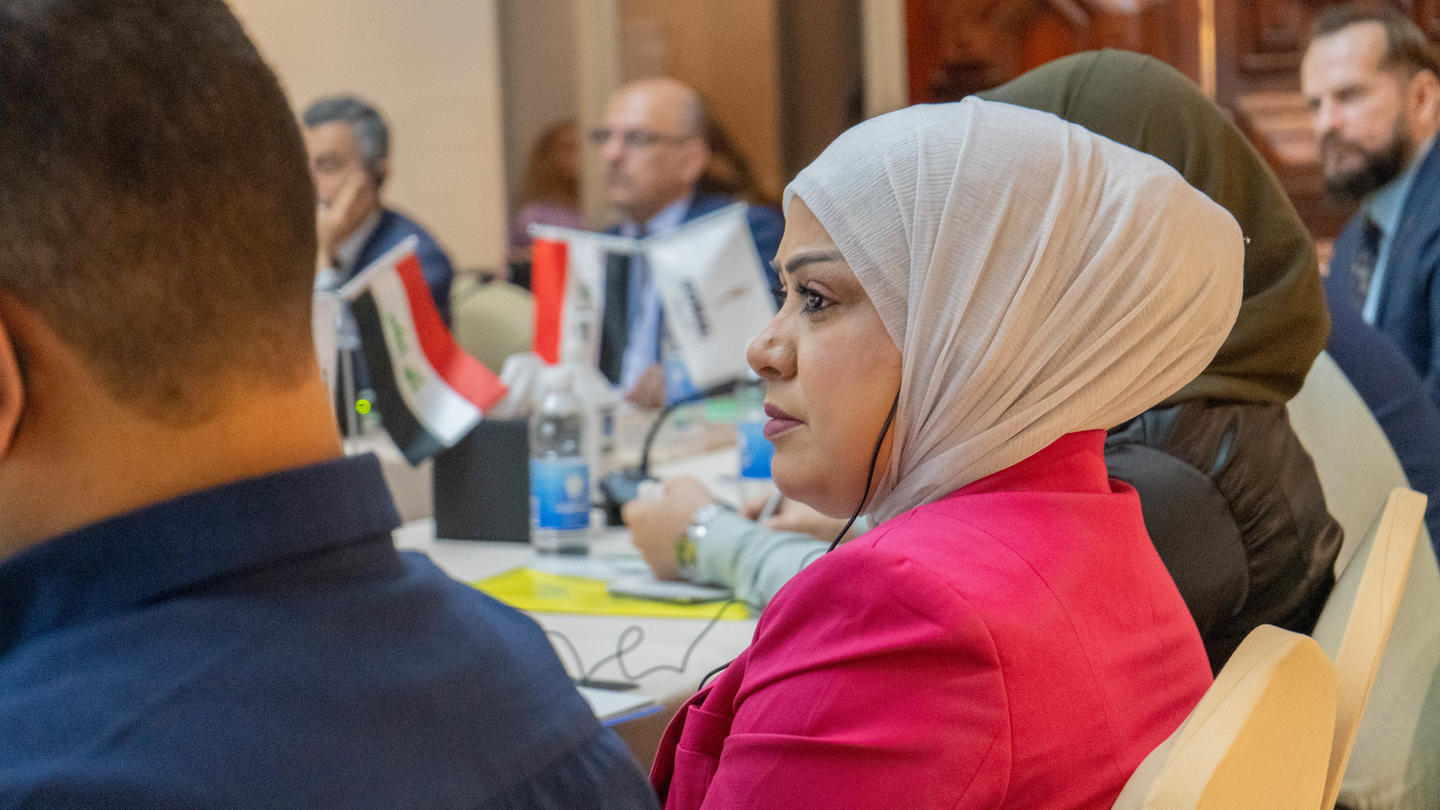


Workshops organised by Iraq’s Ministry of Youth and Sports, Central Statistical Organisation, and UNDP brought together national partners, youth representatives, and data experts to explore new ways to capture citizen perspectives on the performance of public institutions. Photos: UNDP Iraq
Satisfaction as a measure of inclusion
The real value of statistics on peace, justice and strong institutions under SDG 16 lies in how they reflect the realities of people’s everyday lives. Satisfaction with public services are not abstract indicators; they reflect how people experience inclusion, fairness and belonging within society. Consider two communities: in one, people feel ignored or discriminated against at the local health clinic; in the other, they feel heard, respected, and well-served. The difference between the two is not only administrative—it is a measure of social cohesion and trust. Low satisfaction can indicate deeper legitimacy challenges. When institutions are trusted, people are more likely to engage constructively, participate in civic life, abide by laws, and contribute to collective well-being.
In this way, SDG 16 is not merely a governance goal; it is foundational to expanding people’s opportunities. When people believe the system is fair and accessible, they are more likely to invest in their futures, keep their children in school, and seek justice through formal mechanisms.
The promise and challenges of citizen data
Despite its promise, integrating citizen-generated data into national systems presents challenges. As highlighted by UNDP’s policy brief on Ghana, statistical offices must strengthen their capacity to design, manage, and ethically integrate citizen data initiatives. Ensuring that communities receive feedback is equally important, as it reinforces transparency and reciprocity.
Inclusivity remains a core concern. Digital tools can inadvertently exclude people without smartphones or reliable internet access. Ghana’s pilot addressed this through a USSD option and multimodal interfaces, reducing barriers to participation, but additional solutions might need to be explored.
When thoughtfully implemented, citizen data initiatives can be transformative. They enable faster learning, localised insights, and continuous feedback loops between institutions and the people they serve. They also amplify voices that have long been undercounted—rural youth, linguistic minorities, and hard-to-reach populations, making governance data more representative and equitable.
The rapid expansion of data sources and technologies has not automatically led to better decisions, and policymakers face the growing challenge of identifying which evidence is relevant and actionable. On October 28–29, experts and practitioners will meet in Oslo to discuss New Ways of Governing and will explore the future of evidence-informed policy making. Citizen-generated data offers one way forward, complementing traditional sources with grounded insights into how people experience governance, and helping to ensure that policies respond to real needs rather than assumptions.